
Title
The Metaethics of Constitutional Adjudication (Oxford Constitutional Theory),Used
Sold by Ergodebooks, an authorized reseller.
Returns accepted within 30 days | support@ergodebooks.com
Shipping Information
- Free Standard Shipping — United States only
- Processing Time: 3–5 business days
- Estimated Delivery: 6–10 business days after dispatch
- Double-boxed, fully insured & discreetly packaged
- Tracking number sent via email once dispatched
Returns & Refund
Returns accepted within 30 days of delivery.
Damaged or Defective Item
Free return shipping + replacement or full refund
Wrong Item Received
Free return shipping + replacement or full refund
Change of Mind
Return shipping at customer's expense · 25% restocking fee applies
Payment Option

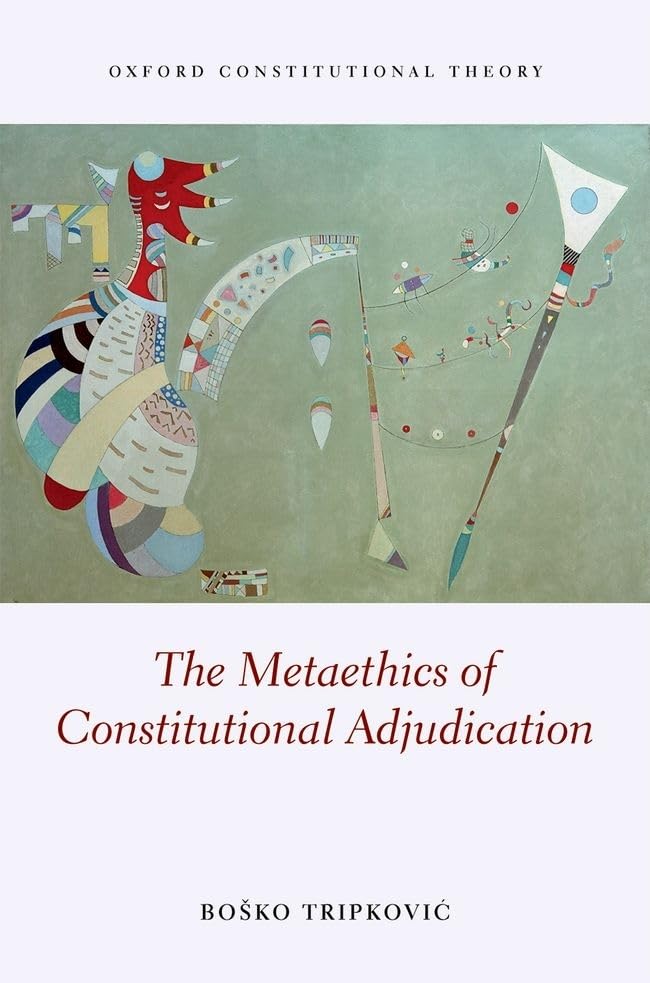
In this book Bosko Tripkovic develops a theory of valuebased arguments in constitutional adjudication. In contrast to the standard question of constitutional theory that asks whether the courts get moral answers wrong, it asks a more fundamental question of whether the courts get the morality itself wrong. Tripkovic argues for an antirealist conception of value one that does not presuppose the existence of mindindependent moral truths and accounts for the effect this ought to have on existing valuebased arguments made by constitutional courts.The book identifies three dominant types of valuebased arguments in comparative constitutional practice: arguments from constitutional identity, common sentiment, and universal reason, and explains why they fail as selfstanding approaches to moral judgment. It then suggests that the appropriate moral judgments emerge from the dynamics between practical confidence, which denotes the inescapability of the self and the evaluative attitudes it entails, and reflection, which denotes the process of challenging and questioning these attitudes.The book applies the notions of confidence and reflection to constitutional reasoning and maintains that the moral inquiry of the constitutional court ought to depart from the emotive intuitions of the constitutional community and then challenge these intuitions through reflective exposure to different perspectives in order to better understand and develop the underlying constitutional identity. The book casts new light on common constitutional dilemmas and allows us to envisage new ways of resolving them.
⚠️ WARNING (California Proposition 65):
This product may contain chemicals known to the State of California to cause cancer, birth defects, or other reproductive harm.
For more information, please visit www.P65Warnings.ca.gov.