
Title
The Metaphysics Of Edmund Burke,Used
Sold by Ergodebooks, an authorized reseller.
Returns accepted within 30 days | support@ergodebooks.com
Shipping Information
- Free Standard Shipping — United States only
- Processing Time: 3–5 business days
- Estimated Delivery: 6–10 business days after dispatch
- Double-boxed, fully insured & discreetly packaged
- Tracking number sent via email once dispatched
Returns & Refund
Returns accepted within 30 days of delivery.
Damaged or Defective Item
Free return shipping + replacement or full refund
Wrong Item Received
Free return shipping + replacement or full refund
Change of Mind
Return shipping at customer's expense · 25% restocking fee applies
Payment Option

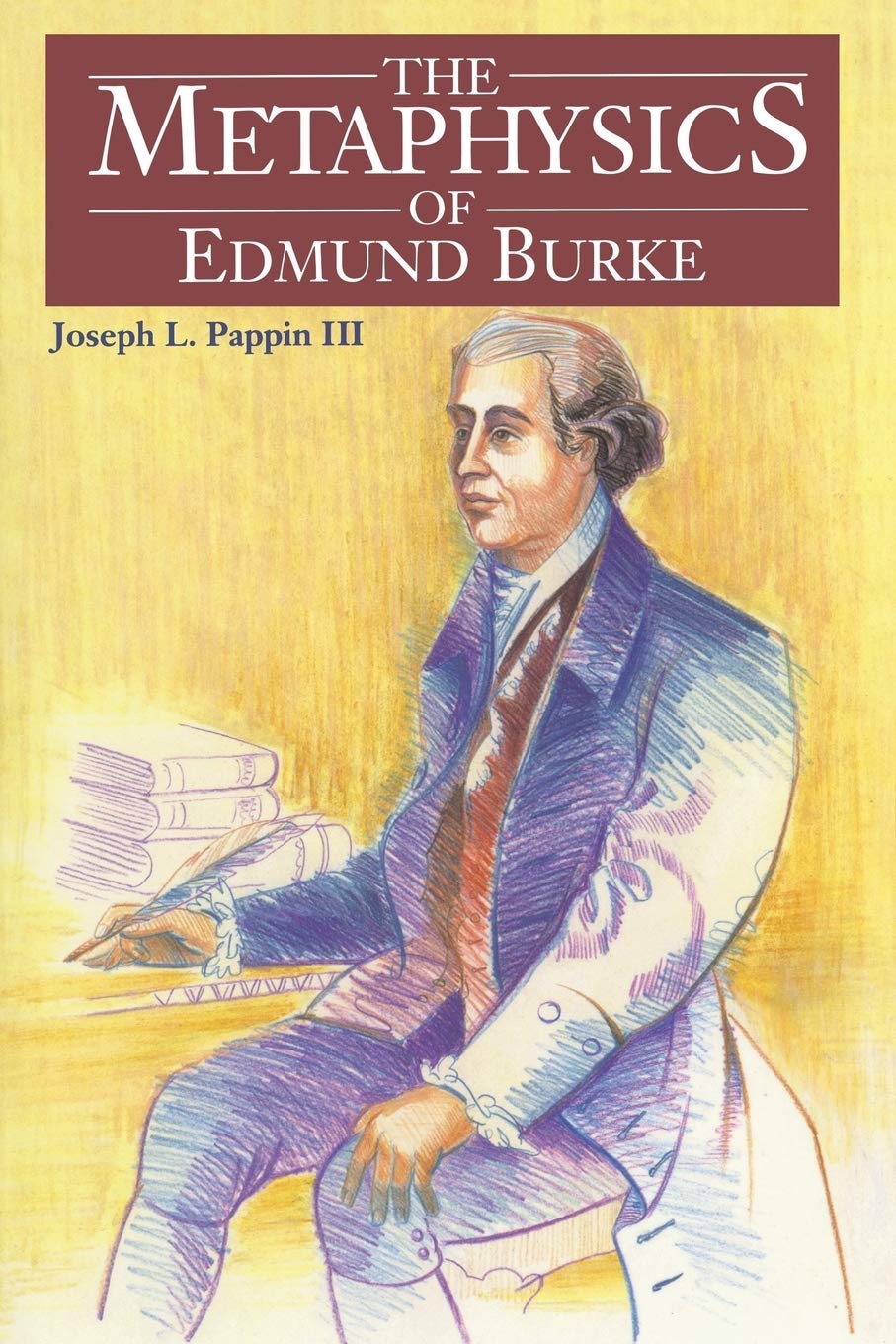
The most recent commentators on Edmund Burke have renewed the charge that his political thought lacks the consistency and coherency necessary to even claim the status of a political philosophy and that he is indeed a 'utilitarian.' They mark him off as an 'ideologist,' a 'rhetorician,' and a 'deliberate propagandist.' Even Burkes Reflections on the Revolution in France, his most profound statement of a political philosophy, is regarded by some as a work of mere 'persuasion,' not 'philosophy.' All this occurs in spite of the seminal work of Stanlis, Canavan, and Wilkins, who in the 1950s and 60s, demonstrated the natural law foundations of Burkes politics. Burke revisionists, forced to acknowledge his use of the 'natural law,' label such use as a rhetorical means for utilitarian ends.Directly opposed to this renewed 'utilitarian' interpretation of Burke is Joseph Pappins work The Metaphysics of Edmund Burke. Not only does this work challenge the 'utilitarian' view of Burke, it sets out, as not other work on Burke has attempted to do, 'to make explicit the implicit metaphysical core of Burkes political thought.' Pappin does this by examining both Burkes critics and Burkes own attack on a rationalist, ideologically inspired metaphysics. Drawing from Burkes vast writings, Pappin establishes as his goal 'to demonstrate that Burkes political philosophy is grounded in a realist metaphysic, one that is basically consonant with the AristotelianThomistic tradition.' Does the author succeed? According to Francis Canavan, in his Foreword to this work, the 'explanatory key' of a realist metaphysics grounding Burkes politics 'is a key that fits the lock better than any other that scholars have offered.' Canavan further holds that the author offers 'us a more thorough analysis of Burkes understanding of God, the creation, nature, man, and society than has previously appeared.'
⚠️ WARNING (California Proposition 65):
This product may contain chemicals known to the State of California to cause cancer, birth defects, or other reproductive harm.
For more information, please visit www.P65Warnings.ca.gov.