
Title
The MiddleClass City: Transforming Space and Time in Philadelphia, 18761926,New
Sold by Ergodebooks, an authorized reseller.
Returns accepted within 30 days | support@ergodebooks.com
Shipping Information
- Free Standard Shipping — United States only
- Processing Time: 3–5 business days
- Estimated Delivery: 6–10 business days after dispatch
- Double-boxed, fully insured & discreetly packaged
- Tracking number sent via email once dispatched
Returns & Refund
Returns accepted within 30 days of delivery.
Damaged or Defective Item
Free return shipping + replacement or full refund
Wrong Item Received
Free return shipping + replacement or full refund
Change of Mind
Return shipping at customer's expense · 25% restocking fee applies
Payment Option

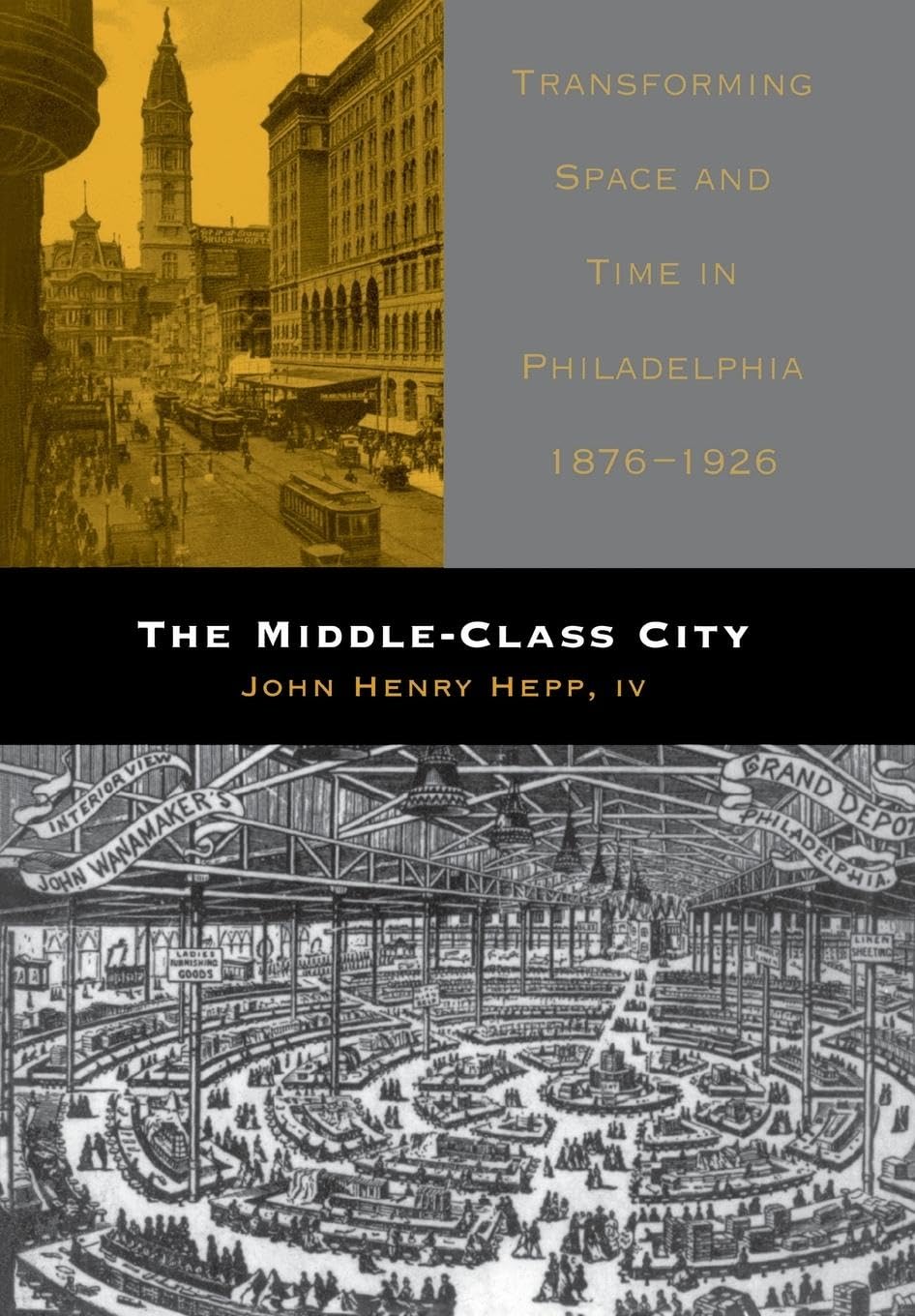
The classic historical interpretation of the late nineteenth and early twentieth centuries in America sees this period as a political search for order by the middle class, culminating in Progressive Era reforms. In The MiddleClass City, John Hepp examines transformations in everyday middleclass life in Philadelphia between 1876 and 1926 to discover the cultural roots of this search for order. By looking at complex relationships among members of that city's middle class and three largely bourgeois commercial institutionsnewspapers, department stores, and railroadsHepp finds that the men and women of the middle class consistently reordered their world along rational lines.According to Hepp, this period was rife with evidence of creative reorganization that served to mold middleclass life. The department store was more than just an expanded dry goods emporium; it was a middleclass haven of order in the heart of a frenetic cityan entirely new way of organizing merchandise for sale. Redesigned newspapers brought wellordered news and entertainment to middleclass homes and also carried retail advertisements to entice consumers downtown via train and streetcar. The complex interiors of urban railroad stations reflected a rationalization of space, and rail schedules embodied the modernized specialization of standard time. In his fascinating investigation of similar patterns of behavior among commercial institutions, Hepp exposes an important intersection between the histories of the city and the middle class.In his careful reconstruction of this now vanished culture, Hepp examines a wide variety of sources, including diaries and memoirs left by middleclass women and men of the region. Following Philadelphians as they rode trains and trolleys, read newspapers, and shopped at department stores, he uses their accounts as individualized guidebooks to middleclass life in the metropolis. And through a creative use of photographs, floor plans, maps, and material culture, The MiddleClass City helps to reconstruct the physical settings of these enterprises and recreate everyday middleclass life, shedding new light on an underanalyzed historical group and the cultural history of twentiethcentury America.
⚠️ WARNING (California Proposition 65):
This product may contain chemicals known to the State of California to cause cancer, birth defects, or other reproductive harm.
For more information, please visit www.P65Warnings.ca.gov.