
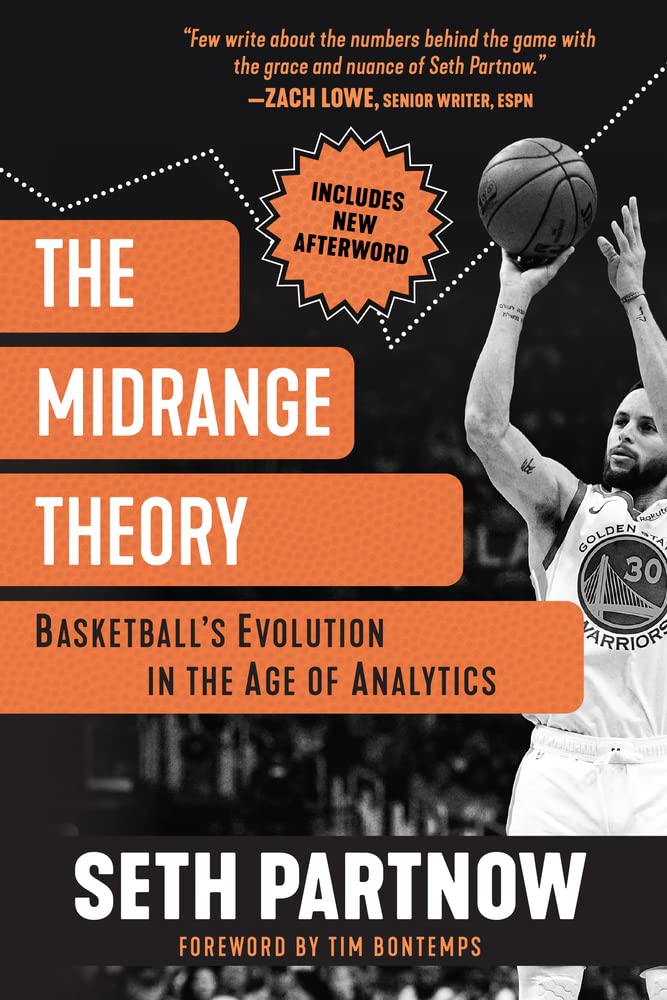
Title
The Midrange Theory: Basketball'S Evolution In The Age Of Analytics,New
Sold by Ergodebooks, an authorized reseller.
Returns accepted within 30 days | support@ergodebooks.com
Shipping Information
- Free Standard Shipping — United States only
- Processing Time: 3–5 business days
- Estimated Delivery: 6–10 business days after dispatch
- Double-boxed, fully insured & discreetly packaged
- Tracking number sent via email once dispatched
Returns & Refund
Returns accepted within 30 days of delivery.
Damaged or Defective Item
Free return shipping + replacement or full refund
Wrong Item Received
Free return shipping + replacement or full refund
Change of Mind
Return shipping at customer's expense · 25% restocking fee applies
Payment Option

At its core, the goal of any basketball team is relatively simple: take and make good shots while preventing the opponent from doing the same. But what is a good shot? Are all good shots created equally? And how might one identify players who are more or less likely to make and prevent those shots in the first place?The concept of basketball analytics, for lack of a better term, has been lauded, derided, and misunderstood. The incorporation of more data into NBA decisionmaking has been creditedor blamedfor everything from the death of the traditional center to the proliferation of threepoint shooting to the alleged abandonment of the area of the court known as the midrange. What is beyond doubt is that understanding its methods has never been more important to watching and appreciating the NBA.In The Midrange Theory, Seth Partnow, NBA analyst for The Athletic and former Director of Basketball Research for the Milwaukee Bucks, explains how numbers have affected the modern NBA game, and how those numbers seek not to solve the game of basketball but instead urge us toward thinking about it in new ways. The relative value of Russell Westbrooks tripledoubles Why some players succeed in the playoffs while others dont How NBA teams think about constructing their rosters through the draft and free agency The difficulty in measuring defensive achievement The fallacy of the quick twoFrom shot selection to evaluating prospects to considering aesthetics and ethics while analyzing the box scores, Partnow deftly explores where the NBA is now, how it got here, and where it might be going next.
⚠️ WARNING (California Proposition 65):
This product may contain chemicals known to the State of California to cause cancer, birth defects, or other reproductive harm.
For more information, please visit www.P65Warnings.ca.gov.