
Title
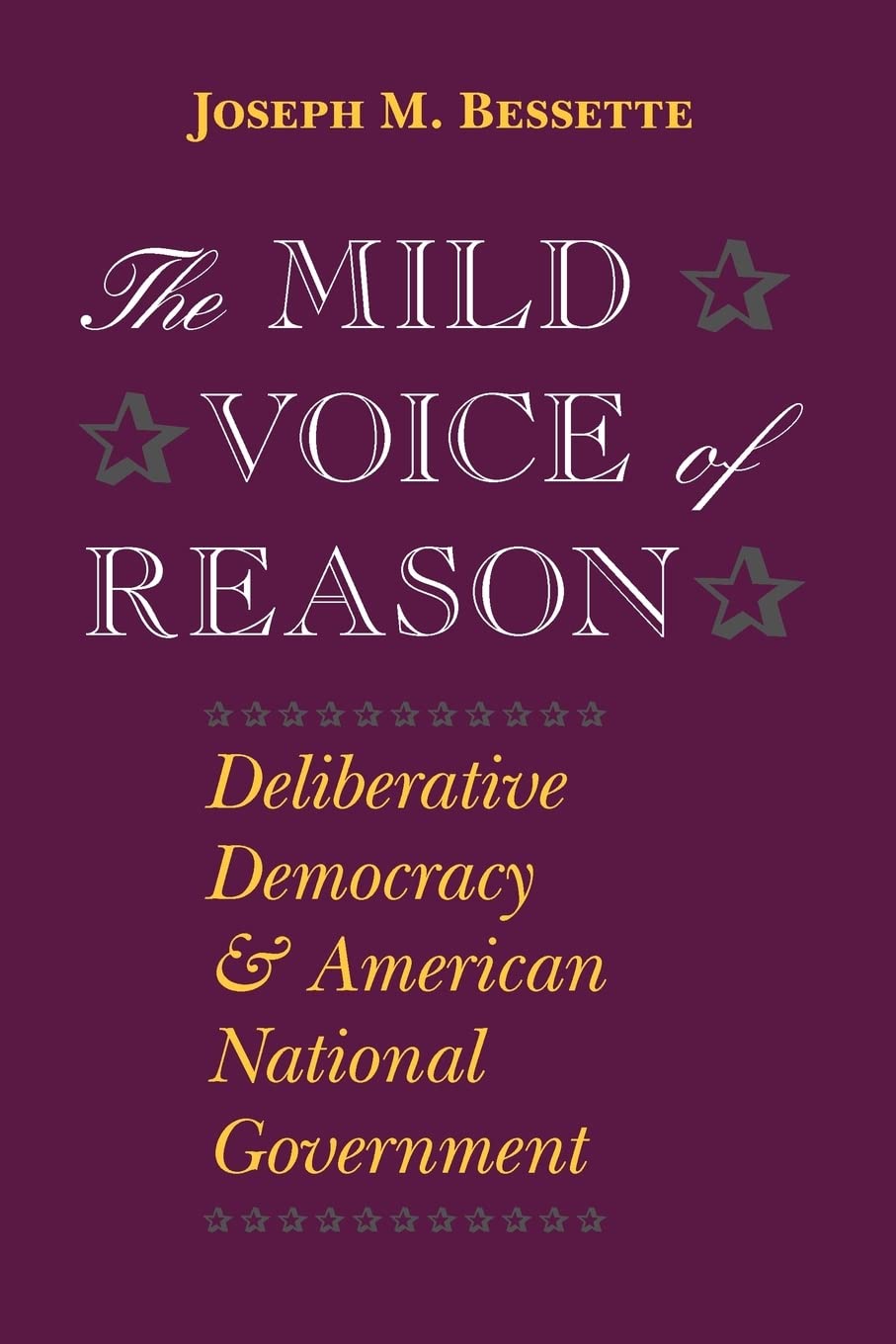
The Mild Voice of Reason: Deliberative Democracy and American National Government (American Politics and Political Economy Serie,Used
Sold by Ergodebooks, an authorized reseller.
Returns accepted within 30 days | support@ergodebooks.com
Shipping Information
- Free Standard Shipping — United States only
- Processing Time: 3–5 business days
- Estimated Delivery: 6–10 business days after dispatch
- Double-boxed, fully insured & discreetly packaged
- Tracking number sent via email once dispatched
Returns & Refund
Returns accepted within 30 days of delivery.
Damaged or Defective Item
Free return shipping + replacement or full refund
Wrong Item Received
Free return shipping + replacement or full refund
Change of Mind
Return shipping at customer's expense · 25% restocking fee applies
Payment Option

In recent years, many Americans and more than a few political scientists have come to believe that democratic deliberation in Congresswhereby judgments are made on the merits of policies reflecting the interests and desires of American citizensis more myth than reality. Rather, pressure from special interest groups, legislative bargaining, and the desire of incumbents to be reelected are thought to originate in American legislative politics. While not denying such influences, Joseph M. Bessette argues that the institutional framework created by the founding fathers continues to foster a government that is both democratic and deliberative, at least to some important degree.Drawing on original research, case studies of policymaking in Congress, and portraits of American lawmakers, Bessette demonstrates not only the limitations of nondeliberative explanations for how laws are made but also the continued vitality of genuine reasoning on the merits of public policy. Bessette discusses the contributions of the executive branch to policy deliberation, and looks at the controversial issue of the proper relationship of public opinion to policymaking.Informed by Bessette's nine years of public service in city and federal government, The Mild Voice of Reason offers important insights into the real workings of American democracy, articulates a set of standards by which to assess the workings of our governing institutions, and clarifies the forces that promote or inhibit the collective reasoning about common goals so necessary to the success of American democracy.'No doubt the bestpublicized recent booklength work on Congress is columnist George Will's diatribe in praise of term limits in which the core of his complaint is that Congress does not deliberate in its decisionmaking. Readers who are inclined to share that fantasy would do well to consult the work of Joseph M. Bessette. He turns up massive amounts of material attesting to the centrality of deliberation in congressional life.'Nelson W. Polsby, Presidential Studies Quarterly
⚠️ WARNING (California Proposition 65):
This product may contain chemicals known to the State of California to cause cancer, birth defects, or other reproductive harm.
For more information, please visit www.P65Warnings.ca.gov.
- Q: How many pages are in this book? A: This book contains three hundred five pages. It provides an in-depth analysis of deliberative democracy in American government.
- Q: What is the binding type of this book? A: This book is published in paperback binding. The paperback format makes it lightweight and easy to handle.
- Q: What are the dimensions of this book? A: The book measures eight point nine inches in length, five point nine five inches in width, and zero point six eight inches in height.
- Q: Who is the author of 'The Mild Voice of Reason'? A: The author is Joseph M. Bessette. He draws on his extensive public service experience to inform this work.
- Q: What is the main topic of the book? A: The book discusses deliberative democracy and its role in American national government. It critiques the influences of special interest groups on Congress.
- Q: How do I use this book for research? A: You can use this book as a resource for understanding democratic deliberation in Congress. It contains original research and case studies that enhance political science discussions.
- Q: Is this book suitable for students? A: Yes, this book is suitable for students studying political science or American government. Its insights are valuable for academic research and discussions.
- Q: What skills or knowledge do I need to read this book? A: A basic understanding of political science concepts would be beneficial. The book is designed for readers interested in the intricacies of American democracy.
- Q: How should I care for this book? A: To keep this book in good condition, store it in a cool, dry place away from direct sunlight. Avoid bending the pages to preserve its quality.
- Q: Is there any specific way to clean this book? A: Do not attempt to clean the book with water or chemicals. Instead, use a soft, dry cloth to gently wipe the cover if necessary.
- Q: What if the book arrives damaged? A: If the book arrives damaged, you should contact the seller for a return or replacement. Make sure to keep the original packaging for the return process.
- Q: What is the return policy for this book? A: The return policy typically allows returns within a specified time frame. Check with the seller for specific details regarding their policy.
- Q: How does this book compare to other political science books? A: This book stands out due to its focus on deliberation in Congress. Unlike many political science texts, it emphasizes the importance of reasoning in the legislative process.
- Q: Is this book appropriate for casual readers? A: While the book is academic in nature, casual readers interested in American politics may find it insightful and engaging.
- Q: What are the unique features of this book? A: The book features original research and case studies, offering a comprehensive analysis of American democracy and deliberation.
- Q: Can this book be used for a thesis or dissertation? A: Yes, this book can be a valuable resource for theses or dissertations focused on American government and democratic processes.