
Title
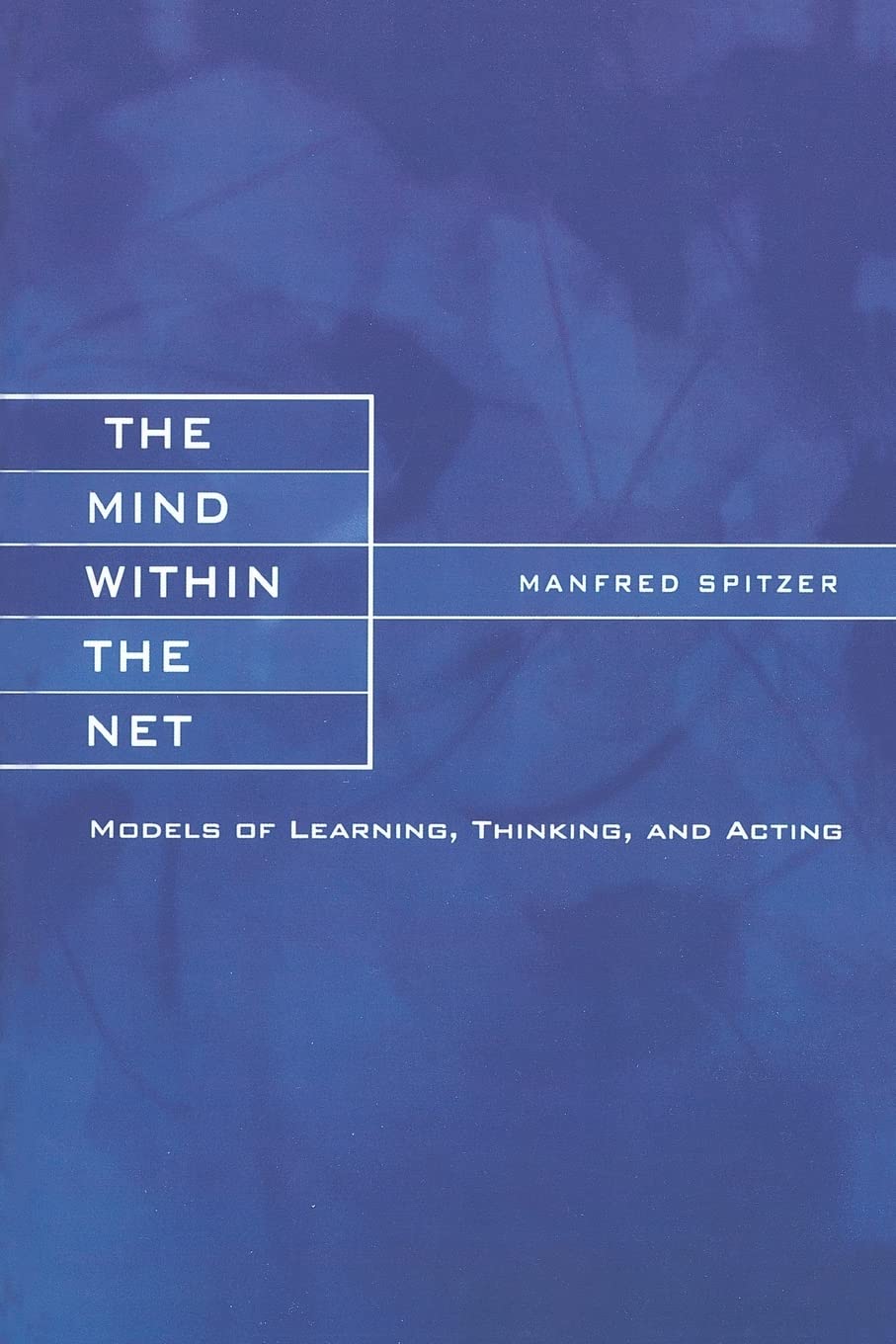
The Mind Within The Net: Models Of Learning, Thinking, And Acting,New
Sold by Ergodebooks, an authorized reseller.
Returns accepted within 30 days | support@ergodebooks.com
Shipping Information
- Free Standard Shipping — United States only
- Processing Time: 3–5 business days
- Estimated Delivery: 6–10 business days after dispatch
- Double-boxed, fully insured & discreetly packaged
- Tracking number sent via email once dispatched
Returns & Refund
Returns accepted within 30 days of delivery.
Damaged or Defective Item
Free return shipping + replacement or full refund
Wrong Item Received
Free return shipping + replacement or full refund
Change of Mind
Return shipping at customer's expense · 25% restocking fee applies
Payment Option

A Highly Readable, Nonmathematical Introduction To Neural Networkscomputer Models That Help Us To Understand How We Perceive, Think, Feel, And Act.How Does The Brain Work? How Do Billions Of Neurons Bring About Ideas, Sensations, Emotions, And Actions? Why Do Children Learn Faster Than Elderly People? What Can Go Wrong In Perception, Thinking, Learning, And Acting? Scientists Now Use Computer Models To Help Us To Understand The Most Private And Human Experiences. In The Mind Within The Net, Manfred Spitzer Shows How These Models Can Fundamentally Change How We Think About Learning, Creativity, Thinking, And Acting, As Well As Such Matters As Schools, Retirement Homes, Politics, And Mental Disorders.Neurophysiology Has Told Us A Lot About How Neurons Work; Neural Network Theory Is About How Neurons Work Together To Process Information. In This Highly Readable Book, Spitzer Provides A Basic, Nonmathematical Introduction To Neural Networks And Their Clinical Applications. Part I Explains The Fundamental Theory Of Neural Networks And How Neural Network Models Work. Part Ii Covers The Principles Of Network Functioning And How Computer Simulations Of Neural Networks Have Profound Consequences For Our Understanding Of How The Brain Works. Part Iii Covers Applications Of Network Models (E.G., To Knowledge Representation, Language, And Mental Disorders Such As Schizophrenia And Alzheimer'S Disease) That Shed New Light On Normal And Abnormal States Of Mind. Finally, Spitzer Concludes With His Thoughts On The Ramifications Of Neural Networks For The Understanding Of Neuropsychology And Human Nature.
⚠️ WARNING (California Proposition 65):
This product may contain chemicals known to the State of California to cause cancer, birth defects, or other reproductive harm.
For more information, please visit www.P65Warnings.ca.gov.