
Title
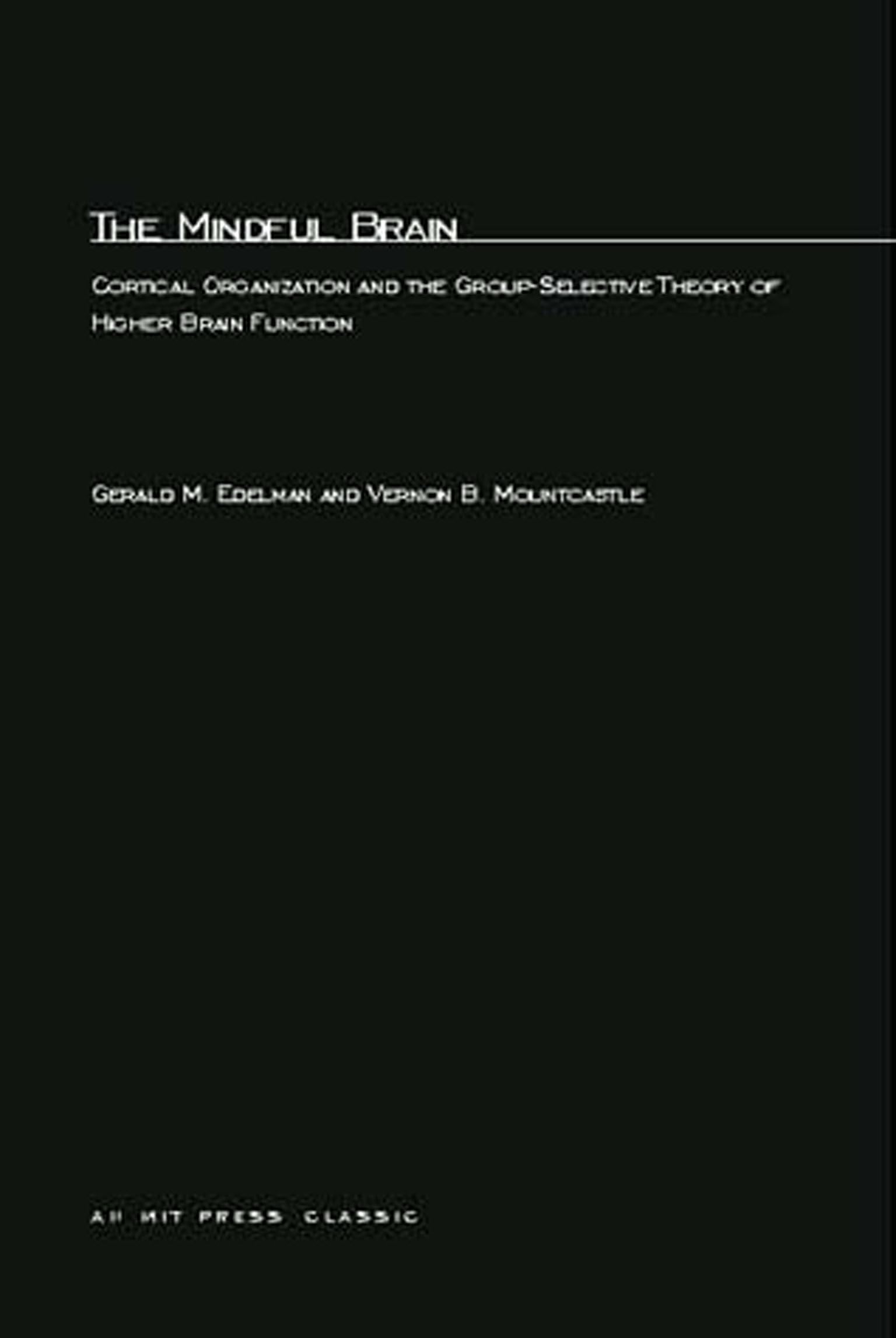
The Mindful Brain: Cortical Organization and the GroupSelective Theory of Higher Brain Function (Mit Press),New
Sold by Ergodebooks, an authorized reseller.
Returns accepted within 30 days | support@ergodebooks.com
Shipping Information
- Free Standard Shipping — United States only
- Processing Time: 3–5 business days
- Estimated Delivery: 6–10 business days after dispatch
- Double-boxed, fully insured & discreetly packaged
- Tracking number sent via email once dispatched
Returns & Refund
Returns accepted within 30 days of delivery.
Damaged or Defective Item
Free return shipping + replacement or full refund
Wrong Item Received
Free return shipping + replacement or full refund
Change of Mind
Return shipping at customer's expense · 25% restocking fee applies
Payment Option

A proposal by two eminent biological scientists for a mechanism whereby mind becomes manifest from the operations of brain tissue.This significant contribution to neuroscience consists of two papers, the first by Mountcastle an, the second by Edelman. Between them, they examine from different but complementary directions the relationships that connect the higher brainmemory, learning, perception, thinkingwith what goes on at the most basic levels of neural activity, with particular stress on the role of local neuronal circuits.Edelman's major hypothesis is that 'the conscious state results from phasic reentrant signaling occurring in parallel processes that involve associations between stored patterns and current sensory or internal input.' This selective process occurs by the polling of degenerate primary repertoires of neuronal groups that are formed during embryogenesis and development. Edelman's theory extrapolates to the brain the selectionistic immunological theories for which he was awarded the 1972 Nobel Prize in Physiology or Medicine. Mountcastle's paper reviews what is known about the actual structure of various parts of the neo cortex. He relates the large entities of the neocortex to their component modulesthe local neuronal circuitsand shows how the complex interrelationships of such a distributed system can yield dynamic distributed functioning. There are strong conceptual parallels between Mountcastle's idea of cortical columns and their functional subunits and Edelman's concept of populations of neurons functioning as processors in a brain system based on selectional rather than instructional principles. These parallels are traced and put into perspective in Francis Schmitt's Introduction.
⚠️ WARNING (California Proposition 65):
This product may contain chemicals known to the State of California to cause cancer, birth defects, or other reproductive harm.
For more information, please visit www.P65Warnings.ca.gov.