
Title
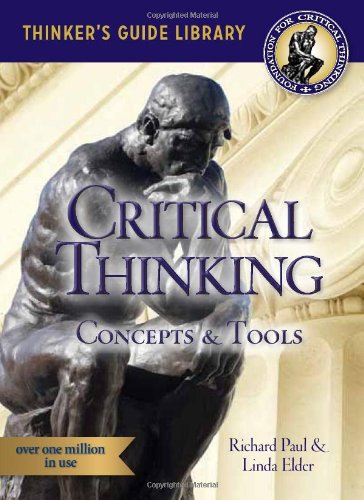
The Miniature Guide to Critical ThinkingConcepts and Tools,Used
Sold by Ergodebooks, an authorized reseller.
Returns accepted within 30 days | support@ergodebooks.com
Shipping Information
- Free Standard Shipping — United States only
- Processing Time: 3–5 business days
- Estimated Delivery: 6–10 business days after dispatch
- Double-boxed, fully insured & discreetly packaged
- Tracking number sent via email once dispatched
Returns & Refund
Returns accepted within 30 days of delivery.
Damaged or Defective Item
Free return shipping + replacement or full refund
Wrong Item Received
Free return shipping + replacement or full refund
Change of Mind
Return shipping at customer's expense · 25% restocking fee applies
Payment Option

The essence of critical thinking concepts and tools distilled into a 20page pocketsize guide. It is a critical thinking supplement to any textbook or course. It is best used in conjunction with the Analytic Thinking Guide. Everyone thinks; it is our nature to do so. But much of our thinking, left to itself, is biased, distorted, partial, uninformed or downright prejudiced. Yet the quality of our life and that of what we produce, make, or build depends precisely on the quality of our thought. Shoddy thinking is costly, both in money and in quality of life. Excellence in thought, however, must be systematically cultivated. Critical thinking is the art of analyzing and evaluating thinking with a view to improving it. Critical thinking is, selfdirected, selfdisciplined, selfmonitored, and selfcorrective thinking. It requires rigorous standards of excellence and mindful command of their use. It entails effective communication and problem solving abilities and a commitment to overcoming our native egocentrism and sociocentrism. This miniature guide focuses on of the essence of critical thinking concepts and tools distilled into pocket size. For faculty it provides a shared concept of critical thinking. For students it is a critical thinking supplement to any textbook for any course. Faculty can use it to design instruction, assignments, and tests in any subject. Students can use it to improve their learning in any content area. Its generic skills apply to all subjects. For example, critical thinkers are clear as to the purpose at hand and the question at issue. They question information, conclusions, and points of view. They strive to be clear, accurate, precise, and relevant. They seek to think beneath the surface, to be logical, and fair. They apply these skills to their reading and writing as well as to their speaking and listening. They apply them in history, science, math, philosophy, and the arts; in professional and personal life.
⚠️ WARNING (California Proposition 65):
This product may contain chemicals known to the State of California to cause cancer, birth defects, or other reproductive harm.
For more information, please visit www.P65Warnings.ca.gov.