If you have any questions, you are always welcome to contact us. We'll get back to you as soon as possible, withing 24 hours on weekdays.
Customer service
All questions about your order, return and delivery must be sent to our customer service team by e-mail at yourstore@yourdomain.com
Sale & Press
If you are interested in selling our products, need more information about our brand or wish to make a collaboration, please contact us at press@yourdomain.com
Help
If you have any questions, you are always welcome to contact us. We'll get back to you as soon as possible, withing 24 hours on weekdays.
Customer service
All questions about your order, return and delivery must be sent to our customer service team by e-mail at yourstore@yourdomain.com
Sale & Press
If you are interested in selling our products, need more information about our brand or wish to make a collaboration, please contact us at press@yourdomain.com
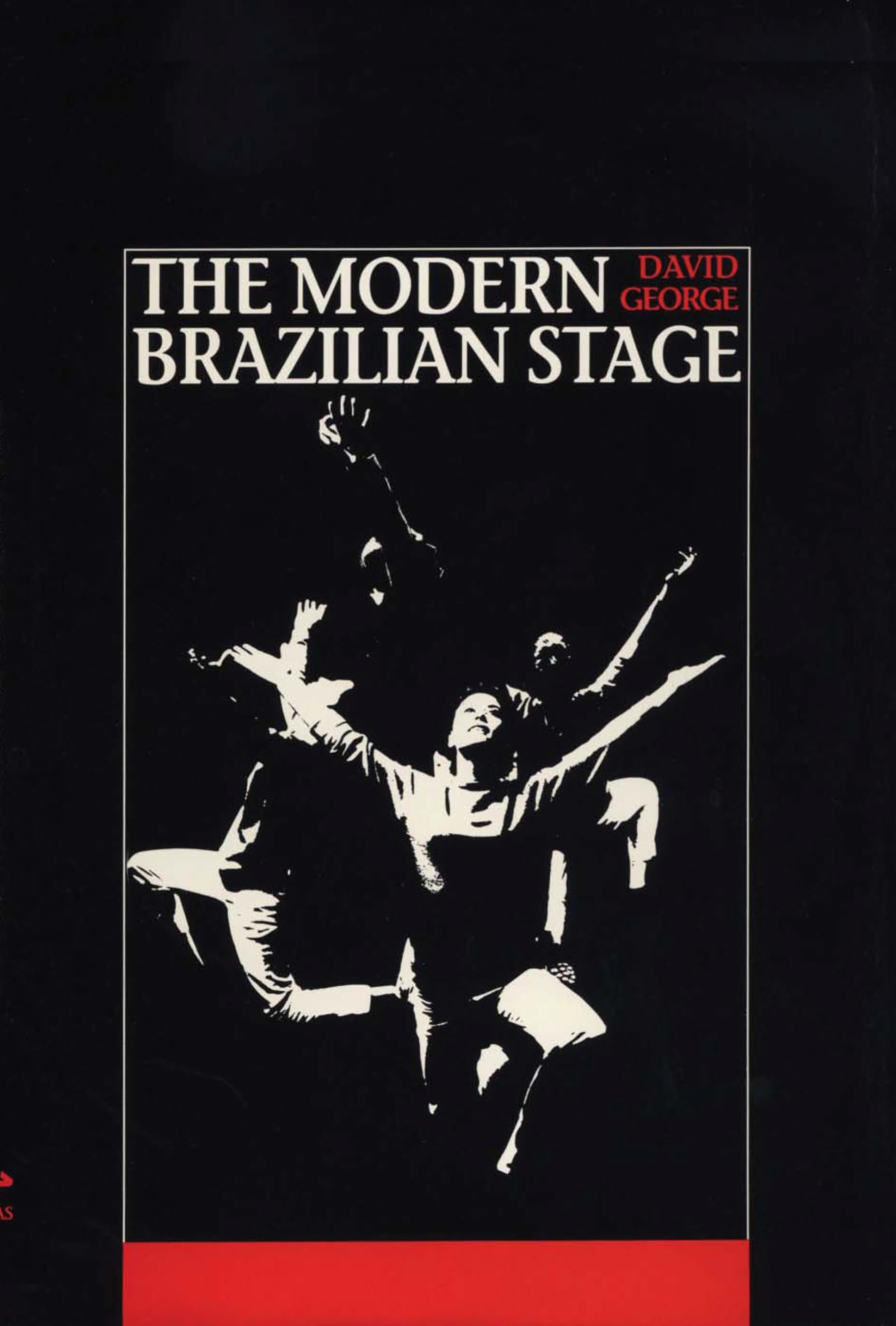
Reading a play and watching it performed onstage are quite different experiences. Likewise, studying a country's theatrical tradition with reference only to playtexts overlooks the vital impact of a play's performance on the audience and on the whole artistic community. In this performancecentered approach to Brazilian theatre since the 1940s, David George explores a total theatrical languagethe plays, the companies that produced them, and the performances that set a standard for all future stagings.George structures the discussion around several important companies. He begins with Os Comediantes, whose revolutionary 1943 staging of Nelson Rodrigues' Vestido de Noiva (Bridal Gown) broke with the outmoded comedyofmanners formula that had dominated the national stage since the nineteenth century. He considers three companies of the 1950s and 1960sTeatro Brasileiro de Comdia, Teatro de Arena, and Teatro Oficinaalong with the 1967 production of O Rei da Vela (The Candle King) by Teatro Oficina.The 1970s represented a wasteland for Brazilian theatre, George finds, in which a repressive military dictatorship muzzled artistic expression. The Grupo Macunama brought theatre alive again in the 1980s, with its productions of Macunama and Nelson 2 Rodrigues.Common to all theatrical companies, George concludes, was the desire to establish a national aesthetic, free from European and United States models. The creative tension this generated and the successes of modern Brazilian theatre make lively reading for all students of Brazilian and world drama.
⚠️ WARNING (California Proposition 65):
This product may contain chemicals known to the State of California to cause cancer,
birth defects, or other reproductive harm.
For MAP (Minimum Advertised Price) violations and Intellectual Property (IP) or Trademark concerns, please contact:
support@ergodebooks.com
⚠️ California Proposition 65 Warning: Some products sold on this website may expose you to chemicals known to the State of California to cause cancer, birth defects, or other reproductive harm. For more information, visit www.P65Warnings.ca.gov.