
Title
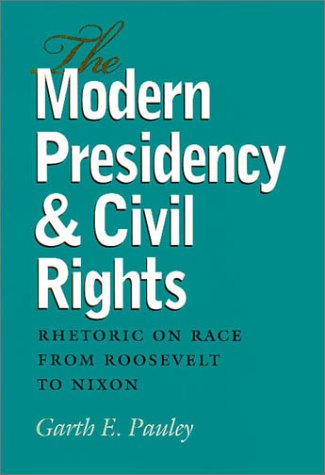
The Modern Presidency And Civil Rights: Rhetoric On Race From Roosevelt To Nixon (Volume 3) (Presidential Rhetoric And Political
Sold by Ergodebooks, an authorized reseller.
Returns accepted within 30 days | support@ergodebooks.com
Shipping Information
- Free Standard Shipping — United States only
- Processing Time: 3–5 business days
- Estimated Delivery: 6–10 business days after dispatch
- Double-boxed, fully insured & discreetly packaged
- Tracking number sent via email once dispatched
Returns & Refund
Returns accepted within 30 days of delivery.
Damaged or Defective Item
Free return shipping + replacement or full refund
Wrong Item Received
Free return shipping + replacement or full refund
Change of Mind
Return shipping at customer's expense · 25% restocking fee applies
Payment Option

Every President Since Franklin Roosevelt Has Confronted Civil Rights Issues During His Tenure In The White House, And Most Have Faced Intense Demands To Speak Publicly About The Nation'S Racial Problems And Possible Solutions. Indeed, Modern American Presidents Have Become A Major Focal Point For The Civil Rights Struggle.In The Modern Presidency And Civil Rights, Garth E. Pauley Examines Modern Presidents' Communicative And Symbolic Involvement In These Matters, Focusing On Four Crucial Speeches, The Circumstances Surrounding Them, And Their Effect On Public Attitudes And Policy.Pauley'S Perspective Is Both Historical And Critical. It Explores The Pattern Of Presidential Discourse On Race In The Modern Era And Considers The Promise And Limitations Of Presidential Talk With Regard To Civil Rights. The Four Significant Episodes Of American Presidential Speech Pauley Examines Are: Harry Truman'S Address Of June 29, 1947, To The Naacp; Dwight Eisenhower'S National Address On September 24, 1957, Following The Integration Crisis At Little Rock; John F. Kennedy'S Speech On June 11, 1963, Labeling Civil Rights As Primarily A Moral Issue; And Lyndon Johnson'S Voting Rights Message Of March 15, 1965. Historical Background Is Provided By A Discussion Of Roosevelt'S Racial Stance.Pauley'S Analysis Is Guided By Several Assumptions About The Presidency, Civil Rights, And Rhetoric, Beginning With The Assumption That Presidential Rhetoric Matters. Pauley Examines The Role Of Rhetoric In Leadership, Policy Making, And The Political Meanings And Interpretations That Form The Political Culture. Following In The Tradition Of His Discipline, Pauley Gives Both Close Analysis Of The Speech Text Itself And Consideration Of The Historical Situation Surrounding The Speech.
⚠️ WARNING (California Proposition 65):
This product may contain chemicals known to the State of California to cause cancer, birth defects, or other reproductive harm.
For more information, please visit www.P65Warnings.ca.gov.
- Q: What is the main focus of 'The Modern Presidency and Civil Rights'? A: The book examines modern presidents' communicative and symbolic involvement in civil rights issues, focusing on pivotal speeches and their impact on public attitudes and policy.
- Q: Who is the author of this book? A: The author is Garth E. Pauley, who explores the historical and critical aspects of presidential rhetoric concerning civil rights.
- Q: What significant speeches are analyzed in the book? A: The book analyzes speeches by Harry Truman, Dwight Eisenhower, John F. Kennedy, and Lyndon Johnson, highlighting their responses to civil rights challenges.
- Q: How many pages does the book have? A: The book contains 264 pages.
- Q: What type of binding does this book have? A: This book is available in hardcover binding.
- Q: Is this book in new or used condition? A: The book is listed as a used book in good condition.
- Q: When was 'The Modern Presidency and Civil Rights' published? A: The book was published on February 1, 2001.
- Q: What themes does the book cover regarding presidential rhetoric? A: It covers themes of leadership, policy making, and the political culture surrounding civil rights rhetoric.
- Q: Does the book provide historical context for the speeches discussed? A: Yes, the book includes historical background, particularly focusing on Roosevelt's racial stance to contextualize the speeches.
- Q: Who would benefit from reading this book? A: Students, historians, and anyone interested in political communication and civil rights will find this book particularly valuable.