
Title
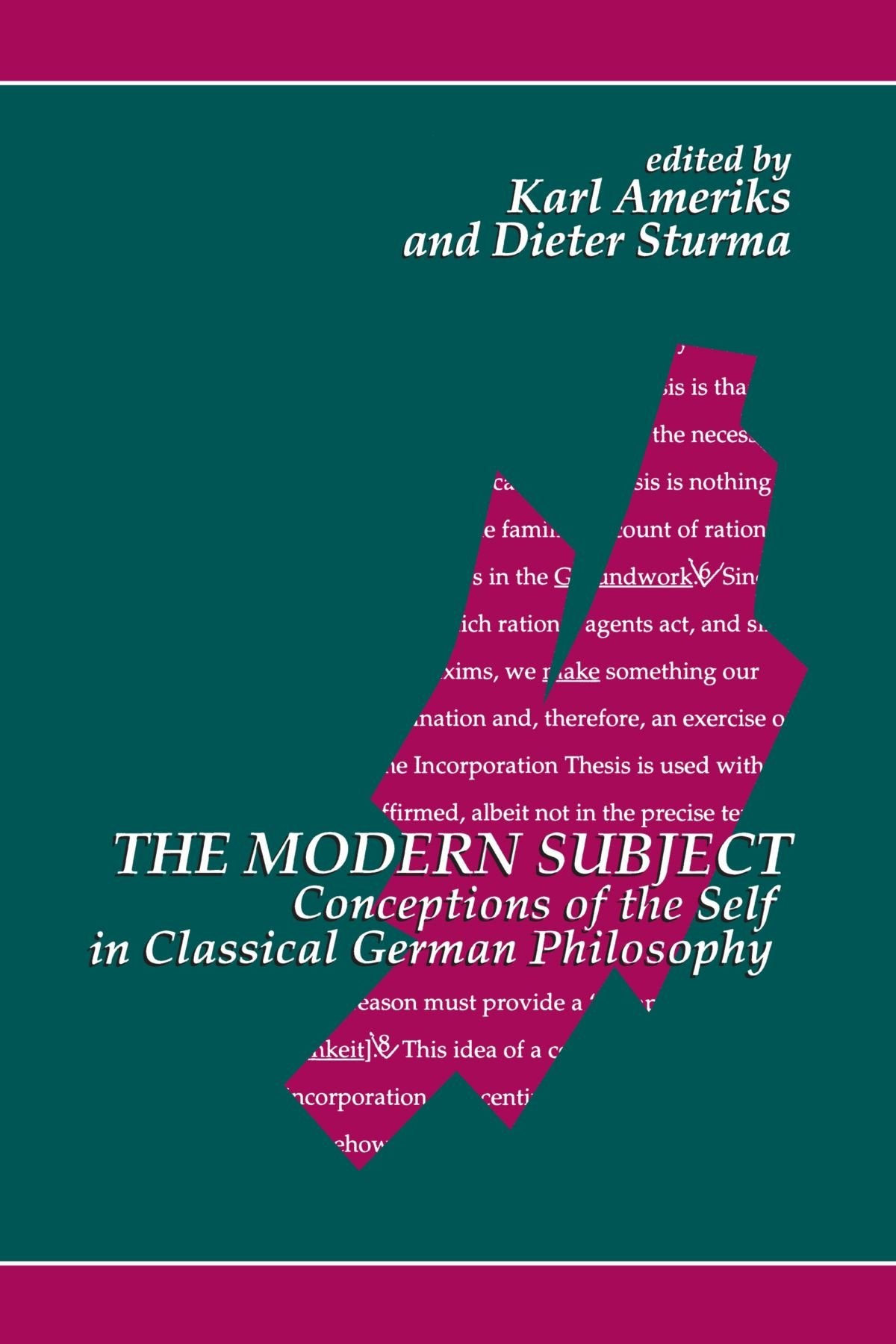
The Modern Subject: Conceptions of the Self in Classical German Philosophy (Suny Series in Contemporary Continental Philosophy),New
Sold by Ergodebooks, an authorized reseller.
Returns accepted within 30 days | support@ergodebooks.com
Shipping Information
- Free Standard Shipping — United States only
- Processing Time: 3–5 business days
- Estimated Delivery: 6–10 business days after dispatch
- Double-boxed, fully insured & discreetly packaged
- Tracking number sent via email once dispatched
Returns & Refund
Returns accepted within 30 days of delivery.
Damaged or Defective Item
Free return shipping + replacement or full refund
Wrong Item Received
Free return shipping + replacement or full refund
Change of Mind
Return shipping at customer's expense · 25% restocking fee applies
Payment Option

Provides a thorough background study of the postmodern assault on the standpoint of the subject as a foundation for philosophy, and assesses what remains today of the philosophy of subjectivity.'I very much like the way in which this work bridges the socalled 'continental' and 'analytic' traditions within philosophy, while at the same time calling attention to figures that deserve more attention in both traditions. It represents an important contribution to the historiography of the early postKantian era. Furthermore, it is not just another antiquarian study of some figures that might be of limited interest to historians of philosophy. Rather, it adds an interesting voice to the discussion of 'subjectivity' within the German and AngloAmerican contexts.' Manfred Kuehn, Purdue UniversityContemporary thought often claims the 'death of the subject,' and postmodernists typically contend that the standpoint of human subjectivity has been surpassed as a foundation for philosophy. A proper appreciation of these influential claims requires an understanding of the main tradition in which the standpoint of subjectivity was articulated, namely the classical philosophy of German Idealism. This book provides such an understanding.The authors assess what is dead and what is alive today in the philosophy of subjectivity, and offer the most thorough study available on the background of the postmodern assault on the primacy of the subject. Tracing this assault back to reactions to Kant, they elucidate the historical and systematic details of the development of the concept of the self in Classical philosophy from Kant to Fichte and Hegel. Manfred Frank, one of Europe's most prominent and prolific writers on neostructuralism, provides two major contributionsan account of the philosophical foundations of the reaction to Kant in early romanticism (especially Novalis), and a defense of the ineliminability of selfconsciousness against its critics in current analytic philosophy. Essays by other contributorsincluding Henry Allison, Robert Pippin, Daniel Breazeale, Guenter Zoeller, Ludwig Siep, Veronique Zanetti, and Georg Mohrrelate the concept of the self to topics such as freedom, teleology, modernity, and intersubjectivity.'To a remarkably consistent degree and at a level of argumentation that is uncommonly clear and trenchant, the articles combine historical erudition with a rich awareness of traditional interpretations. The general effort of the textto bring perspectives from a certain line of readings of subjectivity in German idealism (and romanticism) to bear on contemporary philosophy of mind in the analytic traditionis a success and makes for a very good read.' Daniel O. Dahlstrom, Catholic University of America
⚠️ WARNING (California Proposition 65):
This product may contain chemicals known to the State of California to cause cancer, birth defects, or other reproductive harm.
For more information, please visit www.P65Warnings.ca.gov.