
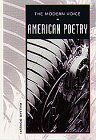
Title

The Modern Voice In American Poetry,Used
Sold by Ergodebooks, an authorized reseller.
Returns accepted within 30 days | support@ergodebooks.com
Shipping Information
- Free Standard Shipping — United States only
- Processing Time: 3–5 business days
- Estimated Delivery: 6–10 business days after dispatch
- Double-boxed, fully insured & discreetly packaged
- Tracking number sent via email once dispatched
Returns & Refund
Returns accepted within 30 days of delivery.
Damaged or Defective Item
Free return shipping + replacement or full refund
Wrong Item Received
Free return shipping + replacement or full refund
Change of Mind
Return shipping at customer's expense · 25% restocking fee applies
Payment Option

A substantial addition to our understanding of how American poets from Frost to Lowell achieved that remarkable range of voice that distinguishes modern poetry. It is a pleasure to read.'A. Walton Litz, Holmes Professor of Literature, Princeton University'Sophistication, popular critical wisdom has it, is not American. But Doreski makes us see that very sophistication as part of a twentiethcentury version of American literary selfassertion.'Times Literary Supplement'Doreski persuasively demonstrates how much poetry has changed since Wordsworth and Browning both in terms of form and also, perhaps more significantly, in terms of address and subject matter. . . . Offers many specific and detailed examples of how modern American poetry has extended the possibilities of the lyric poem even as it works within an increasingly autobiographical vocabulary.'Harvard ReviewProposing that modern American poetry requires 'limber criticism' informed but not straitjacketed by contemporary theory, William Doreski links the major American modernists to each other and to the larger social and cultural world. Concentrating on such poets as Robert Frost, Wallace Stevens, William Carlos Williams, Marianne Moore, T. S. Eliot, Ezra Pound, and Robert Lowell, he finds that many share a willingness to expandor even rejectthe boundaries of poetic language.William Doreski is professor of English at Keene State College in New Hampshire. He is the author of The Years of Our Friendship: Robert Lowell and Allen Tate and coauthor of How to Read and Interpret Poetry.
⚠️ WARNING (California Proposition 65):
This product may contain chemicals known to the State of California to cause cancer, birth defects, or other reproductive harm.
For more information, please visit www.P65Warnings.ca.gov.