
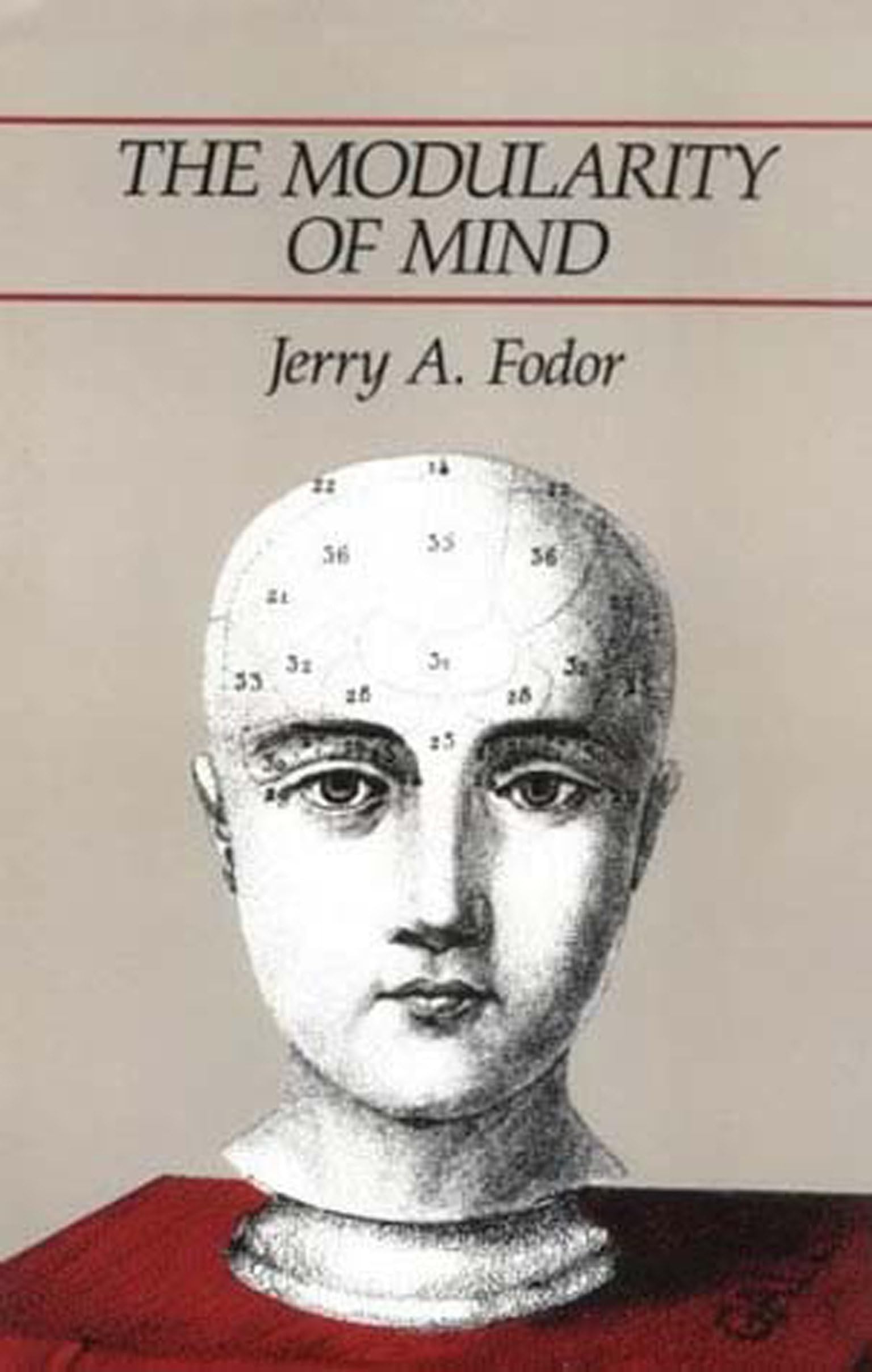
Title
The Modularity of Mind: An Essay on Faculty Psychology,Used
Sold by Ergodebooks, an authorized reseller.
Returns accepted within 30 days | support@ergodebooks.com
Shipping Information
- Free Standard Shipping — United States only
- Processing Time: 3–5 business days
- Estimated Delivery: 6–10 business days after dispatch
- Double-boxed, fully insured & discreetly packaged
- Tracking number sent via email once dispatched
Returns & Refund
Returns accepted within 30 days of delivery.
Damaged or Defective Item
Free return shipping + replacement or full refund
Wrong Item Received
Free return shipping + replacement or full refund
Change of Mind
Return shipping at customer's expense · 25% restocking fee applies
Payment Option

This study synthesizes current information from the various fields of cognitive science in support of a new and exciting theory of mind. Most psychologists study horizontal processes like memory and information flow; Fodor postulates a vertical and modular psychological organization underlying biologically coherent behaviors. This view of mental architecture is consistent with the historical tradition of faculty psychology while integrating a computational approach to mental processes. One of the most notable aspects of Fodor's work is that it articulates features not only of speculative cognitive architectures but also of current research in artificial intelligence.
⚠️ WARNING (California Proposition 65):
This product may contain chemicals known to the State of California to cause cancer, birth defects, or other reproductive harm.
For more information, please visit www.P65Warnings.ca.gov.
- Q: How many pages does this book have? A: This book has one hundred forty-five pages. It's a concise read that explores complex themes in cognitive science.
- Q: What is the binding type of this book? A: This book is published in paperback binding. This makes it lightweight and flexible for easy reading.
- Q: What are the dimensions of this book? A: The dimensions of this book are five point twenty-five inches by eight inches by zero point thirty-six inches. These measurements make it portable for on-the-go reading.
- Q: Who is the author of this book? A: The author of this book is Jerry A. Fodor. He is a prominent figure in cognitive science and philosophy.
- Q: What is the main subject of this book? A: The main subject of this book is cognitive psychology. It discusses theories related to mental architecture and modularity.
- Q: Is this book suitable for beginners in psychology? A: Yes, this book is suitable for beginners in psychology. It synthesizes various fields of cognitive science in an accessible manner.
- Q: Can I read this book if I have no background in cognitive science? A: Yes, you can read this book without a background in cognitive science. The author presents complex ideas in a way that is engaging and understandable.
- Q: What themes are explored in this book? A: This book explores themes of modularity and cognitive architecture in the mind. It also discusses the implications for artificial intelligence.
- Q: Is this book appropriate for academic study? A: Yes, this book is appropriate for academic study. It provides a synthesis of current research and theories in cognitive science.
- Q: How should I store this book to keep it in good condition? A: Store this book in a cool, dry place away from direct sunlight. This will help preserve the integrity of the paperback cover and pages.
- Q: Is this book safe for children to read? A: Yes, this book is safe for older children and young adults. However, it contains advanced concepts that may be challenging for younger readers.
- Q: How can I clean this book if it gets dirty? A: To clean this book, gently wipe the cover with a soft, dry cloth. Avoid using liquids, as they can damage the pages.
- Q: What if I receive a damaged copy of this book? A: If you receive a damaged copy of this book, you should contact the seller for a return or exchange. Most sellers will offer assistance for such issues.
- Q: Where is this book published? A: This book is published by MIT Press. It is part of their academic offerings in the field of psychology.
- Q: What makes this book stand out from other psychology books? A: This book stands out due to its unique synthesis of cognitive science and its theoretical exploration of modularity. It combines traditional ideas with modern research.
- Q: Can I use this book for a research project? A: Yes, you can use this book for a research project. It includes relevant theories and insights that are valuable for studying cognitive psychology.