
Title
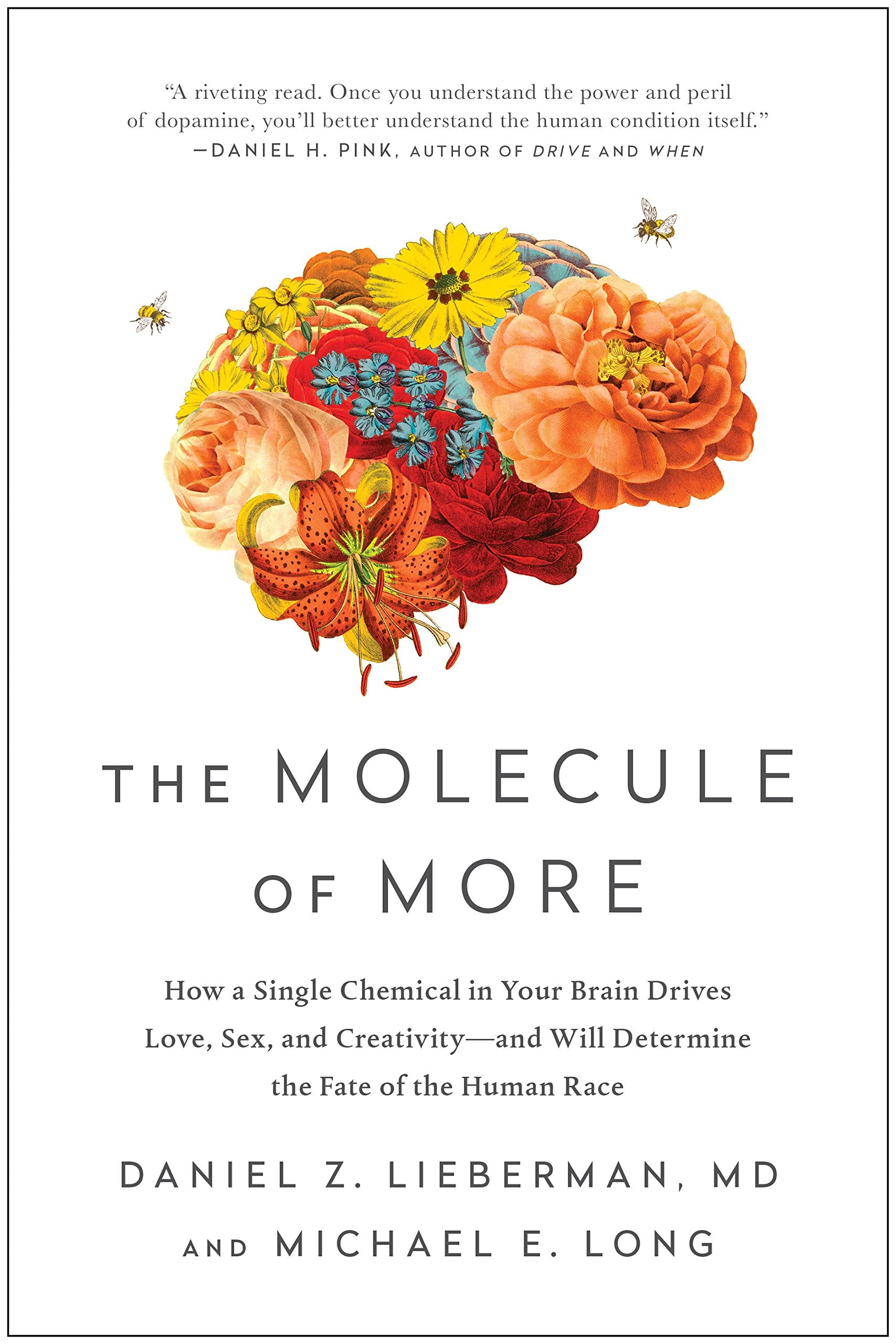
The Molecule of More: How a Single Chemical in Your Brain Drives Love, Sex, and Creativityand Will Determine the Fate of the Hu,Used
Sold by Ergodebooks, an authorized reseller.
Returns accepted within 30 days | support@ergodebooks.com
Shipping Information
- Free Standard Shipping — United States only
- Processing Time: 3–5 business days
- Estimated Delivery: 6–10 business days after dispatch
- Double-boxed, fully insured & discreetly packaged
- Tracking number sent via email once dispatched
Returns & Refund
Returns accepted within 30 days of delivery.
Damaged or Defective Item
Free return shipping + replacement or full refund
Wrong Item Received
Free return shipping + replacement or full refund
Change of Mind
Return shipping at customer's expense · 25% restocking fee applies
Payment Option

Winner of the Next Generation Indie AwardWhy are we obsessed with the things we want and bored when we get them?Why is addiction 'perfectly logical' to an addict?Why does love change so quickly from passion to indifference?Why are some people diehard liberals and others hardcore conservatives?Why are we always hopeful for solutions even in the darkest timesand so good at figuring them out?The answer is found in a single chemical in your brain: dopamine. Dopamine ensured the survival of early man. Thousands of years later, it is the source of our most basic behaviors and cultural ideasand progress itself.Dopamine is the chemical of desire that always asks for moremore stuff, more stimulation, and more surprises. In pursuit of these things, it is undeterred by emotion, fear, or morality. Dopamine is the source of our every urge, that little bit of biology that makes an ambitious business professional sacrifice everything in pursuit of success, or that drives a satisfied spouse to risk it all for the thrill of someone new. Simply put, it is why we seek and succeed; it is why we discover and prosper. Yet, at the same time, it's why we gamble and squander.From dopamine's point of view, it's not the having that matters. It's getting somethinganythingthat's new. From this understandingthe difference between possessing something versus anticipating itwe can understand in a revolutionary new way why we behave as we do in love, business, addiction, politics, religion and we can even predict those behaviors in ourselves and others.In The Molecule of More: How a Single Chemical in Your Brain Drives Love, Sex, and Creativityand will Determine the Fate of the Human Race, George Washington University professor and psychiatrist Daniel Z. Lieberman, MD, and Georgetown University lecturer Michael E. Long present a potentially lifechanging proposal: Much of human life has an unconsidered component that explains an array of behaviors previously thought to be unrelated, including why winners cheat, why geniuses often suffer with mental illness, why nearly all diets fail, and why the brains of liberals and conservatives really are different.
⚠️ WARNING (California Proposition 65):
This product may contain chemicals known to the State of California to cause cancer, birth defects, or other reproductive harm.
For more information, please visit www.P65Warnings.ca.gov.
- Q: What is the page count of 'The Molecule of More'? A: The book has two hundred forty pages. It provides an in-depth exploration of dopamine's impact on human behavior.
- Q: What are the dimensions of 'The Molecule of More'? A: The book measures six point twenty-six inches in length, one inch in width, and nine point twenty-two inches in height.
- Q: What type of binding does 'The Molecule of More' have? A: The book is bound in hardcover. This binding type offers durability and a premium reading experience.
- Q: Who is the author of 'The Molecule of More'? A: The book is authored by Daniel Z. Lieberman, MD, a professor at George Washington University, and Michael E. Long.
- Q: What is the genre of 'The Molecule of More'? A: The book falls under the genre of Cognitive Psychology. It delves into the psychological aspects of desire and behavior.
- Q: How do I read 'The Molecule of More'? A: You can read 'The Molecule of More' at your own pace. It’s suitable for anyone interested in understanding dopamine's influence on life.
- Q: Is 'The Molecule of More' suitable for beginners? A: Yes, the book is accessible for beginners. It presents complex ideas in a relatable manner, making it easy to understand.
- Q: What age group is 'The Molecule of More' appropriate for? A: The book is suitable for adults and young adults. It discusses themes that are relevant to mature audiences.
- Q: How should I store 'The Molecule of More'? A: Store the book in a cool, dry place, away from direct sunlight. This ensures the longevity of the book’s binding and pages.
- Q: Can I keep 'The Molecule of More' in a humid environment? A: No, it's not recommended to store the book in humid conditions. Moisture can damage the pages and binding.
- Q: What if 'The Molecule of More' arrives damaged? A: If the book arrives damaged, you should contact the seller for a return or replacement. Most sellers have policies for defective items.
- Q: Is there a return policy for 'The Molecule of More'? A: Yes, there is typically a return policy for the book. Check with the seller for specific return conditions and timelines.
- Q: How do I handle 'The Molecule of More' to avoid damage? A: Handle the book gently, avoiding bending the pages or spine. This will help maintain its condition over time.
- Q: Is 'The Molecule of More' comparable to other psychology books? A: Yes, it can be compared to other psychology books that explore human behavior. However, its unique focus on dopamine sets it apart.
- Q: What makes 'The Molecule of More' a good choice for readers? A: The book offers a novel perspective on human behavior through the lens of dopamine, making it a compelling read for many.
- Q: Does 'The Molecule of More' have any illustrations or charts? A: No, the book does not include illustrations or charts. It primarily consists of text-based content exploring psychological concepts.