
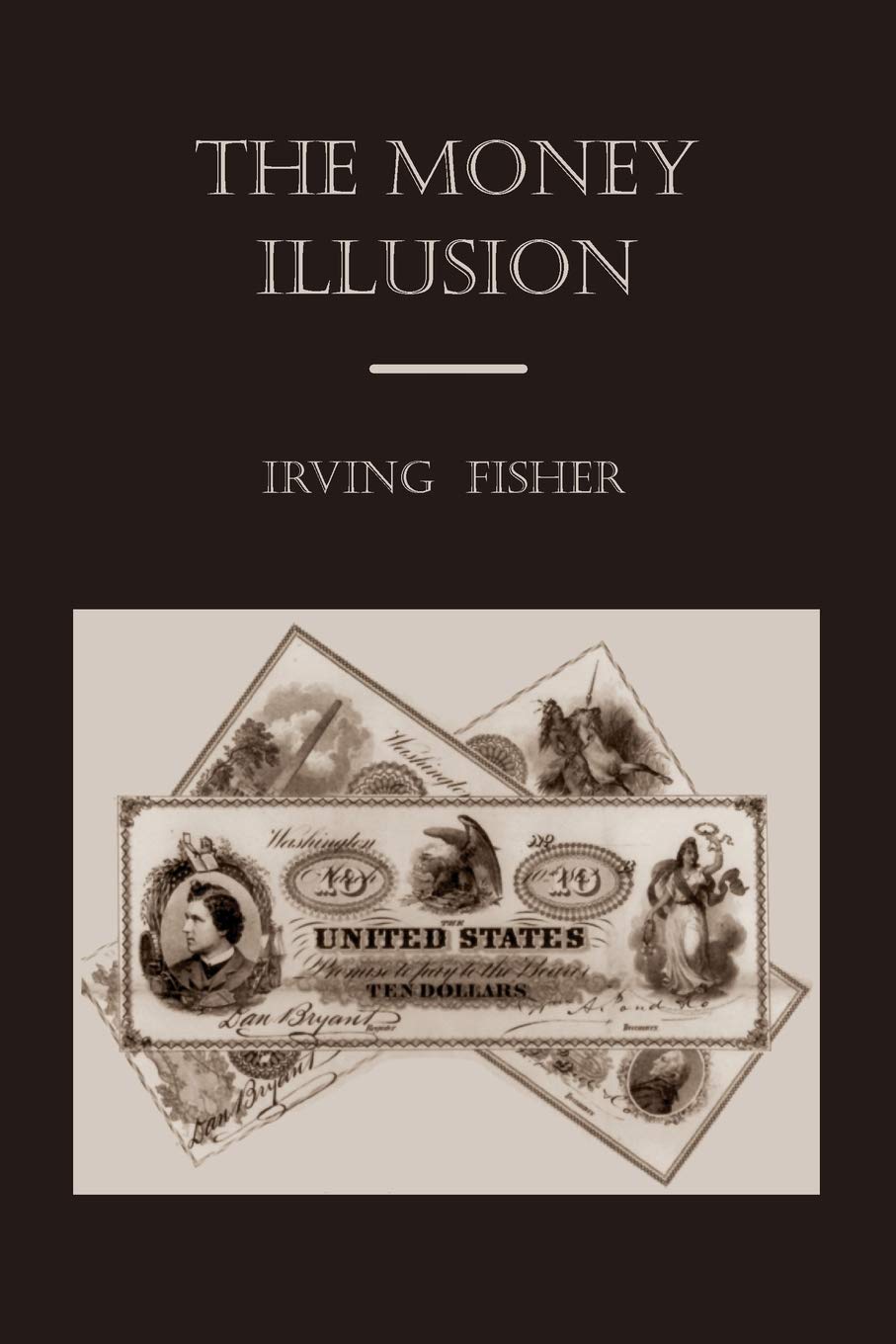
Title
The Money Illusion,New
Sold by Ergodebooks, an authorized reseller.
Returns accepted within 30 days | support@ergodebooks.com
Shipping Information
- Free Standard Shipping — United States only
- Processing Time: 3–5 business days
- Estimated Delivery: 6–10 business days after dispatch
- Double-boxed, fully insured & discreetly packaged
- Tracking number sent via email once dispatched
Returns & Refund
Returns accepted within 30 days of delivery.
Damaged or Defective Item
Free return shipping + replacement or full refund
Wrong Item Received
Free return shipping + replacement or full refund
Change of Mind
Return shipping at customer's expense · 25% restocking fee applies
Payment Option

2009 Reprint Of 1928 Edition. In Economics, Money Illusion Refers To The Tendency Of People To Think Of Currency In Nominal, Rather Than Real, Terms. This Is A Fallacy As Modern Fiat Currencies Have No Inherent Value And Their Real Value Is Derived From Their Ability To Be Exchanged For Goods And Used For Payment Of Taxes. The Term Was Coined By John Maynard Keynes In The Early Twentieth Century, And Irving Fisher 1928 Book, The Money Illusion, Is One Of The Most Important Works On The Subject.
⚠️ WARNING (California Proposition 65):
This product may contain chemicals known to the State of California to cause cancer, birth defects, or other reproductive harm.
For more information, please visit www.P65Warnings.ca.gov.
- Q: What is the page count of 'The Money Illusion'? A: This book contains two hundred sixty-two pages. It provides an in-depth exploration of the concept of money illusion in economics.
- Q: What are the dimensions of 'The Money Illusion'? A: The book measures six inches in length, zero point six seven inches in width, and nine point zero two inches in height. These dimensions make it a convenient size for reading.
- Q: What type of binding does 'The Money Illusion' have? A: This edition is paperback bound. Paperback binding makes it lightweight and portable for readers.
- Q: How should I read 'The Money Illusion'? A: You can read this book at your own pace, but it's best suited for those with an interest in economics. It can be beneficial for anyone looking to understand monetary policy.
- Q: Is 'The Money Illusion' suitable for beginners in economics? A: Yes, this book is accessible for beginners. It provides foundational knowledge about money and its psychological effects.
- Q: What age group is 'The Money Illusion' appropriate for? A: This book is suitable for adults and older teens interested in economic theory. It contains complex ideas that may not be suitable for younger readers.
- Q: How should I store 'The Money Illusion' to keep it in good condition? A: Store this book in a cool, dry place away from direct sunlight. Keeping it upright on a shelf can also help maintain its shape.
- Q: Can I clean 'The Money Illusion' if it gets dirty? A: Yes, you can gently wipe the cover with a dry cloth. Avoid using water or cleaning solutions to prevent damage to the pages.
- Q: Does 'The Money Illusion' contain any adult content? A: No, this book does not contain adult content. It focuses on economic theories and concepts.
- Q: What is the return policy for 'The Money Illusion'? A: Typically, books can be returned within thirty days if they are in new condition. Check the specific retailer's return policy for details.
- Q: What if 'The Money Illusion' arrives damaged? A: If the book arrives damaged, you should contact the retailer for a replacement or refund. Most sellers have policies in place for damaged items.
- Q: Is 'The Money Illusion' a good resource for understanding inflation? A: Yes, it discusses the relationship between money illusion and inflation. Understanding these concepts can enhance your economic knowledge.
- Q: How does 'The Money Illusion' compare to other economic texts? A: This book is unique in its focus on psychological aspects of money, unlike many textbooks that emphasize mathematical models. It offers qualitative insights into monetary policy.
- Q: Is there a summary of the main themes in 'The Money Illusion'? A: Yes, the book explores themes of perception versus reality in monetary value and the psychological impacts of inflation on individuals.
- Q: Who is the author of 'The Money Illusion'? A: The author is Irving Fisher, a prominent economist known for his theories on money and interest rates. His work remains influential in economic thought.