
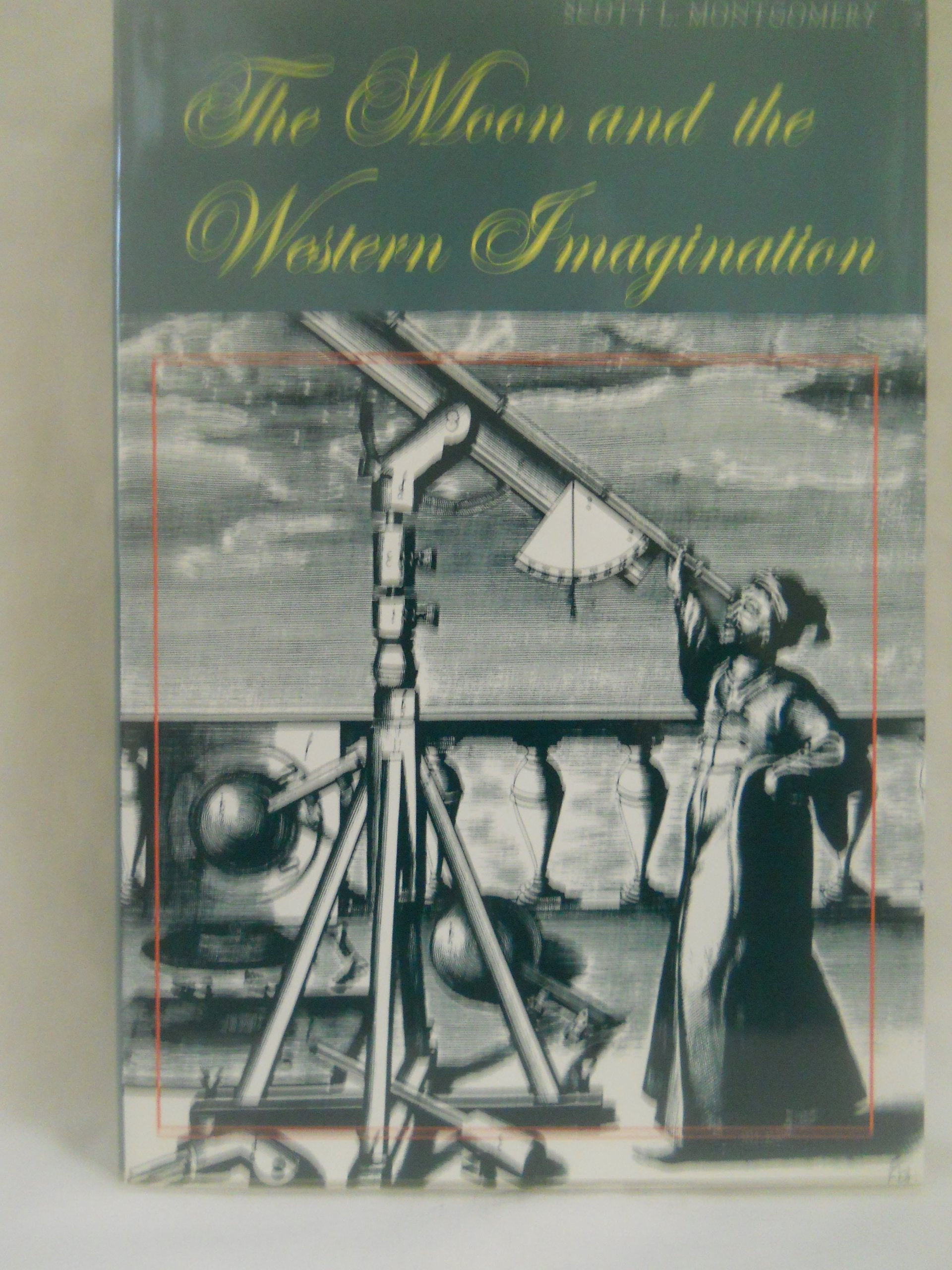
Title
The Moon And The Western Imagination
Sold by Ergodebooks, an authorized reseller.
Returns accepted within 30 days | support@ergodebooks.com
Shipping Information
- Free Standard Shipping — United States only
- Processing Time: 3–5 business days
- Estimated Delivery: 6–10 business days after dispatch
- Double-boxed, fully insured & discreetly packaged
- Tracking number sent via email once dispatched
Returns & Refund
Returns accepted within 30 days of delivery.
Damaged or Defective Item
Free return shipping + replacement or full refund
Wrong Item Received
Free return shipping + replacement or full refund
Change of Mind
Return shipping at customer's expense · 25% restocking fee applies
Payment Option

The Moon Is At Once A Face With A Thousand Expressions And The Archetypal Planet. Throughout History It Has Been Gazed Upon By People Of Every Culture In Every Walk Of Life. From Early Perceptions Of The Moon As An Abode Of Divine Forces, Humanity Has In Turn Accepted The Mathematized Moon Of The Greeks, The Naturalistic Lunar Portrait Of Jan Van Eyck, And The Telescopic View Of Galileo.Scott Montgomery Has Produced A Richly Detailed Analysis Of How The Moon Has Been Visualized In Western Culture Through The Ages, Revealing The Faces It Has Presented To Philosophers, Writers, Artists, And Scientists For Nearly Three Millennia. To Do This, He Has Drawn On A Wide Array Of Sources That Illustrate Mankind'S Changing Concept Of The Nature And Significance Of Heavenly Bodies From Classical Antiquity To The Dawn Of Modern Science.Montgomery Especially Focuses On The Seventeenth Century, When The Moon Was First Mapped And Its Features Named. From Literary Explorations Such As Francis Godwin'S Man In The Moone And Cyrano De Bergerac'S L'Autre Monde To Michael Van Langren'S Textual Lunar Map And Giambattista Riccioli'S Almagestum Novum, He Shows How Renaissance Man Was Moved By The Lunar Orb, How He Battled To Claim Its Surface, And How He In Turn Elevated The Moon To A New Level In Human Awareness.The Effect On Human Imagination Has Been Cumulative: Our Idea Of The Moon, And Therefore The Planets, Is Multilayered And Complex, Having Been Enriched By Associations Played Out In Increasingly Complicated Harmonies Over Time. We Have Shifted The Way We Think About The Lunar Face From A Perfect Body To An Earthlike One, With Corresponding Changes In Verbal And Visual Expression.Ultimately, Montgomery Suggests, Our Concept Of The Moon Has Never Wandered Too Far From The World We Know Bestthe Earth Itself. And When We Finally Establish Lunar Bases And Take Up Some Form Of Residence On The Moon'S Surface, We Will Not Be Conquering A New World, Fresh And Mostly Unknown, But A Much Older One, Ripe With History.
⚠️ WARNING (California Proposition 65):
This product may contain chemicals known to the State of California to cause cancer, birth defects, or other reproductive harm.
For more information, please visit www.P65Warnings.ca.gov.
- Q: What is the page count of 'The Moon and the Western Imagination'? A: This book has two hundred sixty-four pages. It offers a detailed analysis of lunar perceptions in Western culture.
- Q: What are the dimensions of this book? A: The book measures six inches in length, eleven inches in width, and nine point zero two inches in height. These dimensions make it a substantial hardcover volume.
- Q: What type of binding does this book have? A: The book is bound in hardcover. This type of binding is durable and suitable for long-term use.
- Q: How should I read 'The Moon and the Western Imagination'? A: You can read this book at your own pace, as it is suitable for general audiences. It is especially engaging for those interested in history and astronomy.
- Q: Is this book suitable for academic study? A: Yes, this book is suitable for academic study. It provides in-depth analysis and references that support scholarly research.
- Q: Can this book be used in a classroom setting? A: Yes, this book can be effectively used in a classroom setting. It is a valuable resource for discussions on cultural history and science.
- Q: How do I keep this book in good condition? A: To keep this book in good condition, store it upright and away from direct sunlight. Avoid exposing it to moisture to prevent damage.
- Q: Is there a specific way to clean this book? A: Yes, to clean this book, gently dust the cover with a dry cloth. Avoid using liquids or cleaners that could stain the pages.
- Q: What is the recommended storage method for this book? A: Store this book in a cool, dry place on a shelf. This helps prevent warping and other damage over time.
- Q: How does this book compare to other historical studies? A: This book offers a unique perspective on the Moon's representation in Western culture, unlike other historical studies that may focus solely on terrestrial events.
- Q: Is this book better for beginners or advanced readers? A: This book is suitable for both beginners and advanced readers. It balances detailed analysis with accessible language.
- Q: How does this book address the Moon's cultural significance? A: The book explores the Moon's cultural significance through various historical lenses, making connections between literature, art, and science.
- Q: What should I do if the book arrives damaged? A: If the book arrives damaged, contact the seller for a return or replacement. Most sellers have policies in place to address such issues.
- Q: Is there a warranty with this book purchase? A: Typically, there is no warranty with book purchases. However, check the seller's return policy for specific details.
- Q: What if I receive the wrong book? A: If you receive the wrong book, reach out to the seller immediately to resolve the issue. They can guide you on how to return it.
- Q: Can I find more works by Scott Montgomery? A: Yes, Scott Montgomery has authored several works on science and culture. You can search for his other publications for more insights.