
Title
The Moral Authority of Government,Used
Sold by Ergodebooks, an authorized reseller.
Returns accepted within 30 days | support@ergodebooks.com
Shipping Information
- Free Standard Shipping — United States only
- Processing Time: 3–5 business days
- Estimated Delivery: 6–10 business days after dispatch
- Double-boxed, fully insured & discreetly packaged
- Tracking number sent via email once dispatched
Returns & Refund
Returns accepted within 30 days of delivery.
Damaged or Defective Item
Free return shipping + replacement or full refund
Wrong Item Received
Free return shipping + replacement or full refund
Change of Mind
Return shipping at customer's expense · 25% restocking fee applies
Payment Option

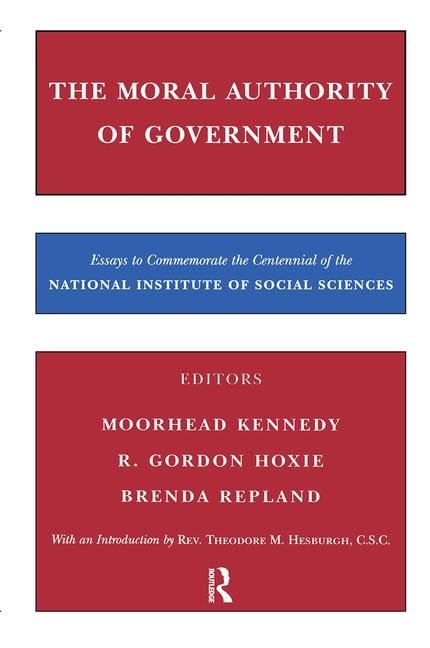
These new essays prepared to commemorate the centennial of the National Institute of Social Sciences have been carefully crafted to deal with an overriding concern of our timethose elements in political rule that go beyond legal rights and responsibilities into the moral requirements of effective governance. The principal theme of this book is presidential leadership. The presidency personifies government authority, including moral authority.In the first part of this book most of the essays argue that the moral authority of leaders depends on high personal standards as well as policy outcomes. The second segment on the rule of law and character raises considerations not limited to the presidency. Character and the authority that derives from it are demonstrated most effectively not by what someone does in his or her personal life, but in the moral values of the causes espoused and effectiveness in pursuing them. In the realm of international affairs, governmental leadership must wrestle with the moral and constitutional guidelines known as "reasons of state." Under what circumstances is it morally acceptable for a leader or government to practice deception upon the citizenry, to overthrow other governments, to bomb civilians?Many contributors raise the issue of what permits a government to take actions that would be immoral or illegal in individuals or groups. The final segment expands and deepens this theme by exploring the work and role of nongovernmental agencies that influence both leaders and citizens in the public arena. In short, at a period that brings to a close a period in which the presidency has become more visible as well as more prominent, this collective effort sheds new light on classic themes. It will be an invaluable guide as we enter the new century.The contributors include an illustrious galaxy of public officials and political scientists, including Madeleine K. Albright, Judith A. Best, Betty Glad, C. Lowell Harriss, Travis Beal Jacobs, Ruth P. Morgan, Stanley A. Renshon, Donald L. Robinson and William vanden Heuvel.
⚠️ WARNING (California Proposition 65):
This product may contain chemicals known to the State of California to cause cancer, birth defects, or other reproductive harm.
For more information, please visit www.P65Warnings.ca.gov.