
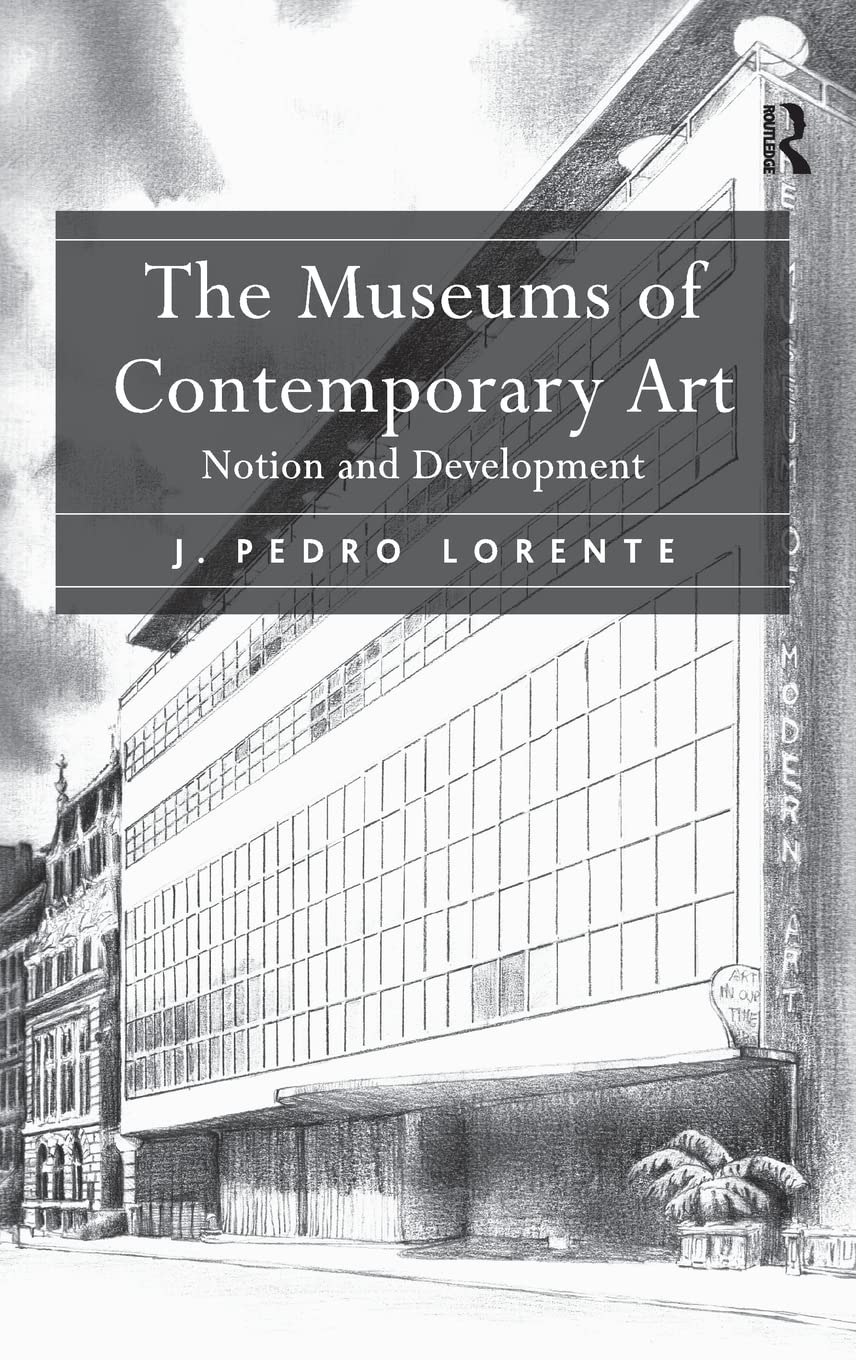
Title
The Museums of Contemporary Art: Notion and Development,Used
Sold by Ergodebooks, an authorized reseller.
Returns accepted within 30 days | support@ergodebooks.com
Shipping Information
- Free Standard Shipping — United States only
- Processing Time: 3–5 business days
- Estimated Delivery: 6–10 business days after dispatch
- Double-boxed, fully insured & discreetly packaged
- Tracking number sent via email once dispatched
Returns & Refund
Returns accepted within 30 days of delivery.
Damaged or Defective Item
Free return shipping + replacement or full refund
Wrong Item Received
Free return shipping + replacement or full refund
Change of Mind
Return shipping at customer's expense · 25% restocking fee applies
Payment Option

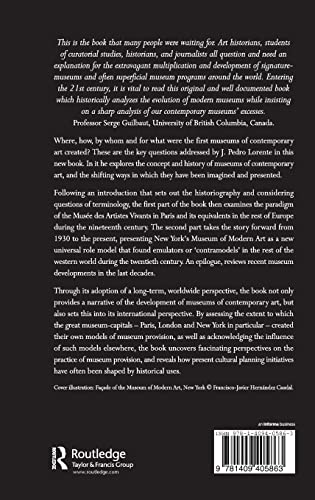
Where, how, by whom and for what were the first museums of contemporary art created? These are the key questions addressed by J. Pedro Lorente in this new book. In it he explores the concept and history of museums of contemporary art, and the shifting ways in which they have been imagined and presented. Following an introduction that sets out the historiography and considering questions of terminology, the first part of the book then examines the paradigm of the Muse des Artistes Vivants in Paris and its equivalents in the rest of Europe during the nineteenth century. The second part takes the story forward from 1930 to the present, presenting New York's Museum of Modern Art as a new universal role model that found emulators or 'contramodels' in the rest of the Western world during the twentieth century. An epilogue, reviews recent museum developments in the last decades. Through its adoption of a longterm, worldwide perspective, the book not only provides a narrative of the development of museums of contemporary art, but also sets this into its international perspective. By assessing the extent to which the great museumcapitals Paris, London and New York in particular created their own models of museum provision, as well as acknowledging the influence of such models elsewhere, the book uncovers fascinating perspectives on the practice of museum provision, and reveals how present cultural planning initiatives have often been shaped by historical uses.
⚠️ WARNING (California Proposition 65):
This product may contain chemicals known to the State of California to cause cancer, birth defects, or other reproductive harm.
For more information, please visit www.P65Warnings.ca.gov.