
Title
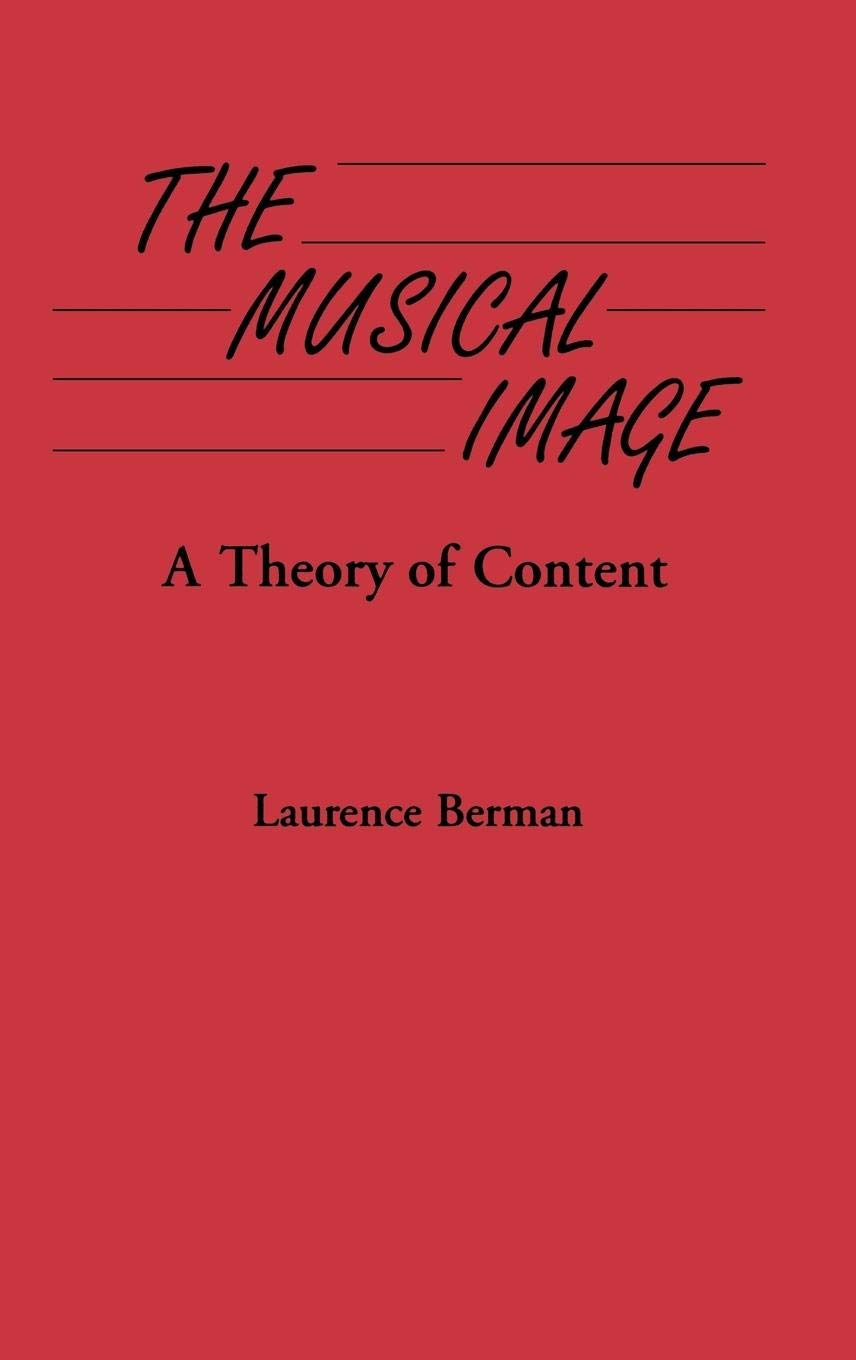
The Musical Image: A Theory of Content (Contributions to the Study of Music and Dance),New
Sold by Ergodebooks, an authorized reseller.
Returns accepted within 30 days | support@ergodebooks.com
Shipping Information
- Free Standard Shipping — United States only
- Processing Time: 3–5 business days
- Estimated Delivery: 6–10 business days after dispatch
- Double-boxed, fully insured & discreetly packaged
- Tracking number sent via email once dispatched
Returns & Refund
Returns accepted within 30 days of delivery.
Damaged or Defective Item
Free return shipping + replacement or full refund
Wrong Item Received
Free return shipping + replacement or full refund
Change of Mind
Return shipping at customer's expense · 25% restocking fee applies
Payment Option

A musical phrase, or, for that matter, a musical unit of any size or shape, becomes an image whenever we imagine it to be invested with a content whose origins lie outside music. Such a content, according to the theory developed here, constitutes the image's conventional significance; it accounts for whatever strikes us about the image as having a common and familiar ring. That being so, the origins in question must be coincident with the fundamental ideasthe archetypesthat have been traditionally represented as underlying and unifying Western culture. As the theoretical constructs they are, arehctypes are never encountered directly. It is in the form of their local variants that we make contact with the archetypes, and it is at this local level that the present book sets its sights: style, the typical or shared element in the musical imagery of a time and place, is studies as a function of Zeitgeist, the complex of beliefs, values, and ideals of a community. The approach is both thematic and historical, in keeping with a key objective of archetypal criticism.Far from repudiating the popular notion that music expresses the human emotions, this study attempts to recast emotion theory by examining musical images for kinds of behavior from which we may infer not only emotion (pathos, effectus) but also personality (ethos). Ethical and affective distinctions are very sharply drawn, in an effort to clarify and widen the vocabulary of musical commentary, as well as to provide cultural and historical backing for contents long considered the cliches of musical expression.
⚠️ WARNING (California Proposition 65):
This product may contain chemicals known to the State of California to cause cancer, birth defects, or other reproductive harm.
For more information, please visit www.P65Warnings.ca.gov.