
Title
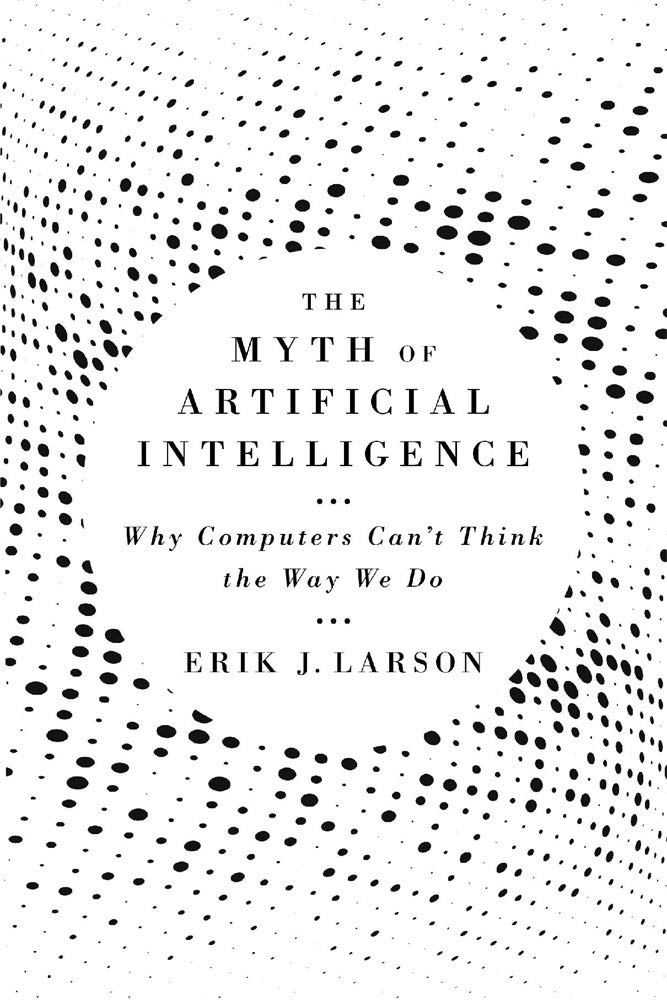
The Myth Of Artificial Intelligence: Why Computers Cant Think The Way We Do
Sold by Ergodebooks, an authorized reseller.
Returns accepted within 30 days | support@ergodebooks.com
Shipping Information
- Free Standard Shipping — United States only
- Processing Time: 3–5 business days
- Estimated Delivery: 6–10 business days after dispatch
- Double-boxed, fully insured & discreetly packaged
- Tracking number sent via email once dispatched
Returns & Refund
Returns accepted within 30 days of delivery.
Damaged or Defective Item
Free return shipping + replacement or full refund
Wrong Item Received
Free return shipping + replacement or full refund
Change of Mind
Return shipping at customer's expense · 25% restocking fee applies
Payment Option

If You Want To Know About Ai, Read This Bookit Shows How A Supposedly Futuristic Reverence For Artificial Intelligence Retards Progress When It Denigrates Our Most Irreplaceable Resource For Any Future Progress: Our Own Human Intelligence.Peter Thiela Cuttingedge Ai Researcher And Tech Entrepreneur Debunks The Fantasy That Superintelligence Is Just A Few Clicks Awayand Argues That This Myth Is Not Just Wrong, Its Actively Blocking Innovation And Distorting Our Ability To Make The Crucial Next Leap.Futurists Insist That Ai Will Soon Eclipse The Capacities Of The Most Gifted Human Mind. What Hope Do We Have Against Superintelligent Machines? But We Arent Really On The Path To Developing Intelligent Machines. In Fact, We Dont Even Know Where That Path Might Be.A Tech Entrepreneur And Pioneering Research Scientist Working At The Forefront Of Natural Language Processing, Erik Larson Takes Us On A Tour Of The Landscape Of Ai To Show How Far We Are From Superintelligence, And What It Would Take To Get There. Ever Since Alan Turing, Ai Enthusiasts Have Equated Artificial Intelligence With Human Intelligence. This Is A Profound Mistake. Ai Works On Inductive Reasoning, Crunching Data Sets To Predict Outcomes. But Humans Dont Correlate Data Sets: We Make Conjectures Informed By Context And Experience. Human Intelligence Is A Web Of Best Guesses, Given What We Know About The World. We Havent A Clue How To Program This Kind Of Intuitive Reasoning, Known As Abduction. Yet It Is The Heart Of Common Sense. Thats Why Alexa Cant Understand What You Are Asking, And Why Ai Can Only Take Us So Far.Larson Argues That Ai Hype Is Both Bad Science And Bad For Science. A Culture Of Invention Thrives On Exploring Unknowns, Not Overselling Existing Methods. Inductive Ai Will Continue To Improve At Narrow Tasks, But If We Want To Make Real Progress, We Will Need To Start By More Fully Appreciating The Only True Intelligence We Knowour Own.
⚠️ WARNING (California Proposition 65):
This product may contain chemicals known to the State of California to cause cancer, birth defects, or other reproductive harm.
For more information, please visit www.P65Warnings.ca.gov.
- Q: How many pages does this book have? A: This book has three hundred twenty pages. It offers an in-depth exploration of artificial intelligence and its limitations.
- Q: What is the binding type of this book? A: The binding type is hardcover. This makes it durable for long-term use and enhances its aesthetic appeal.
- Q: What are the dimensions of this book? A: The dimensions are five point seven five inches in length, one point two six inches in width, and eight point seven five inches in height. These dimensions make it a convenient size for reading.
- Q: Who is the author of this book? A: The author is Erik J. Larson. He is a tech entrepreneur and pioneering research scientist in artificial intelligence.
- Q: What genre does this book belong to? A: This book falls under the genre of Intelligence and Semantics. It focuses on the philosophical and practical aspects of AI.
- Q: What is the main theme of this book? A: The main theme is the critique of the myth that artificial intelligence will soon surpass human intelligence. It emphasizes the importance of human reasoning.
- Q: Is this book suitable for beginners in AI? A: Yes, this book is suitable for beginners. It provides accessible insights into the misconceptions surrounding artificial intelligence.
- Q: Can this book be used as a textbook for AI studies? A: Yes, this book can be used as a supplementary textbook. It offers critical perspectives that are useful for understanding AI's limitations.
- Q: What age group is this book appropriate for? A: This book is appropriate for adults and mature teens. It discusses complex ideas that require a certain level of understanding.
- Q: How should I store this book? A: Store this book in a cool, dry place, upright on a shelf. This helps maintain its physical condition and prevents damage.
- Q: What should I do if the book arrives damaged? A: If the book arrives damaged, contact the seller for a return or exchange. Most sellers have policies in place for damaged items.
- Q: Is this book safe for young readers? A: No, this book is not specifically designed for young readers. It covers advanced topics in AI that may not be suitable for children.
- Q: How do I clean this book if it gets dirty? A: To clean this book, gently wipe the cover with a soft, dry cloth. Avoid using water or cleaning solutions on the pages.
- Q: Can I return this book if I don't like it? A: Yes, most sellers offer a return policy if you're unsatisfied. Check the specific return terms when purchasing.
- Q: Does this book include any illustrations? A: No, this book does not include illustrations. It focuses on text to convey its ideas about artificial intelligence.
- Q: Is there a digital version of this book available? A: Yes, a digital version may be available. Check online platforms for eBook options if you prefer digital reading.