
Title
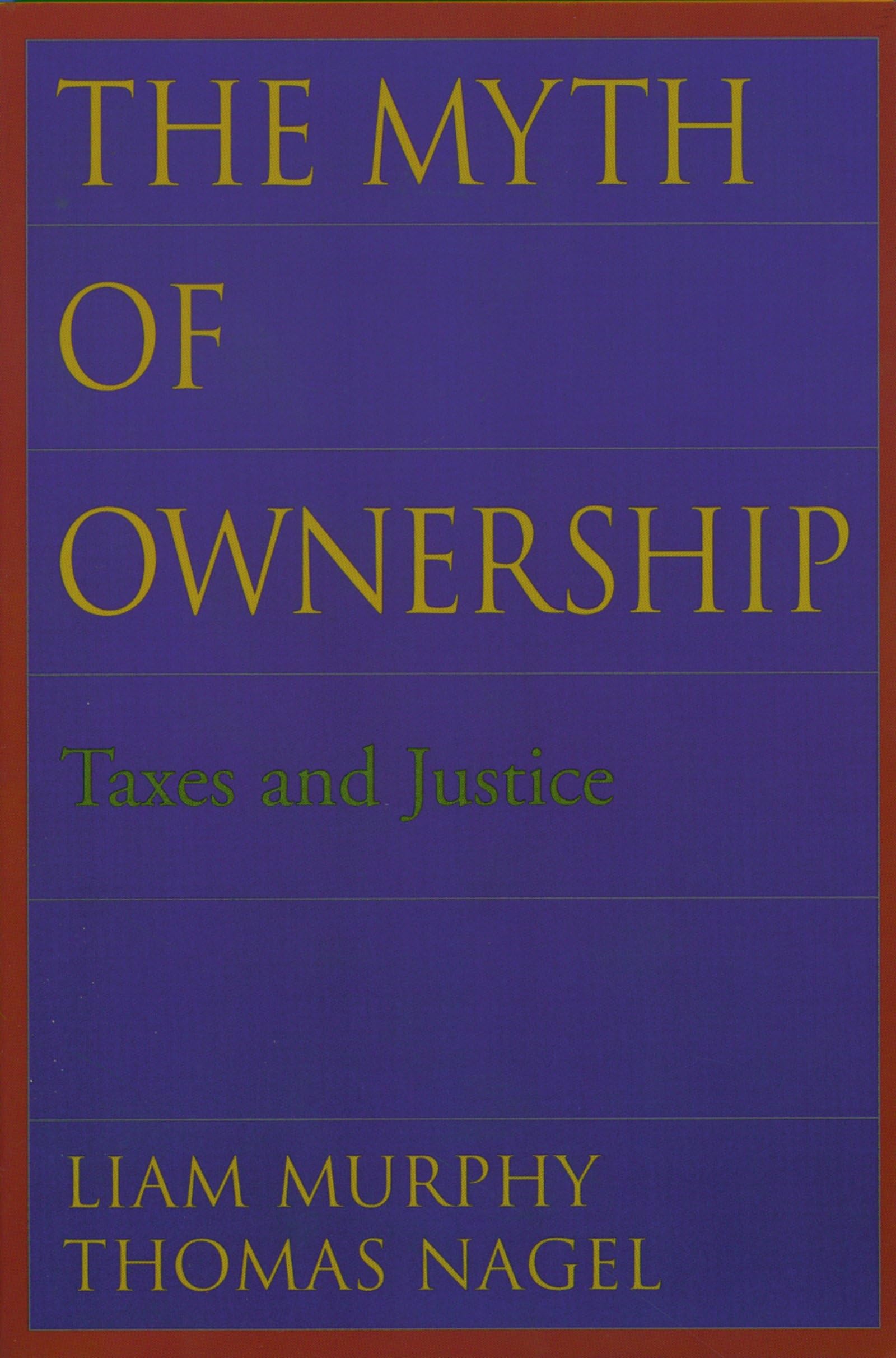
The Myth Of Ownership: Taxes And Justice,New
Processing time: 1-3 days
US Orders Ships in: 3-5 days
International Orders Ships in: 8-12 days
Return Policy: 15-days return on defective items
Payment Option

In A Capitalist Economy, Taxes Are The Most Important Instrument By Which The Political System Puts Into Practice A Conception Of Economic And Distributive Justice. Taxes Arouse Strong Passions, Fueled Not Only By Conflicts Of Economic Selfinterest, But By Conflicting Ideas Of Fairness. Taking As A Guiding Principle The Conventional Nature Of Private Property, Murphy And Nagel Show How Taxes Can Only Be Evaluated As Part Of The Overall System Of Property Rights That They Help To Create. Justice Or Injustice In Taxation, They Argue, Can Only Mean Justice Or Injustice In The System Of Property Rights And Entitlements That Result From A Particular Regime. Taking Up Ethical Issues About Individual Liberty, Interpersonal Obligation, And Both Collective And Personal Responsibility, Murphy And Nagel Force Us To Reconsider How Our Tax Policy Shapes Our System Of Property Rights.
⚠️ WARNING (California Proposition 65):
This product may contain chemicals known to the State of California to cause cancer, birth defects, or other reproductive harm.
For more information, please visit www.P65Warnings.ca.gov.
- Q: What is the page count of 'The Myth of Ownership: Taxes and Justice'? A: This book has two hundred forty pages. It provides an in-depth exploration of taxes, justice, and property rights.
- Q: What are the dimensions of this book? A: The dimensions are eight point fifteen inches in length, zero point seventy-five inches in width, and six point forty-six inches in height. These measurements make it a manageable size for reading.
- Q: What type of binding does this book have? A: This book is a paperback edition. Paperback bindings are flexible and lightweight, making them easy to carry.
- Q: Who is the author of this book? A: The author is Liam Murphy. He is known for his work in philosophy and economics, offering insights into justice and taxation.
- Q: What is the main theme of 'The Myth of Ownership'? A: The main theme is the relationship between taxes and justice in a capitalist economy. It challenges conventional beliefs about property rights.
- Q: Is this book suitable for beginners in economics? A: Yes, it is suitable for beginners. The book presents complex ideas in an accessible manner for those new to economic theories.
- Q: How can I apply the concepts from this book? A: You can apply the concepts by examining current tax policies and their impact on property rights. The book encourages critical thinking about justice in taxation.
- Q: Is there a specific audience for this book? A: This book is targeted towards students, educators, and anyone interested in economics and social justice. It appeals to readers seeking a deeper understanding of tax policy.
- Q: How should I store this book to keep it in good condition? A: Store it upright on a shelf away from direct sunlight. This helps prevent fading and keeps the pages from becoming warped.
- Q: Can I clean this book if it gets dirty? A: Yes, you can clean it gently. Use a dry cloth to wipe the cover without getting the pages wet to avoid damage.
- Q: What if I receive a damaged copy of the book? A: If you receive a damaged copy, you should contact the seller for a return or exchange. Most retailers have policies in place for such issues.
- Q: Is this book available in other formats? A: Yes, it may be available in digital formats. Check with retailers for options like e-books or audiobooks.
- Q: Does this book discuss ethical issues related to taxation? A: Yes, it discusses ethical issues such as individual liberty and collective responsibility in relation to taxation. These themes are central to its arguments.
- Q: What makes this book unique in its field? A: Its unique perspective lies in connecting taxation with broader concepts of justice and property rights. It encourages readers to rethink conventional tax policies.
- Q: Is there a glossary or index in this book? A: Yes, it typically includes an index. This feature helps readers easily locate specific topics discussed throughout the book.
- Q: Does the book provide practical examples of tax justice? A: Yes, it includes various examples and case studies to illustrate the principles of tax justice in real-world scenarios.