
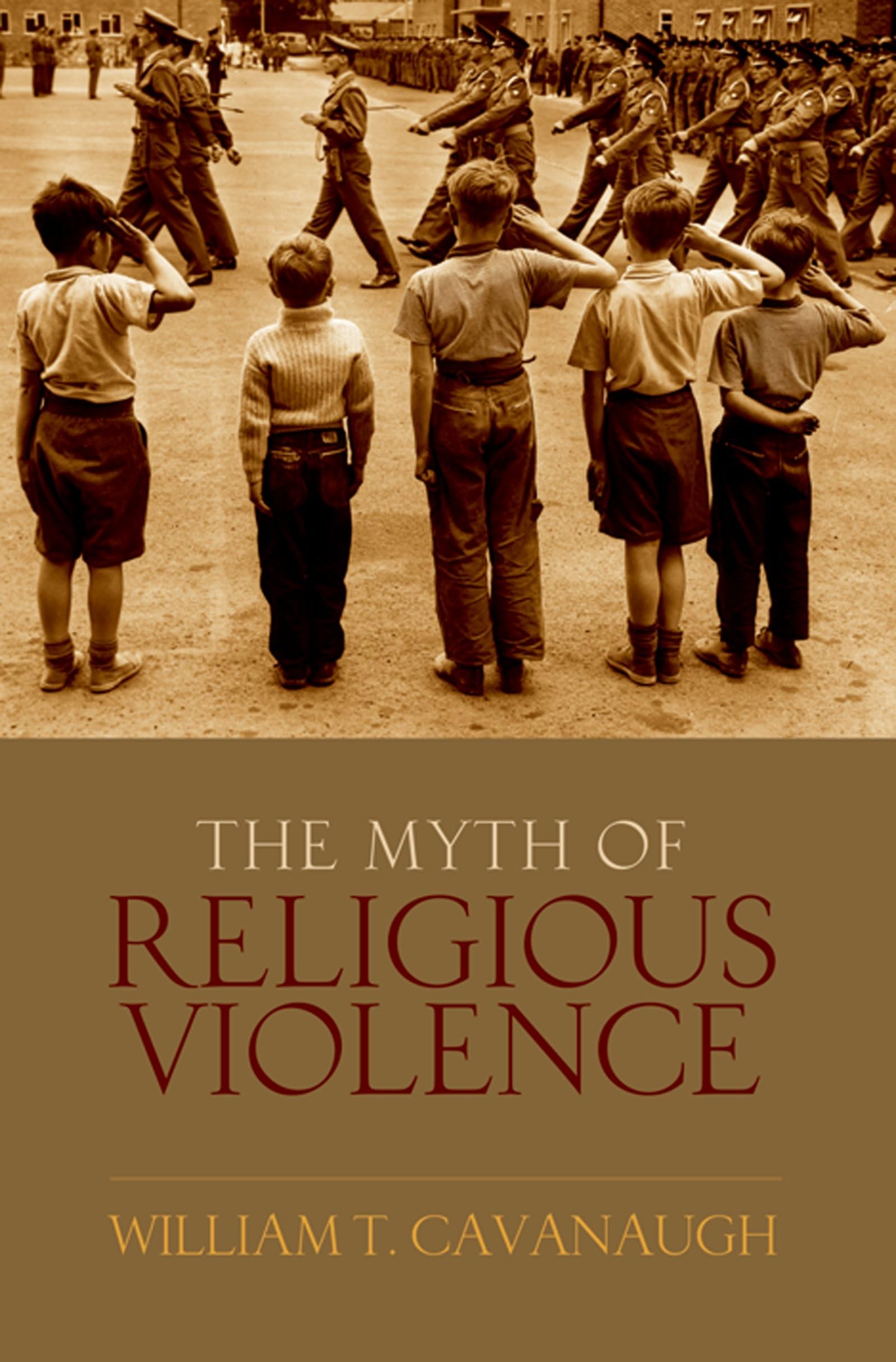
Title
The Myth of Religious Violence: Secular Ideology and the Roots of Modern Conflict,Used
Sold by Ergodebooks, an authorized reseller.
Returns accepted within 30 days | support@ergodebooks.com
Shipping Information
- Free Standard Shipping — United States only
- Processing Time: 3–5 business days
- Estimated Delivery: 6–10 business days after dispatch
- Double-boxed, fully insured & discreetly packaged
- Tracking number sent via email once dispatched
Returns & Refund
Returns accepted within 30 days of delivery.
Damaged or Defective Item
Free return shipping + replacement or full refund
Wrong Item Received
Free return shipping + replacement or full refund
Change of Mind
Return shipping at customer's expense · 25% restocking fee applies
Payment Option

The idea that religion has a dangerous tendency to promote violence is part of the conventional wisdom of Western societies, and it underlies many of our institutions and policies, from limits on the public role of religion to efforts to promote liberal democracy in the Middle East. William T. Cavanaugh challenges this conventional wisdom by examining how the twin categories of religion and the secular are constructed. A growing body of scholarly work explores how the category 'religion' has been constructed in the modern West and in colonial contexts according to specific configurations of political power. Cavanaugh draws on this scholarship to examine how timeless and transcultural categories of 'religion and 'the secular' are used in arguments that religion causes violence. He argues three points: 1) There is no transhistorical and transcultural essence of religion. What counts as religious or secular in any given context is a function of political configurations of power; 2) Such a transhistorical and transcultural concept of religion as nonrational and prone to violence is one of the foundational legitimating myths of Western society; 3) This myth can be and is used to legitimate neocolonial violence against nonWestern others, particularly the Muslim world.
⚠️ WARNING (California Proposition 65):
This product may contain chemicals known to the State of California to cause cancer, birth defects, or other reproductive harm.
For more information, please visit www.P65Warnings.ca.gov.
- Q: What is the main theme of 'The Myth of Religious Violence'? A: The book explores how the idea that religion inherently promotes violence is a constructed notion within Western societies, challenging the conventional wisdom surrounding this belief.
- Q: Who is the author of this book? A: The author is William T. Cavanaugh, a scholar known for his work on the intersections of religion, violence, and political power.
- Q: What are the key arguments presented in the book? A: Cavanaugh argues that there is no universal essence of religion, that the perception of religion as violent is a myth of Western culture, and that this myth has been used to justify neo-colonial violence.
- Q: What is the genre of this book? A: The book falls under the category of Spiritual Warfare, addressing philosophical and sociopolitical themes.
- Q: How many pages does the book have? A: The book has a total of 285 pages.
- Q: What type of binding does this book have? A: This edition of the book is available in hardcover.
- Q: When was 'The Myth of Religious Violence' published? A: The book was published on September 3, 2009.
- Q: Is this book suitable for academic use? A: Yes, the book is well-researched and provides a scholarly examination of its themes, making it suitable for academic study.
- Q: What edition of the book is available? A: The book is available in its first edition.
- Q: What condition is the book in? A: The book is brand new, ensuring it is in pristine condition for readers.