
Title
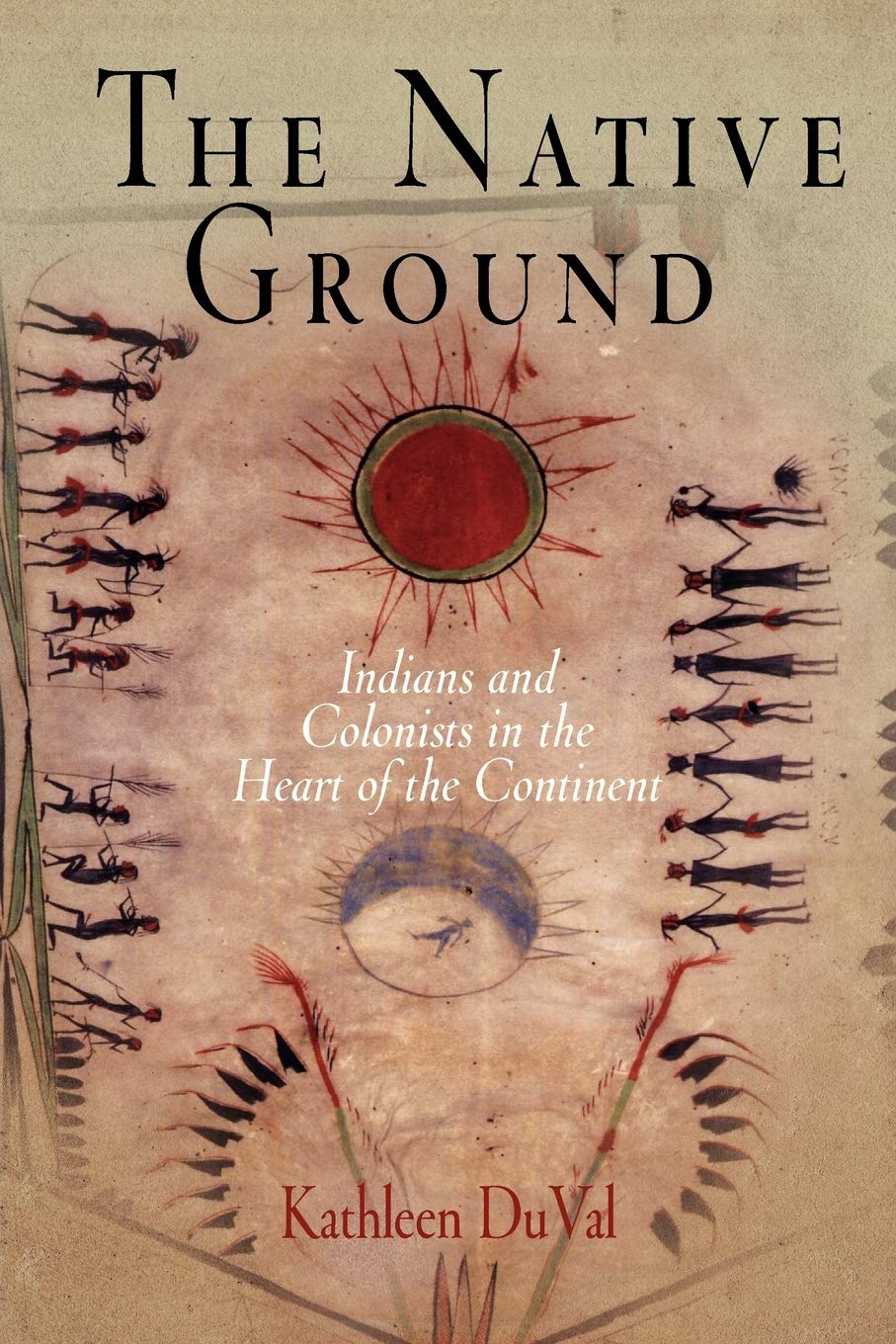
The Native Ground: Indians And Colonists In The Heart Of The Continent (Early American Studies),Used
Sold by Ergodebooks, an authorized reseller.
Returns accepted within 30 days | support@ergodebooks.com
Shipping Information
- Free Standard Shipping — United States only
- Processing Time: 3–5 business days
- Estimated Delivery: 6–10 business days after dispatch
- Double-boxed, fully insured & discreetly packaged
- Tracking number sent via email once dispatched
Returns & Refund
Returns accepted within 30 days of delivery.
Damaged or Defective Item
Free return shipping + replacement or full refund
Wrong Item Received
Free return shipping + replacement or full refund
Change of Mind
Return shipping at customer's expense · 25% restocking fee applies
Payment Option

In The Native Ground, Kathleen Duval Argues That It Was Indians Rather Than European Wouldbe Colonizers Who Were More Often Able To Determine The Form And Content Of The Relations Between The Two Groups. Along The Banks Of The Arkansas And Mississippi Rivers, Far From Paris, Madrid, And London, European Colonialism Met Neither Accommodation Nor Resistance But Incorporation. Rather Than Being Colonized, Indians Drew European Empires Into Local Patterns Of Land And Resource Allocation, Sustenance, Goods Exchange, Gender Relations, Diplomacy, And Warfare. Placing Indians At The Center Of The Story, Duval Shows Both Their Diversity And Our Contemporary Tendency To Exaggerate The Influence Of Europeans In Places Far From Their Centers Of Power. Europeans Were Often More Dependent On Indians Than Indians Were On Them.Now The States Of Arkansas, Oklahoma, Kansas, And Colorado, This Native Ground Was Originally Populated By Indigenous Peoples, Became Part Of The French And Spanish Empires, And In 1803 Was Bought By The United States In The Louisiana Purchase. Drawing On Archaeology And Oral History, As Well As Documents In English, French, And Spanish, Duval Chronicles The Successive Migrations Of Indians And Europeans To The Area From Precolonial Times Through The 1820S. These Myriad Native Groupsmississippians, Quapaws, Osages, Chickasaws, Caddos, And Cherokeesand The Waves Of Europeans All Competed With One Another For Control Of The Region.Only In The Nineteenth Century Did Outsiders Initiate A Future In Which One People Would Claim Exclusive Ownership Of The Midcontinent. After The War Of 1812, These Settlers Came In Numbers Large Enough To Overwhelm The Region'S Inhabitants And Reject The Early Patterns Of Crosscultural Interdependence. As Citizens Of The United States, They Persuaded The Federal Government To Muster Its Resources On Behalf Of Their Dreams Of Landholding And Citizenship.With Keen Insight And Broad Vision, Kathleen Duval Retells The Story Of Indian And European Contact In A More Complex And, Ultimately, More Satisfactory Way.
⚠️ WARNING (California Proposition 65):
This product may contain chemicals known to the State of California to cause cancer, birth defects, or other reproductive harm.
For more information, please visit www.P65Warnings.ca.gov.
- Q: How many pages does this book have? A: This book has three hundred thirty-six pages. It provides an in-depth exploration of the interactions between Native Americans and European colonizers.
- Q: What are the dimensions of this book? A: The book measures six inches in length, one inch in width, and nine point zero two inches in height. These dimensions make it a convenient size for reading and storage.
- Q: What type of binding does this book have? A: This book is paperback bound. Paperback binding is lightweight and flexible, making it easy to handle.
- Q: Who is the author of 'The Native Ground'? A: The author is Kathleen DuVal. She is known for her research on early American history and Native American interactions.
- Q: What is the book's primary focus? A: The primary focus is on the interactions between Native Americans and European colonizers. It emphasizes how Indians influenced colonial relationships.
- Q: Is this book suitable for academic use? A: Yes, this book is suitable for academic use. It includes research based on archaeology, oral history, and historical documents.
- Q: How should I care for this paperback book? A: To care for this paperback book, keep it in a cool, dry place and avoid exposure to direct sunlight. This will help preserve its condition.
- Q: Can I use a bookmark in this book? A: Yes, you can use a bookmark. The pages are designed to withstand frequent turning without damage.
- Q: Is there a warranty or return policy for this book? A: Typically, books do not come with a warranty, but return policies may vary by seller. Check with the retailer for specific details.
- Q: What should I do if the book arrives damaged? A: If the book arrives damaged, contact the seller for return instructions. Most retailers will offer a replacement or refund.
- Q: Does this book include maps or illustrations? A: No, this book does not include maps or illustrations. It focuses primarily on text-based historical analysis.
- Q: Is this book appropriate for young adults? A: Yes, this book is appropriate for young adults. It is suitable for readers interested in American history and Native American studies.
- Q: What genres does this book belong to? A: This book belongs to the genres of historical nonfiction and Native American studies. It provides a scholarly perspective on early American history.
- Q: Are there any special features in this book? A: The book features a comprehensive bibliography and notes section. These elements support further research and reading.
- Q: How should I store this book? A: Store this book upright on a shelf or in a bookcase. Avoid stacking heavy items on top to prevent warping.