
Title
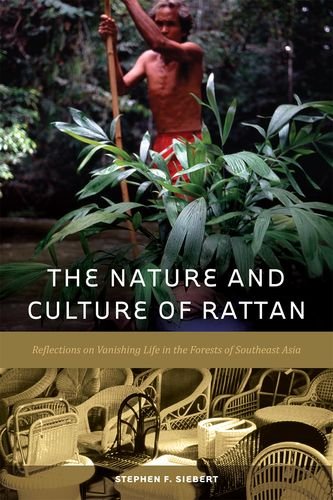
The Nature and Culture of Rattan: Reflections on Vanishing Life in the Forests of Southeast Asia,Used
Sold by Ergodebooks, an authorized reseller.
Returns accepted within 30 days | support@ergodebooks.com
Shipping Information
- Free Standard Shipping — United States only
- Processing Time: 3–5 business days
- Estimated Delivery: 6–10 business days after dispatch
- Double-boxed, fully insured & discreetly packaged
- Tracking number sent via email once dispatched
Returns & Refund
Returns accepted within 30 days of delivery.
Damaged or Defective Item
Free return shipping + replacement or full refund
Wrong Item Received
Free return shipping + replacement or full refund
Change of Mind
Return shipping at customer's expense · 25% restocking fee applies
Payment Option

Rattan is the common name for a diverse group of climbing palms found throughout Old World tropical forests. For centuries people have used them for binding, basketry, house construction, food, and numerous other nonmarket purposes; more recently the canes of some species have been gathered for the multibilliondollar furniture, handicraft, and matmaking industries. Thus rattan continues to be vital to the culture and economic well being of millions of cane collectors, laborers, and artisans throughout tropical Asia and Africa. The Nature and Culture of Rattan explores this valuable forest product, the tropical forests on which it depends, and the societies that flourish by using and managing these remarkable plants.The Nature and Culture of Rattan provides a distinctive and engaging review of rattan and the people whose lives are centered on it. It examines rattan use, biology, human culture, and challenges in tropical field research and conservation through the knowledge of cane workers in three Southeast Asian forest villages where the author lived over a twentyfiveyear period. He effectively challenges commonly held views of 'slash and burn' farming, rainforest destruction, and population increase while underscoring the myriad forces involved in individual decisionmaking and social and environmental change. Personal stories and experiences are integrated with scientific information in a manner that will attract nonspecialists as well as students and researchers.The Nature and Culture of Rattan will be a valuable addition to undergraduate and graduate courses in ecology, anthropology, rural sociology and development, forestry, and natural resource management. A website (www.cfc.umt.edu/rattan) includes additional photographs, suggested reading, and discussion topics.
⚠️ WARNING (California Proposition 65):
This product may contain chemicals known to the State of California to cause cancer, birth defects, or other reproductive harm.
For more information, please visit www.P65Warnings.ca.gov.