
Title

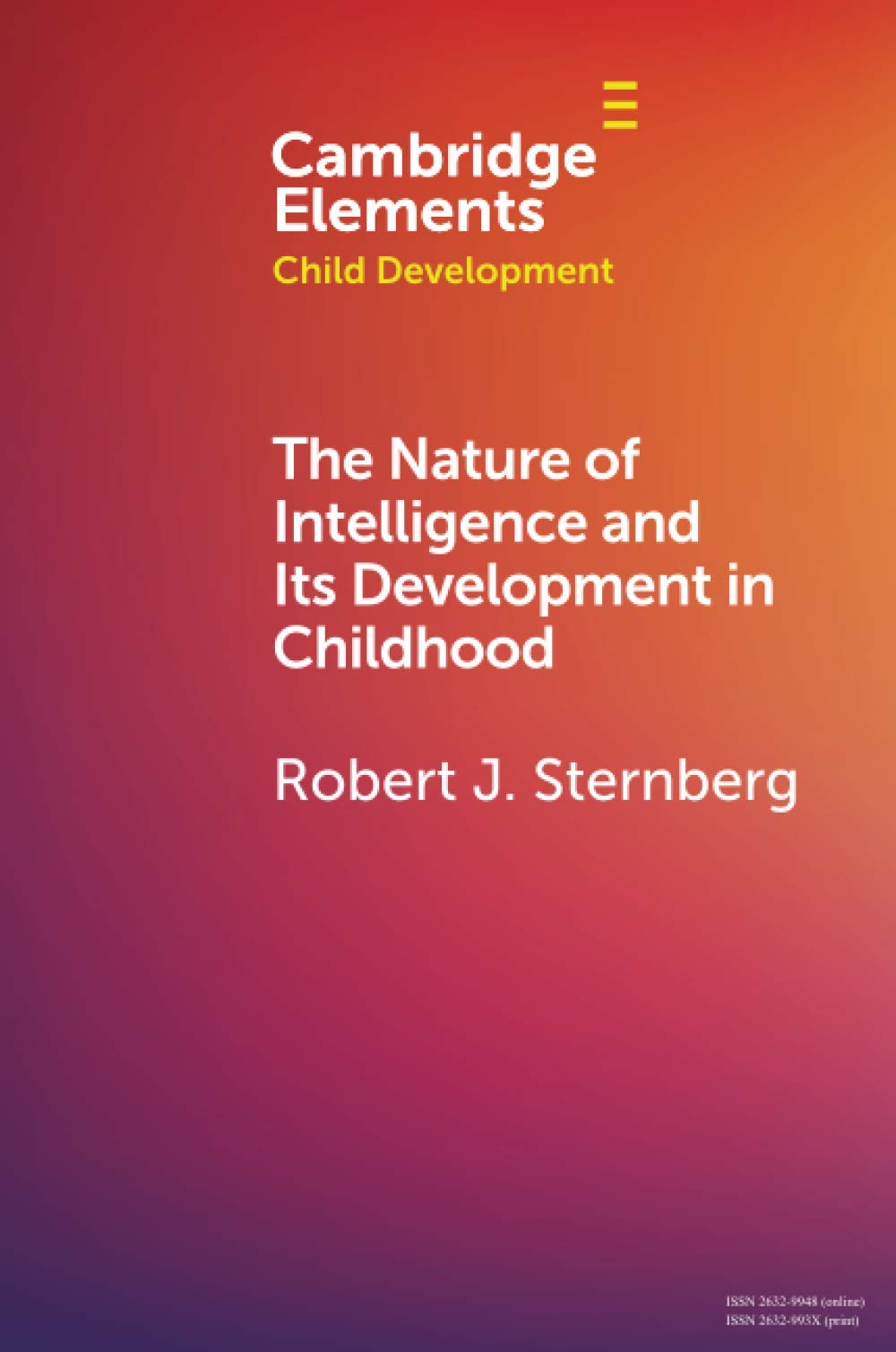
The Nature of Intelligence and Its Development in Childhood (Elements in Child Development),Used
Sold by Ergodebooks, an authorized reseller.
Returns accepted within 30 days | support@ergodebooks.com
Shipping Information
- Free Standard Shipping — United States only
- Processing Time: 1–3 business days
- Estimated Delivery: 3–5 business days after dispatch
- Double-boxed, fully insured & discreetly packaged
- Tracking number sent via email once dispatched
- Orders over $250 require signature upon delivery. Taxes calculated at checkout.
Returns & Refund
Returns accepted within 30 days of delivery.
Damaged or Defective Item
Free return shipping + replacement or full refund
Wrong Item Received
Free return shipping + replacement or full refund
Change of Mind
Return shipping at customer's expense · 25% restocking fee applies
Payment Option

In this Element, I first introduce intelligence in terms of historical definitions. I show that intelligence, as conceived even by the originators of the first intelligence tests, Alfred Binet and David Wechsler, is a much broader construct than just scores on narrow tests of intelligence and their proxies. I then review the major approaches to understanding intelligence and its development: the psychometric (testbased), cognitive and neurocognitive (intelligence as a set of brainbased cognitive representations and processes), systems, cultural, and developmental. These approaches, taken together, present a much more complex portrait of intelligence and its development than the one that would be ascertained just from scores on intelligence tests. Finally, I draw some takeaway conclusions.
⚠️ WARNING (California Proposition 65):
This product may contain chemicals known to the State of California to cause cancer, birth defects, or other reproductive harm.
For more information, please visit www.P65Warnings.ca.gov.