
Title
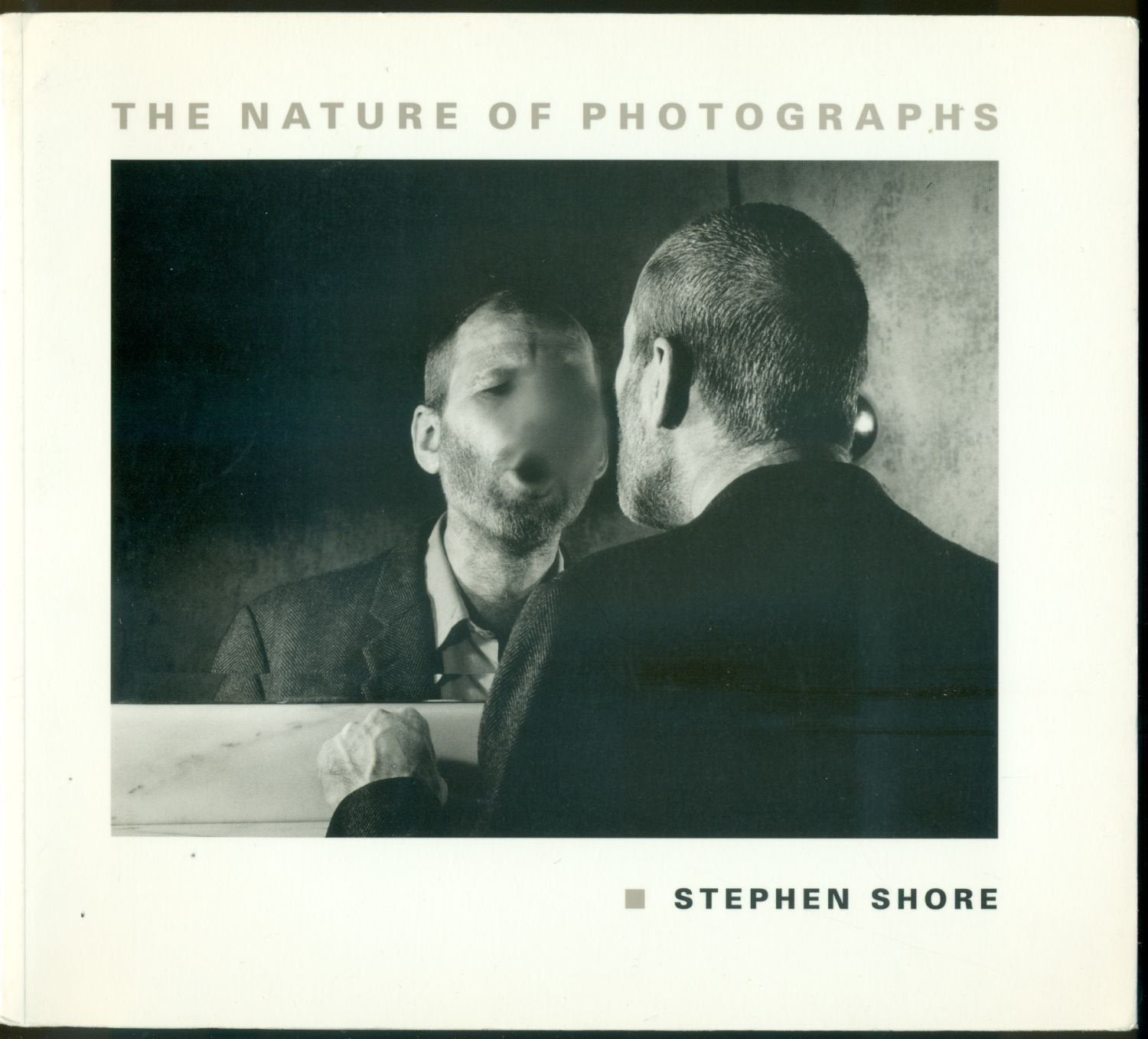
The Nature of Photographs,Used
Sold by Ergodebooks, an authorized reseller.
Returns accepted within 30 days | support@ergodebooks.com
Shipping Information
- Free Standard Shipping — United States only
- Processing Time: 3–5 business days
- Estimated Delivery: 6–10 business days after dispatch
- Double-boxed, fully insured & discreetly packaged
- Tracking number sent via email once dispatched
Returns & Refund
Returns accepted within 30 days of delivery.
Damaged or Defective Item
Free return shipping + replacement or full refund
Wrong Item Received
Free return shipping + replacement or full refund
Change of Mind
Return shipping at customer's expense · 25% restocking fee applies
Payment Option

How does a photograph 'work'? In this book, internationally acclaimed photographer Stephen Shore brings together more than fifty images (by such photographers as Walker Evans, Eugne Atget, Robert Adams, Diane Arbus, Frank Gohlke, Lee Friedlander, Edward Weston, Robert Frank, William Eggleston, and Jan Groover) to illustrate a process of looking at and understanding photography. He traces the process by which the world in front of the camera is transformed into a photograph and how that photograph, in turn, is transformed into a mental image.A photograph, Shore explains, can be viewed on several levels. First, it is a physical object, a print. On this print is an image, an illusion of a window onto the world. It is at this level that we 'read' a picture and discover its content: a souvenir of an exotic land, the face of a lover, a wet rock, a landscape at night. This is the depictive level, in which the world is transformed into a photograph through qualities of flatness, frame, time, and focus. On a final level is the mental apprehension of the image, which joins the focus of lens, eye, attention, and mind.Using these levels of seeing, Shore reveals how the qualities of a photograph create tension and meaning as the collapsing of depth creates new relationships, as lines and shapes in the image play against the frame, as focus creates barriers in the depth of an image, as the duration of exposure variously transforms the fluid world into a static piece of film. As the visual image continues to grow in importance as a medium of global communication, the skills and insights conveyed by this book will become increasingly relevant both to those who take photographs and those who view them.
⚠️ WARNING (California Proposition 65):
This product may contain chemicals known to the State of California to cause cancer, birth defects, or other reproductive harm.
For more information, please visit www.P65Warnings.ca.gov.