
Title
The Nature Of Space And Time
Sold by Ergodebooks, an authorized reseller.
Returns accepted within 30 days | support@ergodebooks.com
Shipping Information
- Free Standard Shipping — United States only
- Processing Time: 3–5 business days
- Estimated Delivery: 6–10 business days after dispatch
- Double-boxed, fully insured & discreetly packaged
- Tracking number sent via email once dispatched
Returns & Refund
Returns accepted within 30 days of delivery.
Damaged or Defective Item
Free return shipping + replacement or full refund
Wrong Item Received
Free return shipping + replacement or full refund
Change of Mind
Return shipping at customer's expense · 25% restocking fee applies
Payment Option

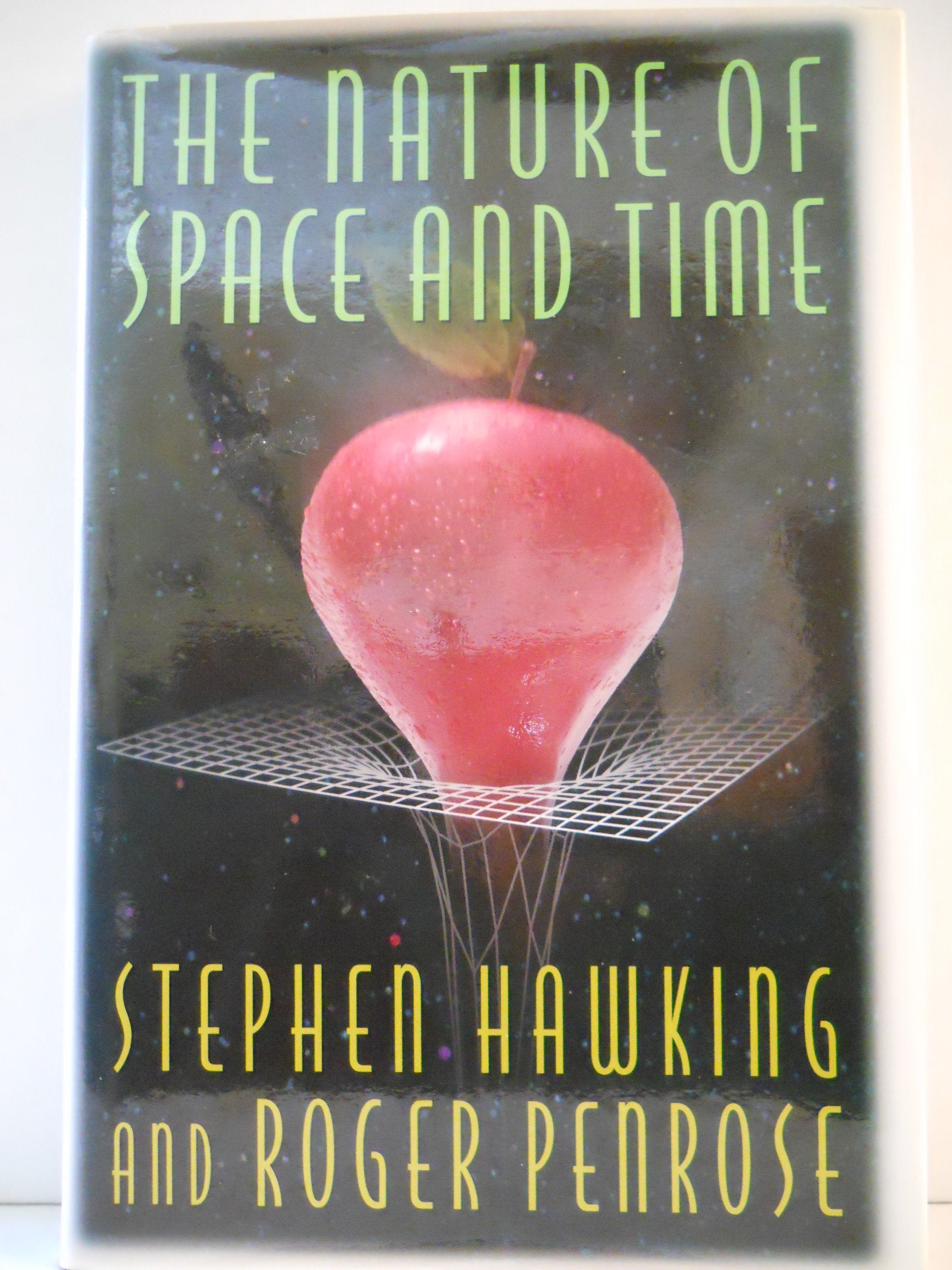
From Two Of The World'S Great Physicistsstephen Hawking And Nobel Laureate Roger Penrosea Lively Debate About The Nature Of Space And Timeeinstein Said That The Most Incomprehensible Thing About The Universe Is That It Is Comprehensible. But Was He Right? Can The Quantum Theory Of Fields And Einstein'S General Theory Of Relativity, The Two Most Accurate And Successful Theories In All Of Physics, Be United In A Single Quantum Theory Of Gravity? Can Quantum And Cosmos Ever Be Combined? On This Issue, Two Of The World'S Most Famous Physicistsstephen Hawking (A Brief History Of Time) And Roger Penrose (The Emperor'S New Mind And Shadows Of The Mind)Disagree. Here They Explain Their Positions In A Work Based On Six Lectures With A Final Debate, All Originally Presented At The Isaac Newton Institute For Mathematical Sciences At The University Of Cambridge.How Could Quantum Gravity, A Theory That Could Explain The Earlier Moments Of The Big Bang And The Physics Of The Enigmatic Objects Known As Black Holes, Be Constructed? Why Does Our Patch Of The Universe Look Just As Einstein Predicted, With No Hint Of Quantum Effects In Sight? What Strange Quantum Processes Can Cause Black Holes To Evaporate, And What Happens To All The Information That They Swallow? Why Does Time Go Forward, Not Backward?In This Book, The Two Opponents Touch On All These Questions. Penrose, Like Einstein, Refuses To Believe That Quantum Mechanics Is A Final Theory. Hawking Thinks Otherwise, And Argues That General Relativity Simply Cannot Account For How The Universe Began. Only A Quantum Theory Of Gravity, Coupled With The Noboundary Hypothesis, Can Ever Hope To Explain Adequately What Little We Can Observe About Our Universe. Penrose, Playing The Realist To Hawking'S Positivist, Thinks That The Universe Is Unbounded And Will Expand Forever. The Universe Can Be Understood, He Argues, In Terms Of The Geometry Of Light Cones, The Compression And Distortion Of Spacetime, And By The Use Of Twistor Theory. With The Final Debate, The Reader Will Come To Realize How Much Hawking And Penrose Diverge In Their Opinions Of The Ultimate Quest To Combine Quantum Mechanics And Relativity, And How Differently They Have Tried To Comprehend The Incomprehensible.
⚠️ WARNING (California Proposition 65):
This product may contain chemicals known to the State of California to cause cancer, birth defects, or other reproductive harm.
For more information, please visit www.P65Warnings.ca.gov.
- Q: How many pages does 'The Nature of Space and Time' have? A: This book has one hundred fifty pages. It provides an in-depth exploration of complex topics related to space and time.
- Q: What is the binding type of this book? A: The binding type is hardcover. This makes the book durable and suitable for long-term reading.
- Q: What are the dimensions of 'The Nature of Space and Time'? A: The dimensions are six point six one inches in length, zero point six seven inches in width, and nine point five seven inches in height. This size makes it a convenient read.
- Q: Who are the authors of this book? A: The authors are Stephen W. Hawking and Roger Penrose. They are renowned physicists known for their contributions to theoretical physics.
- Q: What genre does 'The Nature of Space and Time' belong to? A: This book belongs to the Applied genre, specifically related to Quantum Theory. It discusses significant scientific concepts.
- Q: What is the main theme of 'The Nature of Space and Time'? A: The main theme revolves around the debate on the nature of space and time between two prominent physicists. It explores complex theories and ideas.
- Q: Is 'The Nature of Space and Time' suitable for beginners in physics? A: Yes, it is suitable for beginners. The authors present complex theories in a way that is accessible to a general audience.
- Q: How can I use this book for studying physics? A: You can use this book as a supplementary resource for understanding advanced concepts in physics. It provides insights into key debates in the field.
- Q: Is there a specific age group recommended for reading this book? A: It is generally recommended for adults and older teenagers. The complexity of the subject matter may not be suitable for younger readers.
- Q: What should I do to keep this book in good condition? A: To keep it in good condition, store it in a dry place and avoid direct sunlight. Handle it carefully to prevent wear and tear.
- Q: Can I clean the book if it gets dirty? A: Yes, you can clean it gently. Use a soft, dry cloth to wipe the cover and avoid using water or cleaning products.
- Q: What if the book arrives damaged? A: If the book arrives damaged, you should contact the seller for a return or replacement. Ensure to keep the original packaging for the return process.
- Q: Is there a warranty for this book? A: No, there is typically no warranty for books. However, you can usually return it if it arrives in unsatisfactory condition.
- Q: How can I find more books similar to 'The Nature of Space and Time'? A: You can look for books by the same authors or explore titles related to Quantum Theory and applied physics. Bookstores and online retailers often have recommendations.
- Q: Is 'The Nature of Space and Time' part of a series? A: No, it is not part of a series. It is a standalone work that presents a unique debate between two physicists.