
Title
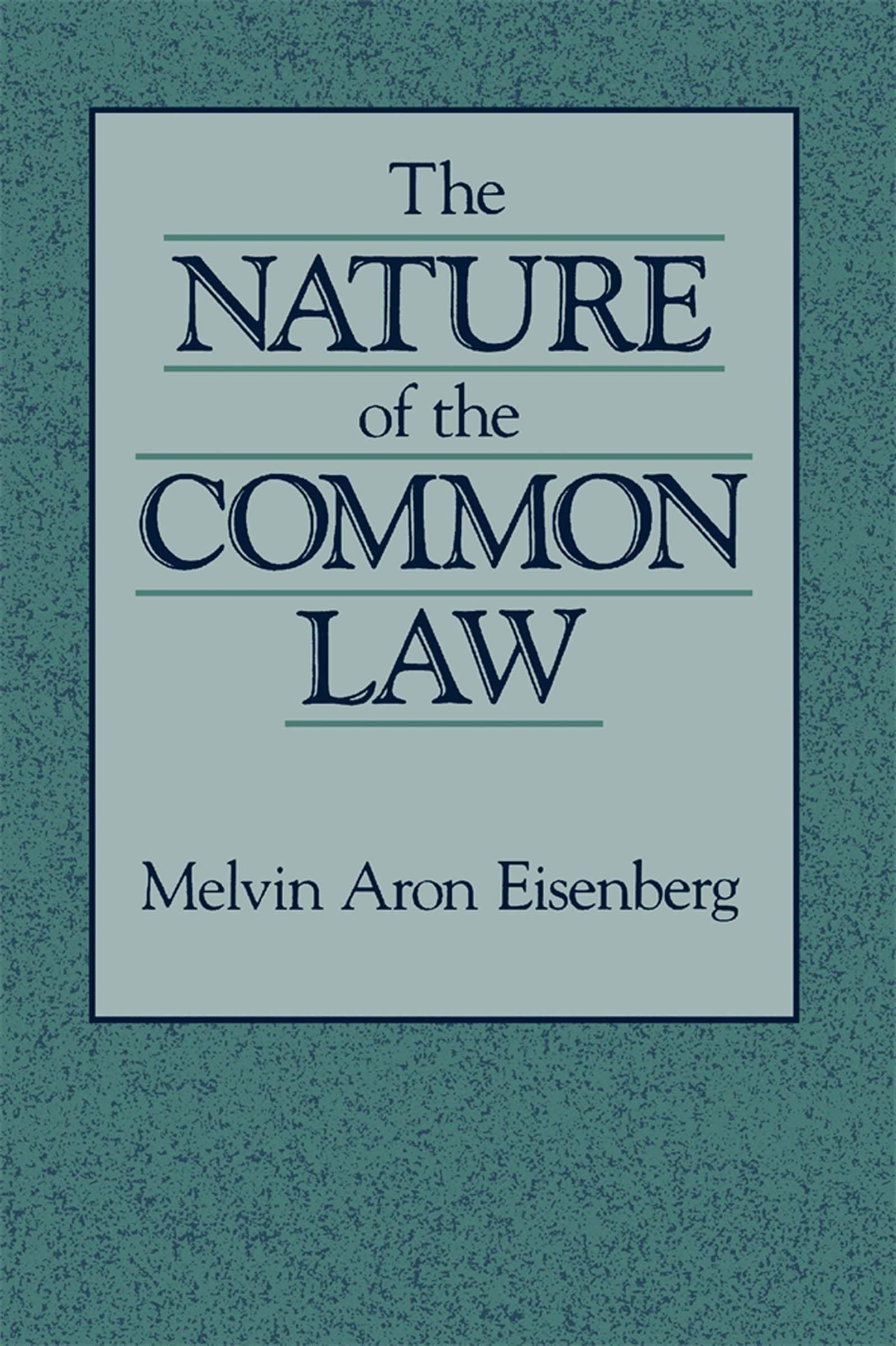
The Nature of the Common Law,Used
Sold by Ergodebooks, an authorized reseller.
Returns accepted within 30 days | support@ergodebooks.com
Shipping Information
- Free Standard Shipping — United States only
- Processing Time: 3–5 business days
- Estimated Delivery: 6–10 business days after dispatch
- Double-boxed, fully insured & discreetly packaged
- Tracking number sent via email once dispatched
Returns & Refund
Returns accepted within 30 days of delivery.
Damaged or Defective Item
Free return shipping + replacement or full refund
Wrong Item Received
Free return shipping + replacement or full refund
Change of Mind
Return shipping at customer's expense · 25% restocking fee applies
Payment Option

Much of our law is based on authoritative texts, such as constitutions and statutes. The common law, in contrast, is that part of the law that is established by the courts. Common law rules predominate in some areas of law, such as torts and contracts, and are extremely important in other areas, such as corporations. Nevertheless, it has been far from clear what principles courts useor should usein establishing common law rules. In this lucid yet subtly argued book, Melvin Eisenberg develops the principles that govern this process.The rules established in every common law case, he shows, are a product of the interplay between the rules announced in past precedents, on the one hand, and moral norms, policies, and experience, on the other. However, a court establishing a common law rule is not free, as a legislator would be, to employ those norms and policies it thinks best. Rather, it can properly employ only those that have a requisite degree of social support. More specifically, the common law should seek to satisfy three standards. First, it should correspond to the body of rules that would be arrived at by giving appropriate weight to all moral norms, policies, and experiential propositions that have the requisite support, and by making the best choices where norms, policies, and experience conflict. Second, all the rules that make up the body of the law should be consistent with one another. Third, the rules adopted in past precedents should be applied consistently over time. Often, these three standards point in the same direction. The central problems of legal reasoning arise when they do not. These problems are resolved by the principles of common law adjudication. With the general principles of common law adjudication as a background, the author then examines and explains the specific modes of common law reasoning, such as reasoning from precedent, reasoning by analogy, drawing distinctions, and overruling. Throughout the book, the analysis is fully illustrated by leading cases.This innovative and carefully worked out account of the common law will be of great interest to lawyers, law students, students in undergraduate legal studies programs, scholars interested in legal theory, and all those who want to understand the basic legal institutions of our society.
⚠️ WARNING (California Proposition 65):
This product may contain chemicals known to the State of California to cause cancer, birth defects, or other reproductive harm.
For more information, please visit www.P65Warnings.ca.gov.
- Q: What are the dimensions of the book? A: The book measures approximately five point nine eight inches in length, zero point five five inches in width, and nine point zero two inches in height.
- Q: How many pages does the book have? A: The book contains two hundred twenty-four pages, providing ample content for readers interested in common law.
- Q: What type of binding does this book have? A: This book is paperback bound, making it lightweight and easy to handle.
- Q: Who is the author of the book? A: The author of the book is Melvin Aron Eisenberg, a noted scholar in legal theory.
- Q: What is the main focus of the book? A: The book focuses on the principles governing common law and the reasoning behind judicial decisions.
- Q: Is this book suitable for law students? A: Yes, this book is ideal for law students as it explores fundamental concepts in common law that are crucial for their studies.
- Q: Can this book be used as a reference for legal practitioners? A: Yes, legal practitioners can use this book as a reference for understanding common law principles and adjudication.
- Q: What is the target audience for this book? A: The target audience includes lawyers, law students, and anyone interested in the legal system and common law.
- Q: How should I care for this book? A: To care for this book, keep it in a dry place and avoid exposing it to direct sunlight to prevent fading and damage.
- Q: Is this book safe for all age groups? A: Yes, this book is appropriate for adult readers and students studying law, but may not be suitable for young children due to its complex subject matter.
- Q: What if my book arrives damaged? A: If your book arrives damaged, please contact customer service to initiate a return or exchange process.
- Q: Does this book come with any warranty? A: No, this book does not come with a warranty, but you can return it if it arrives in unsatisfactory condition.
- Q: What should I do if I have questions about the content? A: If you have questions about the content, consider reaching out to your professor or joining study groups for discussion.
- Q: Is the book based on real court cases? A: Yes, the book analyzes and illustrates common law principles using leading cases from various jurisdictions.
- Q: How often should I read this book for effective understanding? A: For effective understanding, it is recommended to read this book thoroughly, taking notes and revisiting complex sections as needed.
- Q: Can I use this book for a legal theory course? A: Yes, this book is suitable for a legal theory course as it delves into the principles and reasoning of common law.