
Title
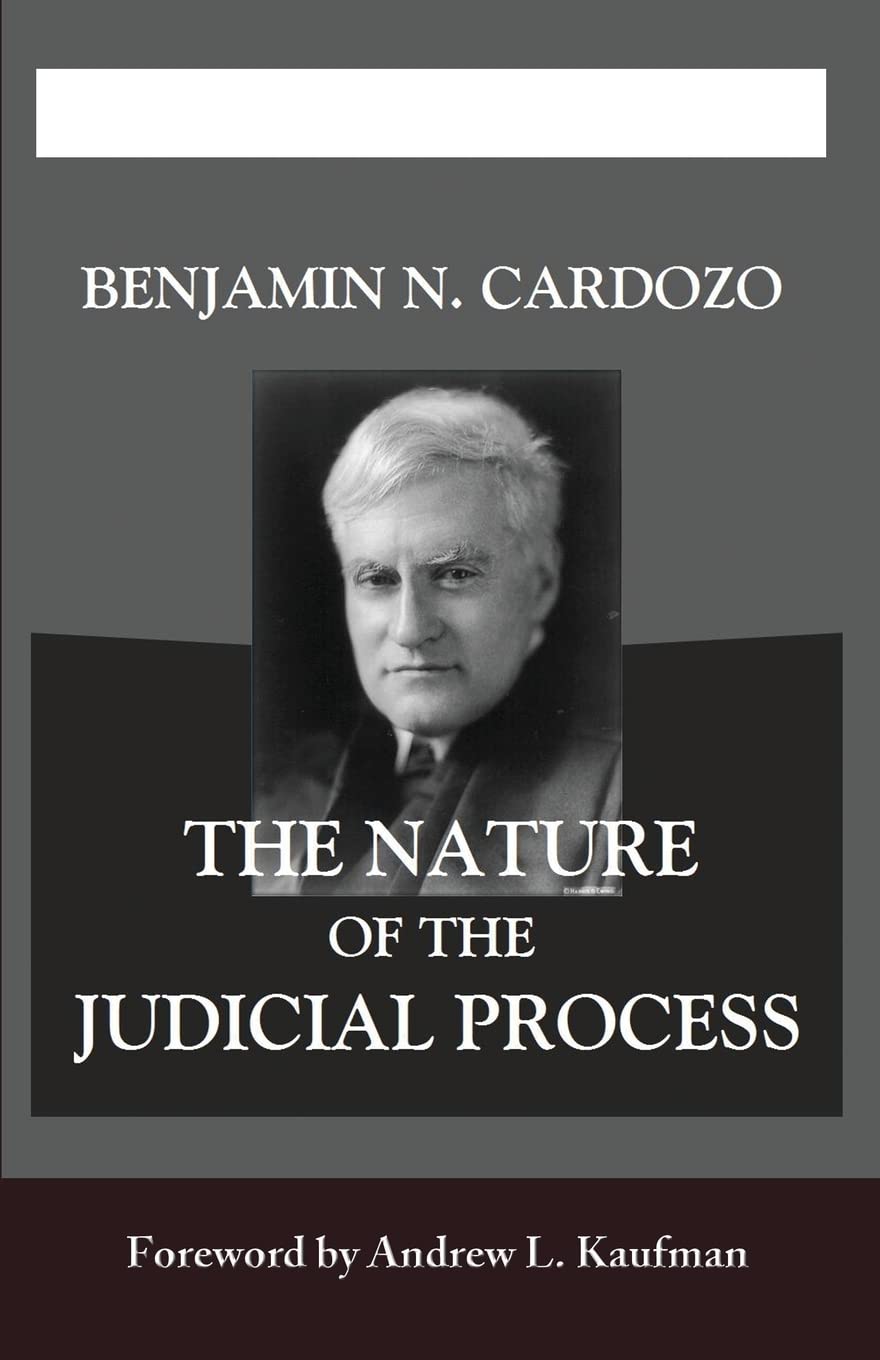
The Nature Of The Judicial Process,Used
Sold by Ergodebooks, an authorized reseller.
Returns accepted within 30 days | support@ergodebooks.com
Shipping Information
- Free Standard Shipping — United States only
- Processing Time: 3–5 business days
- Estimated Delivery: 6–10 business days after dispatch
- Double-boxed, fully insured & discreetly packaged
- Tracking number sent via email once dispatched
Returns & Refund
Returns accepted within 30 days of delivery.
Damaged or Defective Item
Free return shipping + replacement or full refund
Wrong Item Received
Free return shipping + replacement or full refund
Change of Mind
Return shipping at customer's expense · 25% restocking fee applies
Payment Option

The legendary book by Justice Benjamin N. Cardozo explaining, in detail and with his famous style, how judges make decisions. Features a modern explanatory Foreword by Andrew L. Kaufman, a law professor at Harvard and Cardozo's premier biographer ('Cardozo,' Harvard U.P., 1998), and presented in a modern and legible format, with careful formatting, readable font, true footnotes, and photographs. As part of the Legal Legends Series, the correct page numbers are embedded so that passages can be accurately cited or found from the 1921 edition. No other current version of this important work uses correct pages or presents it in an updated and accurate form; no other contains an explanatory and historical Foreword.Judges don't discover the law, they create it. Cardozo (18701938) offered the world a candid and selfconscious study of how judges decide lawthey are lawmakers and not just lawappliers, he knewdrawn from his insights on the bench, in a way that no judge had before. Asked 'What is it that I do when I decide a case? To what sources of information do I appeal for guidance?,' Cardozo answered in timeless prose. This book is still read today by lawyers and judges, law students and scholars, historians and political scientists, and philosophersanyone interested in how judges really think and the many decisional tools they employ.Already famous at the time for his trenchant and fluid opinions as a Justice on New York's highest court (he is still studied on questions of torts, contracts, and business law), and later a Justice of the U.S. Supreme Court, Cardozo filled the lecture hall at Yale when he finally answered the frank query into what judges do and how they do it. The lectures became a landmark book and a source for all other studies of the ways of a judge.
⚠️ WARNING (California Proposition 65):
This product may contain chemicals known to the State of California to cause cancer, birth defects, or other reproductive harm.
For more information, please visit www.P65Warnings.ca.gov.