
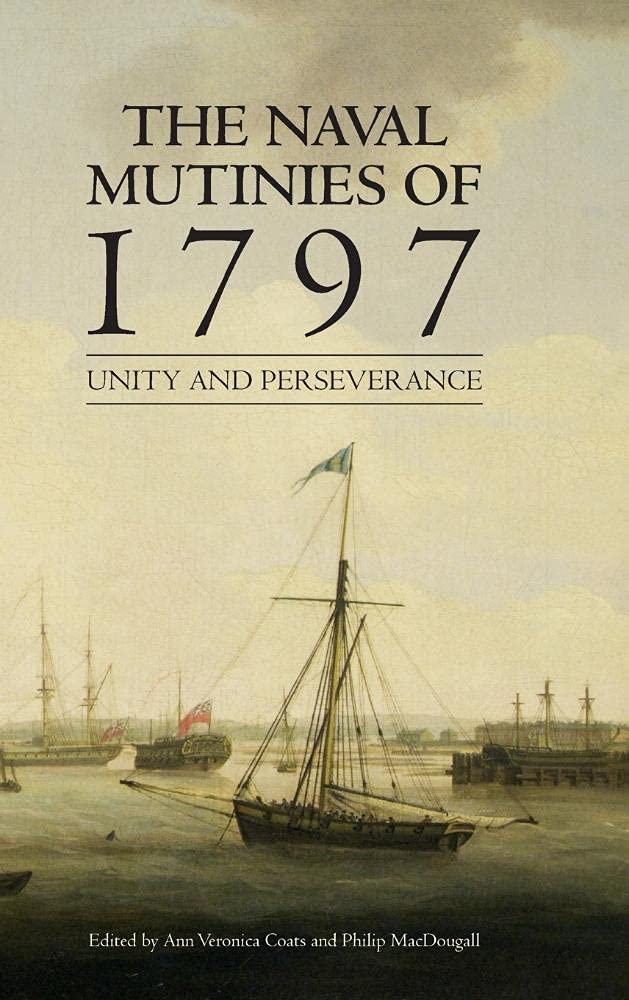
Title
The Naval Mutinies of 1797: Unity and Perseverance,Used
Sold by Ergodebooks, an authorized reseller.
Returns accepted within 30 days | support@ergodebooks.com
Shipping Information
- Free Standard Shipping — United States only
- Processing Time: 3–5 business days
- Estimated Delivery: 6–10 business days after dispatch
- Double-boxed, fully insured & discreetly packaged
- Tracking number sent via email once dispatched
Returns & Refund
Returns accepted within 30 days of delivery.
Damaged or Defective Item
Free return shipping + replacement or full refund
Wrong Item Received
Free return shipping + replacement or full refund
Change of Mind
Return shipping at customer's expense · 25% restocking fee applies
Payment Option

A reassessment of the naval mutinies of 1797, arguing that the mutinies were more industrial dispute than expression of French revolution inspired political radicalism.The naval mutinies of 1797 were unprecedented in scale and impressive in their level of organisation. Under threat of French invasion, crews in the Royal Navy's home fleet, after making clear demands, refused to sail until their demands were met. Subsequent mutinies affected the crews of more than one hundred ships in at least five home anchorages, replicated in the Mediterranean, Atlantic and Indian Ocean.Channel Fleet seamen pursued their grievances of pay and conditions by traditional petitions to their commanding officer, Admiral Richard Howe, but his flawed comprehension and communications were further exacerbated by the Admiralty. The Spithead mutiny became the seamen'slast resort. Ironically Howe acknowledged the justice of their position and was instrumental in resolving the Spithead mutiny, but this did not prevent occurrences at the Nore and elsewhere.The most extensive approach sinceConrad Gill's seminal and eponymous volume of 1913, The Naval Mutinies of 1797 focuses on new research, reevaluating the causes, events, interpretations, discipline, relationships between officers and men, political inputs and affiliations and crucially, the rle of the Irish and quota men. It poses new answers to old questions and suggests a new synthesis selfdetermination the seamen on their own terms.ANN VERONICA COATS is senior lecturer in the the School of Civil Engineering and Surveying at the University of Portsmouth and is Secretary of the Naval Dockyards Society. PHILIP MACDOUGALL is a writer and historian, author of seven books, with a doctorateon naval history from the University of Kent at Canterbury.
⚠️ WARNING (California Proposition 65):
This product may contain chemicals known to the State of California to cause cancer, birth defects, or other reproductive harm.
For more information, please visit www.P65Warnings.ca.gov.