
Title
The Nay Science: A History Of German Indology
Sold by Ergodebooks, an authorized reseller.
Returns accepted within 30 days | support@ergodebooks.com
Shipping Information
- Free Standard Shipping — United States only
- Processing Time: 3–5 business days
- Estimated Delivery: 6–10 business days after dispatch
- Double-boxed, fully insured & discreetly packaged
- Tracking number sent via email once dispatched
Returns & Refund
Returns accepted within 30 days of delivery.
Damaged or Defective Item
Free return shipping + replacement or full refund
Wrong Item Received
Free return shipping + replacement or full refund
Change of Mind
Return shipping at customer's expense · 25% restocking fee applies
Payment Option

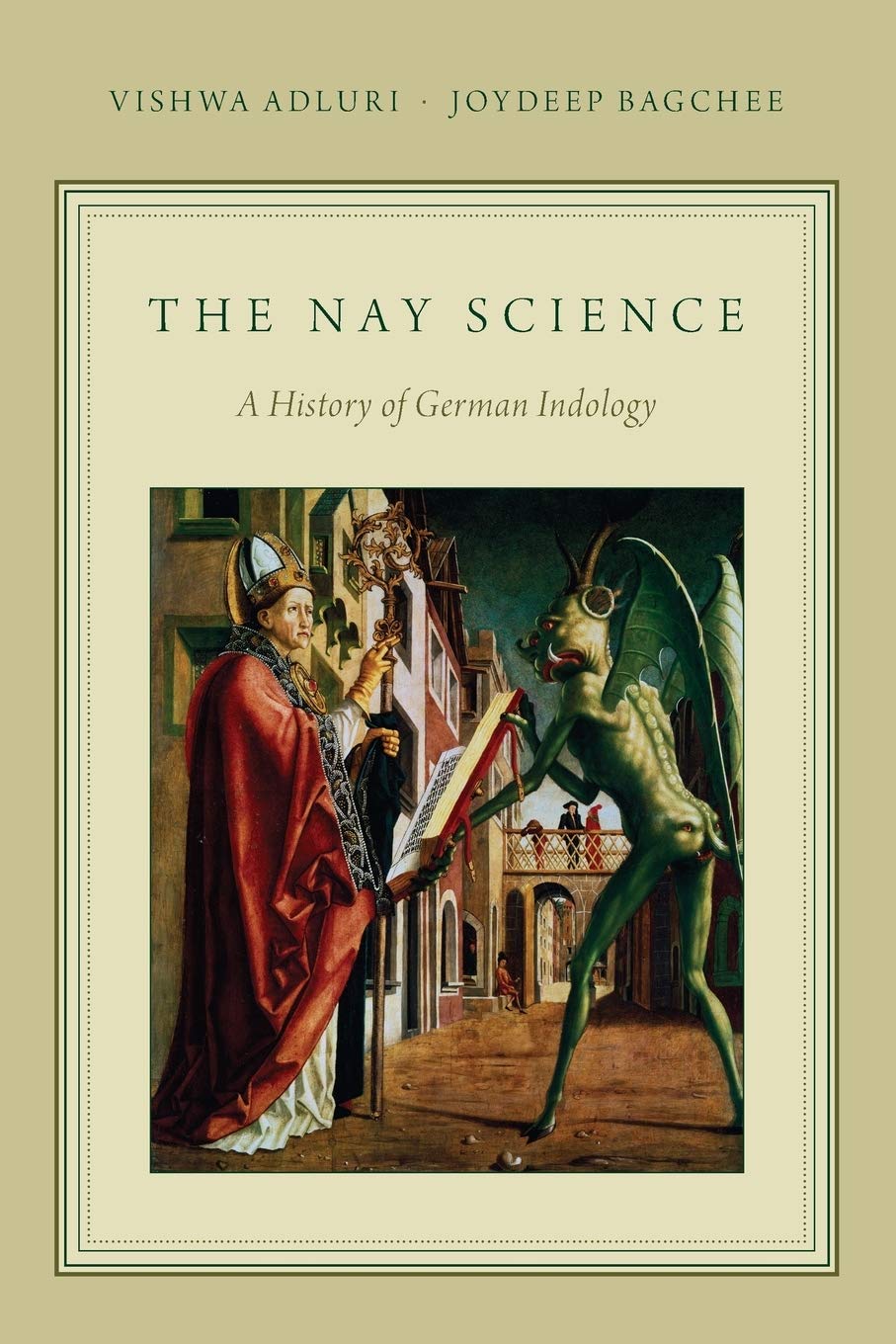
The Nay Science Offers A New Perspective On The Problem Of Scientific Method In The Human Sciences. Taking German Indological Scholarship On The Mahabharata And The Bhagavadgita As Their Example, Adluri And Bagchee Develop A Critique Of The Modern Valorization Of Method Over Truth In The Humanities.The Authors Show How, From Its Origins In Eighteenthcentury Neoprotestantism Onwards, The Critical Method Was Used As A Way Of Making Theological Claims Against Rival Philosophical And/Or Religious Traditions. Via Discussions Of German Romanticism, The Pantheism Controversy, Scientific Positivism, And Empiricism, They Show How Theological Concerns Dominated German Scholarship On The Indian Texts. Indology Functions As A Test Case For Wider Concerns: The Rise Of Historicism, The Displacement Of Philosophical Concerns From Thinking, And The Belief In The Ability Of A Technical Method To Produce Truth.Based On The Historical Evidence Of The First Part Of The Book, Adluri And Bagchee Make A Case In The Second Part For Going Beyond Both The Critical Pretensions Of Modern Academic Scholarship And The Objections Of Its Poststructuralist Or Postorientalist Critics. By Contrasting German Indology With Plato'S Concern For Virtue And Gandhi'S Focus On Praxis, The Authors Argue For A Conception Of The Humanities As A Dialogue Between The Ancients And Moderns And Between Eastern And Western Cultures.
⚠️ WARNING (California Proposition 65):
This product may contain chemicals known to the State of California to cause cancer, birth defects, or other reproductive harm.
For more information, please visit www.P65Warnings.ca.gov.
- Q: How many pages does 'The Nay Science' have? A: This book has five hundred twelve pages. It provides an in-depth exploration of German Indology and its historical context.
- Q: What is the binding type of this book? A: The binding type is paperback. This makes the book flexible and lightweight for easy handling.
- Q: What are the dimensions of 'The Nay Science'? A: The dimensions are nine point one inches in length, one point five inches in width, and nine point twenty-five inches in height. These measurements make it a standard-sized book.
- Q: What is the primary subject of 'The Nay Science'? A: The primary subject is the critique of scientific methods in the humanities, specifically in German Indology. It focuses on the Mahabharata and the Bhagavadgita.
- Q: Is 'The Nay Science' suitable for academic study? A: Yes, it is suitable for academic study. The book provides critical insights into the methods used in humanities research.
- Q: Who are the authors of 'The Nay Science'? A: The authors are Vishwa Adluri and Joydeep Bagchee. They are known for their critical perspectives on Indological scholarship.
- Q: How can I incorporate this book into my studies? A: You can incorporate it by using it as a reference for understanding the historical context of German Indology. It discusses various philosophical concerns relevant to the field.
- Q: Is this book appropriate for beginners in Indology? A: Yes, it is appropriate for beginners. The book presents complex ideas in an accessible manner, making it suitable for those new to the subject.
- Q: How should I care for 'The Nay Science' book? A: You should keep it in a dry place and avoid exposing it to direct sunlight. This will help preserve the quality of the paperback binding.
- Q: Can I return 'The Nay Science' if I don't like it? A: Yes, you can return it if you are not satisfied. Make sure to check the return policy of the retailer you purchased it from.
- Q: What if 'The Nay Science' arrives damaged? A: If it arrives damaged, contact the seller immediately for a replacement or refund. Most retailers have policies in place for such issues.
- Q: Are there any safety concerns with this book? A: No, there are no safety concerns. It is a scholarly book intended for educational purposes.
- Q: What genre does 'The Nay Science' belong to? A: It belongs to the genre of scholarly literature and humanities. It critiques modern methods in the study of the humanities.
- Q: Does this book compare German Indology to other philosophies? A: Yes, it compares German Indology to the philosophical ideas of Plato and Gandhi. This provides a broader context for the discussions.
- Q: Is there a warranty for 'The Nay Science'? A: Typically, books do not come with a warranty. However, check with the retailer for any specific guarantees they might offer.