
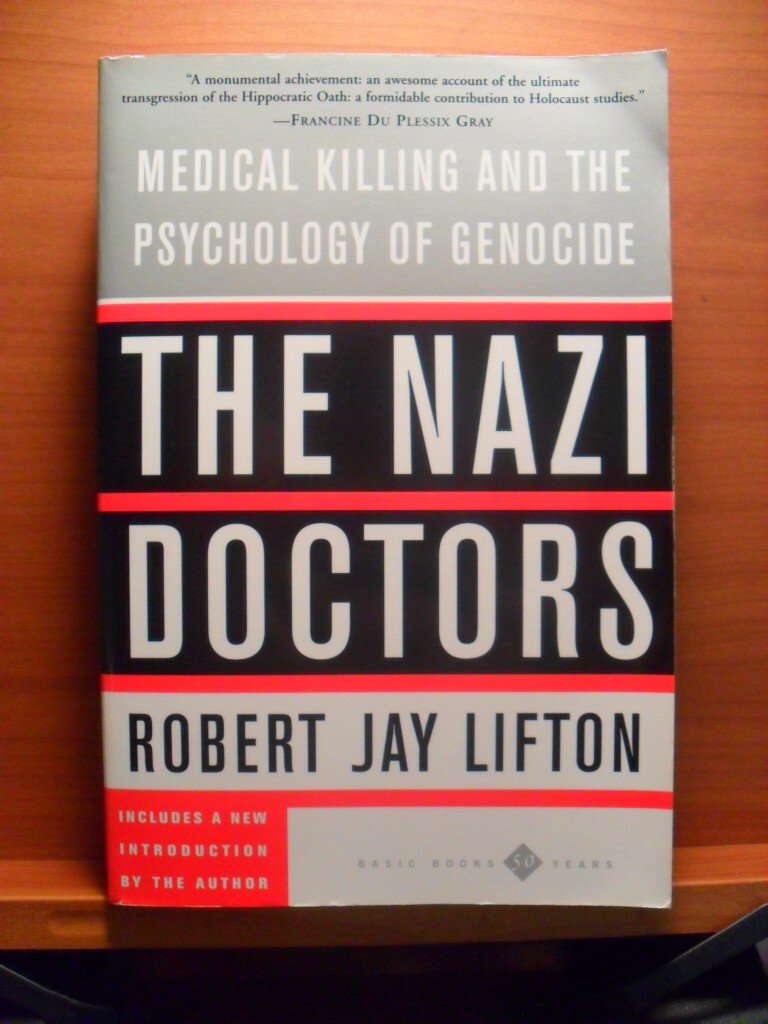
Title
The Nazi Doctors: Medical Killing And The Psychology Of Genocide
Sold by Ergodebooks, an authorized reseller.
Returns accepted within 30 days | support@ergodebooks.com
Shipping Information
- Free Standard Shipping — United States only
- Processing Time: 3–5 business days
- Estimated Delivery: 6–10 business days after dispatch
- Double-boxed, fully insured & discreetly packaged
- Tracking number sent via email once dispatched
Returns & Refund
Returns accepted within 30 days of delivery.
Damaged or Defective Item
Free return shipping + replacement or full refund
Wrong Item Received
Free return shipping + replacement or full refund
Change of Mind
Return shipping at customer's expense · 25% restocking fee applies
Payment Option

Winner Of The Los Angeles Times Book Prizewith A New Preface By The Authorin His Most Powerful And Important Book, Renowned Psychiatrist Robert Jay Lifton Presents A Brilliant Analysis Of The Crucial Role That German Doctors Played In The Nazi Genocide. Now Updated With A New Preface, The Nazi Doctors Remains The Definitive Work On The Nazi Medical Atrocities, A Chilling Expos Of The Banality Of Evil At Its Epitome, And A Sobering Reminder Of The Darkest Side Of Human Nature.
⚠️ WARNING (California Proposition 65):
This product may contain chemicals known to the State of California to cause cancer, birth defects, or other reproductive harm.
For more information, please visit www.P65Warnings.ca.gov.
- Q: How many pages does the book have? A: This book has five hundred seventy-six pages. It provides an in-depth exploration of the psychological aspects of medical atrocities during the Nazi regime.
- Q: What is the binding type of this book? A: The binding type of this book is paperback. This makes it lightweight and flexible, suitable for easy reading and transport.
- Q: What are the dimensions of the book? A: The book measures six inches in length, one and a half inches in width, and nine and a quarter inches in height. These dimensions make it a convenient size for holding and reading.
- Q: Who is the author of this book? A: The author of this book is Robert Jay Lifton. He is a renowned psychiatrist known for his analysis of psychological phenomena related to war and genocide.
- Q: What genre does this book belong to? A: This book belongs to the Social Psychology and Interactions genre. It delves into the intersection of psychology and historical atrocities.
- Q: Is this book suitable for young readers? A: No, this book is not suitable for young readers. It discusses heavy themes of genocide and psychological trauma that may not be appropriate for children.
- Q: What themes are explored in this book? A: The book explores themes of medical ethics, the psychology of evil, and the role of physicians in the Nazi genocide. These themes highlight the complex interplay between medicine and morality.
- Q: What is the target audience for this book? A: The target audience for this book includes scholars, students, and individuals interested in psychology, history, and ethics. It offers deep insights for those studying these subjects.
- Q: How should I care for this book? A: To care for this book, keep it in a dry place away from direct sunlight. Avoid bending the spine to maintain its condition over time.
- Q: Can I read this book if I’m new to the subject? A: Yes, you can read this book even if you're new to the subject. Lifton's writing is accessible and provides context for those unfamiliar with the historical background.
- Q: What makes this book a definitive work? A: This book is considered a definitive work due to its comprehensive analysis and Lifton's extensive research on the involvement of doctors in Nazi atrocities.
- Q: Is there a new preface in this edition? A: Yes, this edition includes a new preface by the author. This preface offers updated insights and reflections on the subject matter.
- Q: How does the author support his arguments? A: The author supports his arguments with historical evidence, psychological analysis, and case studies of individual doctors involved in the Nazi regime.
- Q: What are the implications of the book's findings? A: The implications of the book's findings challenge readers to reflect on moral responsibility and the potential for evil within the medical profession.
- Q: Does the book include any illustrations or images? A: No, the book does not include illustrations or images. It focuses primarily on text to convey its analysis and arguments.
- Q: What distinguishes this book from other works on the topic? A: This book distinguishes itself by combining psychological insight with historical analysis, providing a unique perspective on the moral dilemmas faced by physicians during the Holocaust.