
Title
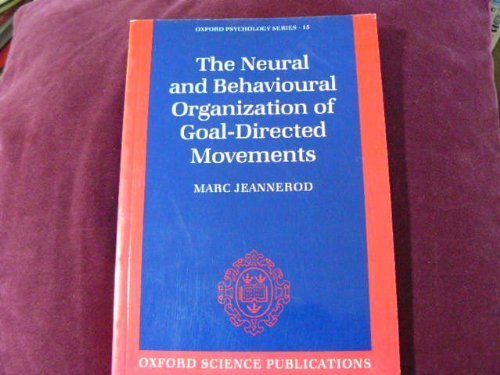
The Neural And Behavioural Organization Of Goaldirected Movements (Oxford Psychology Series),Used
Processing time: 1-3 days
US Orders Ships in: 3-5 days
International Orders Ships in: 8-12 days
Return Policy: 15-days return on defective items
Payment Option

Goaldirected Movement Is Central To The Relationship Between Brain And Behavior In Humans And Other Animals. This Book Presents A Detailed Investigation Of The Topic, One That Integrates Psychology And Physiology. The Authors Account Is Based On A Large Body Of Experimental Data From Human And Animal Work, With Particular Emphasis On Clinical Cases. It Probes Such Questions As: Are Complex Movements Organized On The Same Mode As Simple Ones? How Rigidly Organized Are Coordinated Actions Like Orienting Or Grasping? Where Do Visual Feedback Signals Arise? The Authors Work Takes Into Account The Growing Acceptance Of The Idea That Movements Are Not Directly Dependent Upon Sensory Events, But That They Are Governed By Internal Representations Which Are Built According To Specific, Experimentally Accessible Rules.
⚠️ WARNING (California Proposition 65):
This product may contain chemicals known to the State of California to cause cancer, birth defects, or other reproductive harm.
For more information, please visit www.P65Warnings.ca.gov.
- Q: How many pages does this book have? A: This book has two hundred ninety-six pages. It provides a comprehensive examination of goal-directed movements in psychology and physiology.
- Q: What are the dimensions of this book? A: The book measures six and a half inches in length, nine and a half inches in height, and three-quarters of an inch in width. These dimensions make it portable for reading.
- Q: What type of binding does the book have? A: This book is bound in paperback. Paperback bindings are flexible and lightweight, making them user-friendly.
- Q: Who is the author of this book? A: The author of this book is Marc Jeannerod. He is known for his work in psychology, particularly regarding movement and behavior.
- Q: What is the main topic of this book? A: The main topic of this book is the neural and behavioral organization of goal-directed movements. It integrates concepts from psychology and physiology.
- Q: Is this book suitable for beginners in psychology? A: Yes, this book is suitable for beginners in psychology. It provides a detailed yet accessible exploration of goal-directed movements.
- Q: What kind of research does this book include? A: The book includes a large body of experimental data from both human and animal studies. It emphasizes clinical cases related to movement.
- Q: Can this book help with understanding human behavior? A: Yes, this book can help with understanding human behavior. It discusses how brain functions influence movement and actions.
- Q: How should I care for this book? A: To care for this book, keep it in a dry place and avoid exposure to moisture. Proper storage will maintain its condition.
- Q: Is there a warranty or return policy for this book? A: Yes, there is typically a return policy for books. Check with the retailer for specific details regarding returns and exchanges.
- Q: What if the book arrives damaged? A: If the book arrives damaged, you should contact the retailer immediately for a return or replacement. Most retailers have policies for damaged items.
- Q: Does this book address complex movements? A: Yes, this book addresses complex movements. It explores how these movements are organized and their relationship to simpler actions.
- Q: Is the content of the book based on experimental data? A: Yes, the content is based on a substantial amount of experimental data. It draws from both human and animal research.
- Q: Are there specific clinical cases discussed in the book? A: Yes, there are specific clinical cases discussed. These cases emphasize the practical implications of the research findings.
- Q: Does this book cover the role of visual feedback in movement? A: Yes, the book covers the role of visual feedback in movement. It discusses where these signals originate and their importance in coordination.
- Q: Is this book part of a larger series? A: Yes, this book is part of the Oxford Psychology Series. This series includes various topics in psychology and behavioral science.