
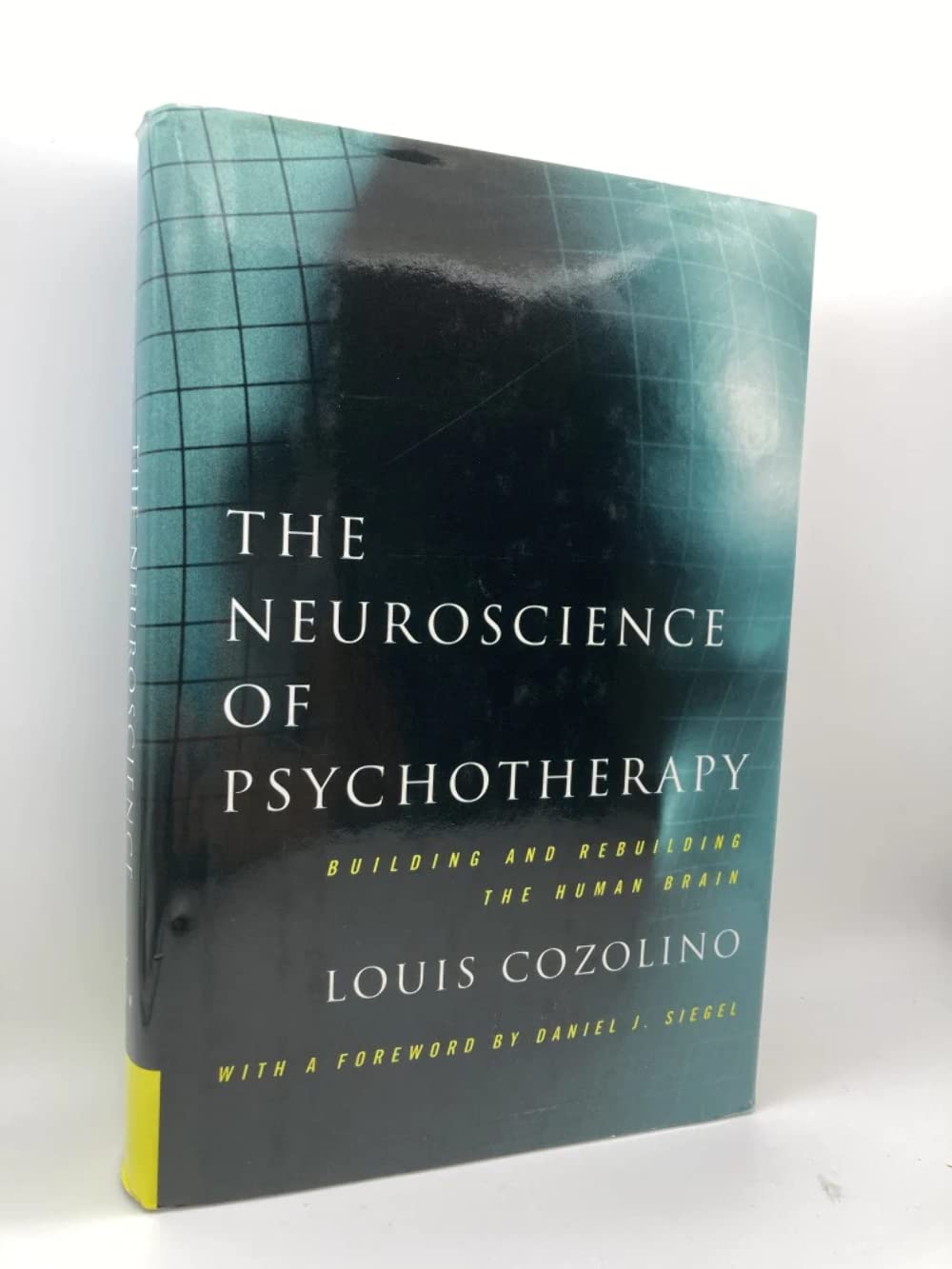
Title

The Neuroscience of Psychotherapy: Building and Rebuilding the Human Brain (Norton Series on Interpersonal Neurobiology),Used
Sold by Ergodebooks, an authorized reseller.
Returns accepted within 30 days | support@ergodebooks.com
Shipping Information
- Free Standard Shipping — United States only
- Processing Time: 3–5 business days
- Estimated Delivery: 6–10 business days after dispatch
- Double-boxed, fully insured & discreetly packaged
- Tracking number sent via email once dispatched
Returns & Refund
Returns accepted within 30 days of delivery.
Damaged or Defective Item
Free return shipping + replacement or full refund
Wrong Item Received
Free return shipping + replacement or full refund
Change of Mind
Return shipping at customer's expense · 25% restocking fee applies
Payment Option

For years, the brain has been viewed as a relatively static entity, determined by the interaction of genetic preprogramming and early childhood experience. In contrast to this view, recent theoretical perspectives and technological advances in brain imaging have revealed that the brain is an organ continually built and rebuilt by one's experiences. We are now beginning to learn that many forms of psychotherapy, developed in the absence of any scientific understanding of the brain, are supported by neuroscientific findings.Louis Cozolino's The Neuroscience of Psychotherapy illustrates in a clearly written and accessible way how the brain's architecture is related to the problems, passions, and aspirations of human beings. As Cozolino so eloquently argues, all forms of psychotherapyfrom psychoanalysis to behavioral interventionsare successful to the extent to which they enhance change in relevant neural circuits.Beginning with an overview of the intersecting fields of neuroscience and psychotherapy, this book delves into the brain's inner workings, from basic neuronal building blocks to complex systems of memory, language, and the organization of experience. It continues by explaining the development and organization of the healthy brain and the unhealthy brain. Common problems such as anxiety, trauma, and codependency are discussed from a scientific and clinical perspective. Cozolino concludes by introducing the emerging paradigm of the psychotherapistasneuroscientist and presents some practical applications of neuroscience to psychotherapy. Throughout the book, the science behind the brain's workings is applied to daytoday experience and clinical practice.Written for psychotherapists and others interested in the relationship between brain and behavior, this book encourages us to consider the brain when attempting to understand human development, mental illness, and psychological health.
⚠️ WARNING (California Proposition 65):
This product may contain chemicals known to the State of California to cause cancer, birth defects, or other reproductive harm.
For more information, please visit www.P65Warnings.ca.gov.
- Q: How many pages does this book have? A: This book has four hundred pages. It provides an in-depth exploration of neuroscience and psychotherapy.
- Q: What are the dimensions of this book? A: The dimensions of this book are six point five inches in length, one point four two inches in width, and nine point six one inches in height.
- Q: What type of binding does this book have? A: This book features a hardcover binding. This makes it durable and suitable for frequent use.
- Q: Who is the author of this book? A: The author of this book is Louis Cozolino. He is known for his contributions to the field of psychotherapy and neuroscience.
- Q: What genre does this book belong to? A: This book belongs to the Counseling genre. It focuses on the integration of neuroscience with therapeutic practices.
- Q: Is this book suitable for beginners in psychotherapy? A: Yes, this book is suitable for beginners. It presents complex ideas in an accessible manner, making it easy to understand.
- Q: Can this book help with understanding mental health issues? A: Yes, this book helps in understanding mental health issues. It discusses anxiety, trauma, and codependency from a scientific perspective.
- Q: How can I apply the insights from this book in practice? A: You can apply insights from this book by integrating neuroscientific findings into your therapeutic practice. The author provides practical applications for therapists.
- Q: Is this book intended for professional therapists only? A: No, this book is not intended for professional therapists only. It is also valuable for anyone interested in the relationship between brain and behavior.
- Q: What is the best way to care for this hardcover book? A: To care for this hardcover book, keep it in a dry place away from direct sunlight. Avoid bending the pages and store it upright.
- Q: Are there any safety concerns with this book? A: No, there are no safety concerns with this book. It is a scholarly text intended for educational purposes.
- Q: How should I store this book to keep it in good condition? A: Store this book upright on a shelf. Ensure it is in a climate-controlled environment to prevent damage.
- Q: What if the book arrives damaged? A: If the book arrives damaged, you should contact the seller for a return or exchange. Most sellers offer a return policy for damaged items.
- Q: Does this book include any practical exercises? A: Yes, this book includes practical applications and exercises. These help readers to implement theories in real-life therapeutic settings.
- Q: Is this book based on current scientific research? A: Yes, this book is based on current scientific research. It incorporates recent advances in neuroscience and psychotherapy.
- Q: Can this book be used as a textbook for a course? A: Yes, this book can be used as a textbook for a course. It provides foundational knowledge on neuroscience relevant to therapy.