
Title
The New Austrian Architecture,Used
Sold by Ergodebooks, an authorized reseller.
Returns accepted within 30 days | support@ergodebooks.com
Shipping Information
- Free Standard Shipping — United States only
- Processing Time: 3–5 business days
- Estimated Delivery: 6–10 business days after dispatch
- Double-boxed, fully insured & discreetly packaged
- Tracking number sent via email once dispatched
Returns & Refund
Returns accepted within 30 days of delivery.
Damaged or Defective Item
Free return shipping + replacement or full refund
Wrong Item Received
Free return shipping + replacement or full refund
Change of Mind
Return shipping at customer's expense · 25% restocking fee applies
Payment Option

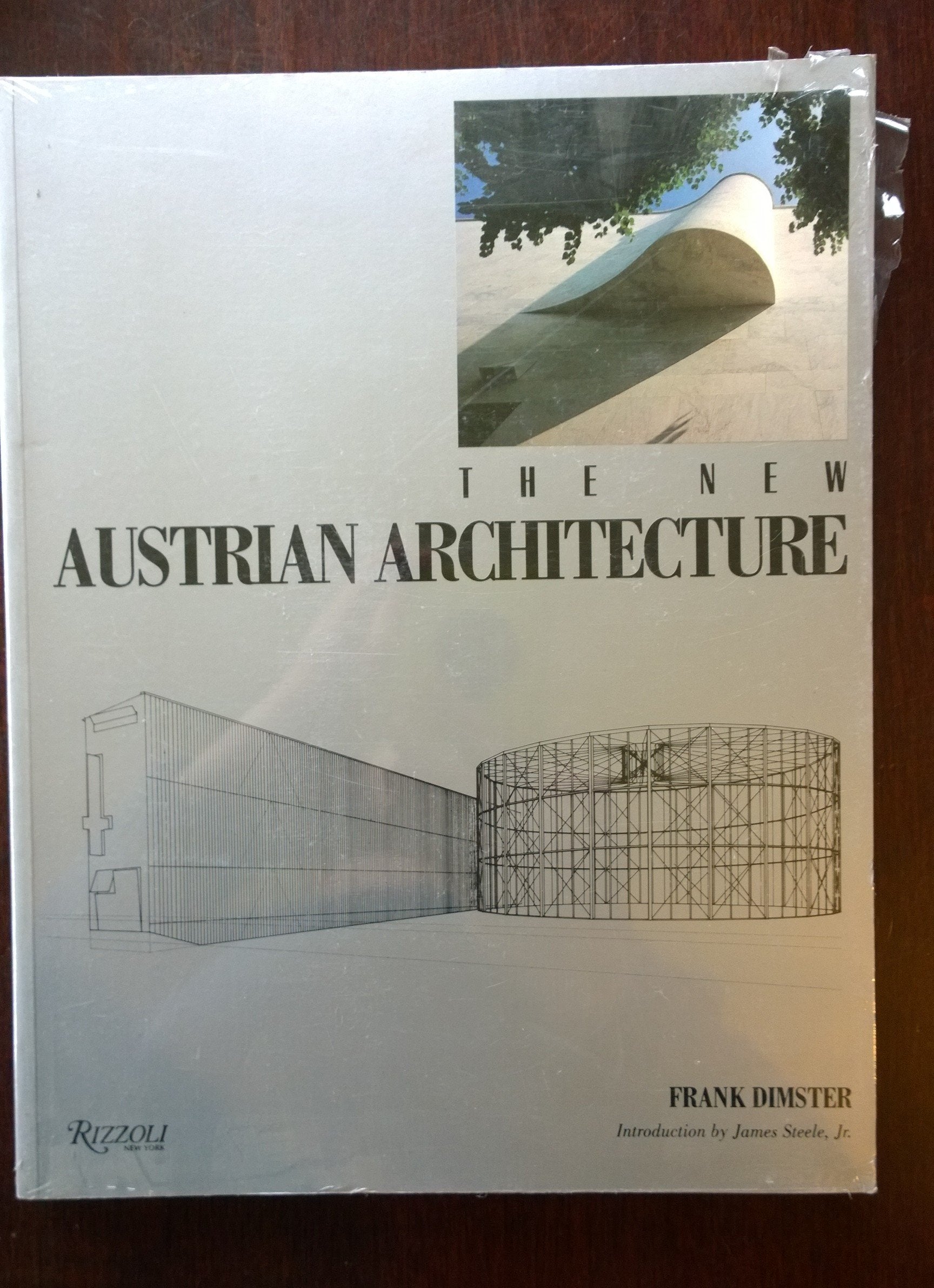
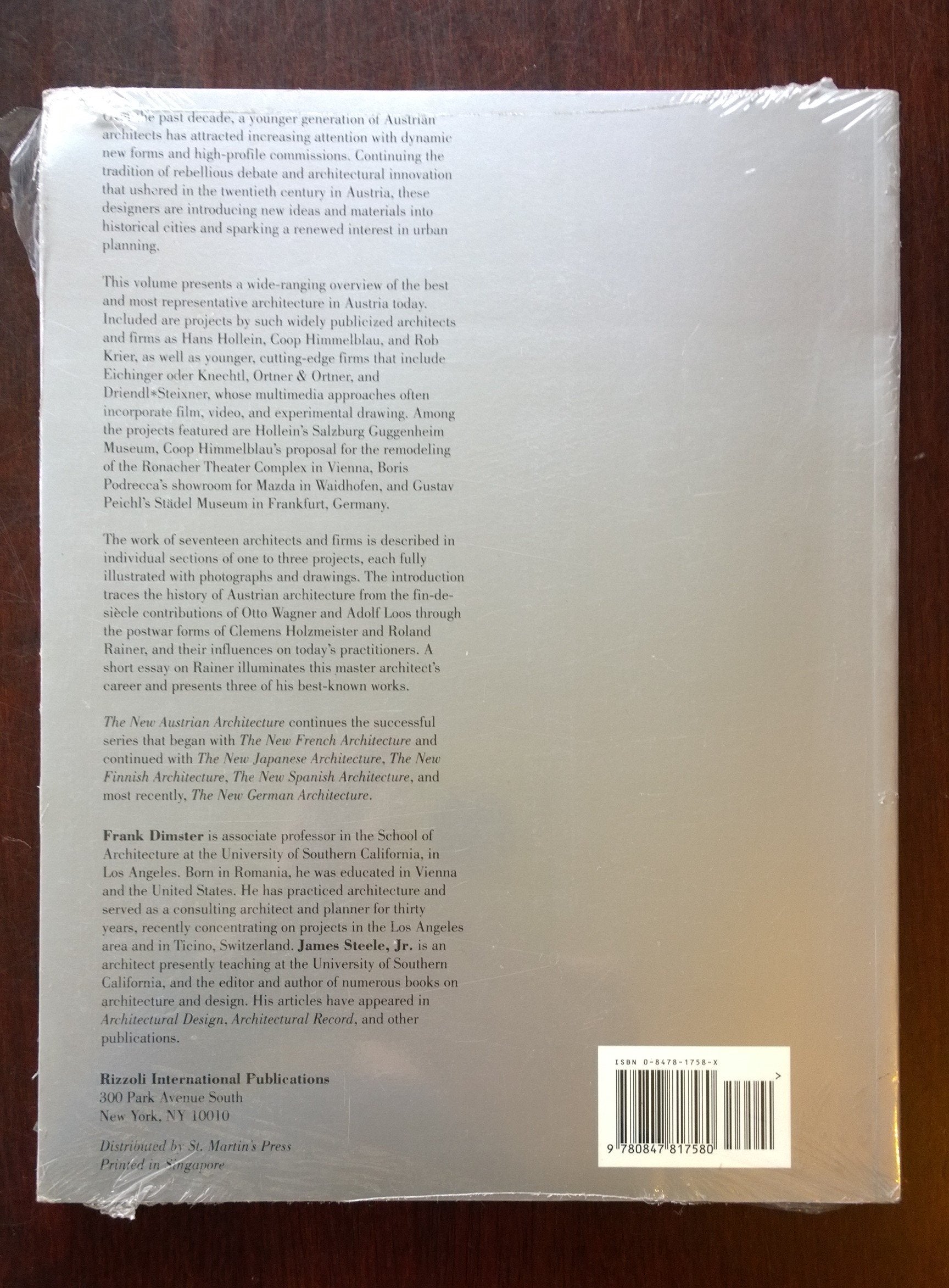
Over the past decade, a younger generation of Austrian architects has attracted increasing attention with dynamic new forms and highprofile commissions. Continuing the tradition of rebellious debate and architectural innovation that ushered in the twentieth century in Austria, these designers are introducing new ideas and materials into historical cities and sparking a renewed interest in urban planning.This volume presents a wideranging overview of the best and most representative architecture in Austria today. Included are projects by such widely publicized architects and firms as Hans Hollein, Coop Himmelblau, and Rob Krier, as well as younger, cuttingedge firms that include Eichinger oder Knechtl, Ortner & Ortner, and Driendl*Steixner, whose multimedia approaches often incorporate film, video, and experimental drawing. Among the projects featured are Hollein's Salzburg Guggenheim Museum, Coop Himmelblau's proposal for the remodeling of the Ronacher Theater Complex in Vienna, Boris Podrecca's showroom for Mazda in Waidhofen, and Gustav Peichl's Stdel Museum in Frankfurt, Germany.The work of seventeen architects and firms is described in individual sections of one to three projects, each fully illustrated with photographs and drawings. The introduction traces the history of Austrian architecture from the findesicle contributions of Otto Wagner and Adolf Loos through the postwar forms of Clemens Holzmeister and Roland Rainer, and their influences on today's practitioners. A short essay on Rainer illuminates this master architect's career and presents three of his bestknown works.The New Austrian Architecture continues the successful series that began withThe New French Architecture and continued with The New Japanese Architecture,The New Finnish Architecture, The New Spanish Architecture, and most recently,The New German Architecture.Over the past decade, a younger generation of Austrian architects has attracted increasing attention with dynamic new forms and highprofile commissions. Continuing the tradition of rebellious debate and architectural innovation that ushered in the twentieth century in Austria, these designers are introducing new ideas and materials into historical cities and sparking a renewed interest in urban planning.This volume presents a wideranging overview of the best and most representative architecture in Austria today. Included are projects by such widely publicized architects and firms as Hans Hollein, Coop Himmelblau, and Rob Krier, as well as younger, cuttingedge firms that include Eichinger oder Knechtl, Ortner & Ortner, and Driendl*Steixner, whose multimedia approaches often incorporate film, video, and experimental drawing. Among the projects featured are Hollein's Salzburg Guggenheim Museum, Coop Himmelblau's proposal for the remodeling of the Ronacher Theater Complex in Vienna, Boris Podrecca's showroom for Mazda in Waidhofen, and Gustav Peichl's Stdel Museum in Frankfurt, Germany.The work of seventeen architects and firms is described in individual sections of one to three projects, each fully illustrated with photographs and drawings. The introduction traces the history of Austrian architecture from the findesicle contributions of Otto Wagner and Adolf Loos through the postwar forms of Clemens Holzmeister and Roland Rainer, and their influences on today's practitioners. A short essay on Rainer illuminates this master architect's career and presents three of his bestknown works.The New Austrian Architecture continues the successful series that began withThe New French Architecture and continued with The New Japanese Architecture,The New Finnish Architecture, The New Spanish Architecture, and most recently,The New German Architecture.
⚠️ WARNING (California Proposition 65):
This product may contain chemicals known to the State of California to cause cancer, birth defects, or other reproductive harm.
For more information, please visit www.P65Warnings.ca.gov.