
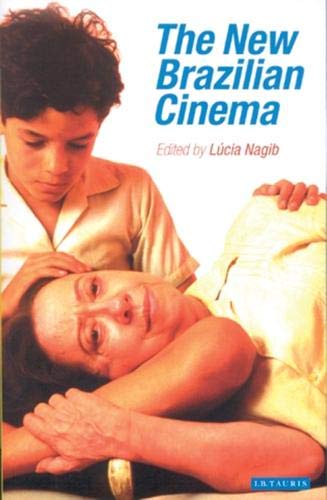
Title
The New Brazilian Cinema
Processing time: 1-3 days
US Orders Ships in: 3-5 days
International Orders Ships in: 8-12 days
Return Policy: 15-days return on defective items
Payment Option

Product Description Lcia Nagib Here Presents The First Comprehensive Critical Survey Of Brazilian Film Production Since The Mid1990S, Which Has Become Known As The Renaissance Of Brazilian Cinema. Besides Reflecting On The Conditions That Made Possible This Recent Boom, This Book Elaborates On The New Aesthetic Tendencies Of Recent Productions, As Well As Their Relationships To Earlier Traditions Of Brazilian Cinema. Internationally Acclaimed Films, Such As Central Station, Seven Days In September And Orpheus, Are Analyzed Alongside Daringly Experimental Works, Such As Chronically Unfeasible, Starry Sky And Perfumed Ball. About The Author Lucia Nagib Is Associate Professor Of Film History And Film Theory, State University Of Campinas, Brazil, And Film Critic Of The Daily Newspaper Folha De S. Paulo.
⚠️ WARNING (California Proposition 65):
This product may contain chemicals known to the State of California to cause cancer, birth defects, or other reproductive harm.
For more information, please visit www.P65Warnings.ca.gov.
- Q: How many pages does 'The New Brazilian Cinema' have? A: This book has three hundred twenty pages. It provides a comprehensive look at Brazilian film production since the mid-1990s.
- Q: What is the binding type of this book? A: The binding type is hardcover. This ensures durability and longevity for readers.
- Q: What are the dimensions of 'The New Brazilian Cinema'? A: The dimensions are five point six three inches in length, one point two inches in width, and eight point seven four inches in height. These sizes make it easy to handle and store.
- Q: Who is the author of 'The New Brazilian Cinema'? A: The author is Lúcia Nagib. She is known for her critical insights into Brazilian cinema.
- Q: What genre does this book fall under? A: This book falls under the Performing Arts genre. It focuses on film production and aesthetic tendencies in Brazilian cinema.
- Q: How can I use this book for research? A: You can use this book as a reference for understanding Brazilian cinema. It covers critical trends and analyses of significant films.
- Q: Is this book suitable for beginners in film studies? A: Yes, it is suitable for beginners. The book offers a comprehensive introduction to Brazilian cinema, making it accessible for new learners.
- Q: Can I read this book if I am not familiar with Brazilian cinema? A: Yes, you can read this book without prior knowledge of Brazilian cinema. It provides context and explanations for various aspects of the films discussed.
- Q: How do I care for this hardcover book? A: To care for this hardcover book, keep it in a dry place and avoid exposure to direct sunlight. This helps preserve the quality of the cover and pages.
- Q: Is this book safe for children? A: Yes, this book is safe for older children and teens interested in film studies. However, parental guidance is recommended for younger readers.
- Q: How should I store 'The New Brazilian Cinema'? A: Store this book upright on a shelf or in a bookcase to prevent damage. Avoid stacking heavy items on top of it.
- Q: What if the book arrives damaged? A: If the book arrives damaged, you should contact the seller for a return or exchange. Most sellers have policies to address such issues.
- Q: Is there a warranty for this book? A: Typically, books do not come with a warranty. However, check with the seller for their return policy.
- Q: How does this book compare to others in film studies? A: This book provides a unique perspective on Brazilian cinema, distinguishing it from other general film studies texts. It focuses specifically on the Renaissance of Brazilian cinema.
- Q: Is this book suitable for academic use? A: Yes, it is suitable for academic use. It offers critical analyses and insights that can support research and coursework in film studies.
- Q: What are some key films discussed in this book? A: Key films discussed include 'Central Station,' 'Seven Days in September,' and 'Orpheus.' These films exemplify significant trends in Brazilian cinema.