If you have any questions, you are always welcome to contact us. We'll get back to you as soon as possible, withing 24 hours on weekdays.
Customer service
All questions about your order, return and delivery must be sent to our customer service team by e-mail at yourstore@yourdomain.com
Sale & Press
If you are interested in selling our products, need more information about our brand or wish to make a collaboration, please contact us at press@yourdomain.com
Help
If you have any questions, you are always welcome to contact us. We'll get back to you as soon as possible, withing 24 hours on weekdays.
Customer service
All questions about your order, return and delivery must be sent to our customer service team by e-mail at yourstore@yourdomain.com
Sale & Press
If you are interested in selling our products, need more information about our brand or wish to make a collaboration, please contact us at press@yourdomain.com
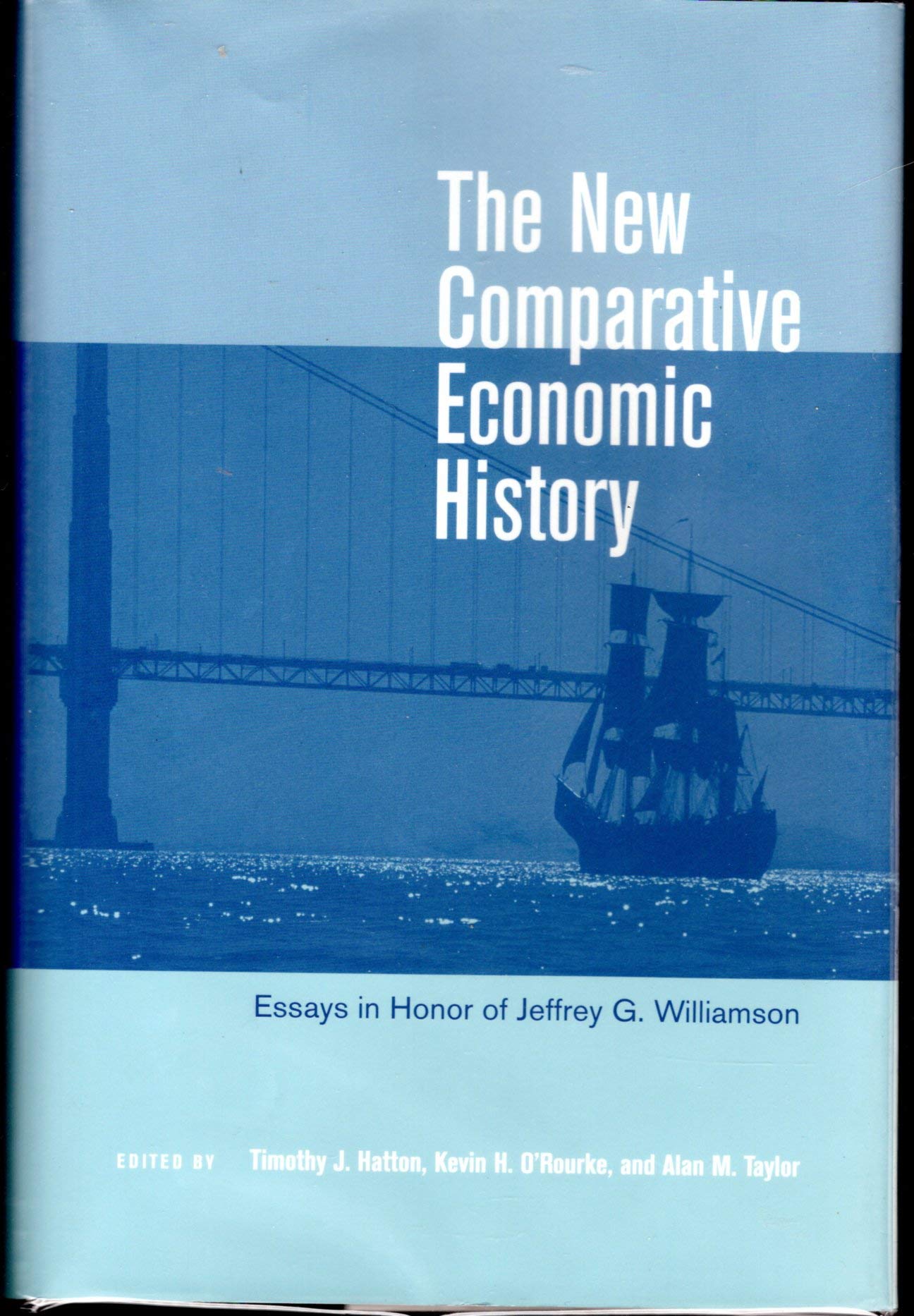
Essays by internationally prominent economists examine long run crosscountry economic trends from the perspective of New Comparative Economic History, an approach pioneered by Harvard economist Jeffrey G. Williamson.The innovative approach to economic history known as the New Comparative Economic History represents a distinct change in the way that many economic historians view their role, do their work, and interact with the broader economics profession. The New Comparative Economic History reflects a belief that economic processes can best be understood by systematically comparing experiences across time, regions, and, above all, countries. It is motivated by current questions that are not nation specificthe sources of economic growth, the importance of institutions, and the impact of globalizationand focuses on longrun trends rather than shortrun ups and downs in economic activity. The essays in this volume offer a New Economic Comparative History perspective on a range of topics and are written in honor of Jeffrey G. Williamson, the most distinguished and influential scholar in the field.The contributors, prominent American and European economists, consider such topics as migration, education, and wage convergence; democracy and protectionism in the nineteenth century; trade and immigration policies in laborscarce economies; and the effect of institutions on European productivity and jobs.
⚠️ WARNING (California Proposition 65):
This product may contain chemicals known to the State of California to cause cancer,
birth defects, or other reproductive harm.
For MAP (Minimum Advertised Price) violations and Intellectual Property (IP) or Trademark concerns, please contact:
support@ergodebooks.com
⚠️ California Proposition 65 Warning: Some products sold on this website may expose you to chemicals known to the State of California to cause cancer, birth defects, or other reproductive harm. For more information, visit www.P65Warnings.ca.gov.