
Title
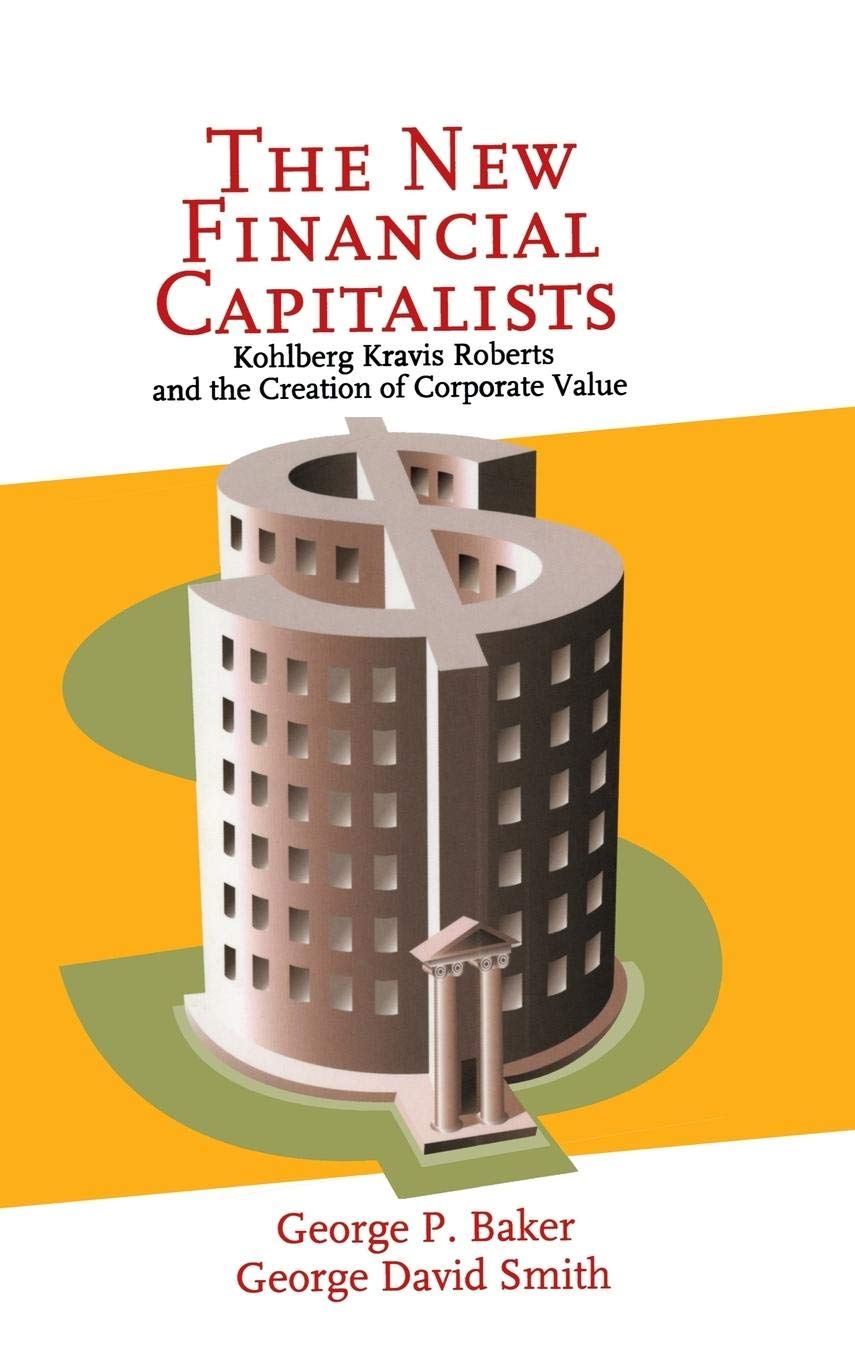
The New Financial Capitalists: Kohlberg Kravis Roberts and the Creation of Corporate Value,New
Sold by Ergodebooks, an authorized reseller.
Returns accepted within 30 days | support@ergodebooks.com
Shipping Information
- Free Standard Shipping — United States only
- Processing Time: 3–5 business days
- Estimated Delivery: 6–10 business days after dispatch
- Double-boxed, fully insured & discreetly packaged
- Tracking number sent via email once dispatched
Returns & Refund
Returns accepted within 30 days of delivery.
Damaged or Defective Item
Free return shipping + replacement or full refund
Wrong Item Received
Free return shipping + replacement or full refund
Change of Mind
Return shipping at customer's expense · 25% restocking fee applies
Payment Option

A widespread misunderstanding concerning leveraged buyouts (LBOs) is the belief that they accomplish little but the ruin of companies and the loss of employment. How else could it be? Until recently, journalists, including much of the business press, have depicted LBO specialists as generally greedy, if not sinister, forces whose activities compound the dislocations of modern American economic and social life. This kind of criticism reached a crescendo in the press and in Congress at the end of the 1980s, and Kohlberg Kravis Roberts found itself in the middle of the controversy. Based on interviews with partners of the firm and on unprecedented access to KKR's records, George P. Baker and George David Smith have written a definitive account of how KKR has approached LBOs in a book that will appeal to the specialist and general reader alike. The authors focus on KKR's founding, evolution, and innovations as ways to understand issues in modern American business. In examining KKR as a unique form of enterpriseone that subscribes to a set of alternative perspectives on business and value creationthe book bridges the gap between public perception and academic knowledge of how financial innovation impacts economic life. The firm's approach to leveraged buyouts was an important aspect of the corporate restructuring and governance reforms in the American economy from the mid1970s through 1990 (the years of what some have called the 'leveraged buyout movement'). KKR and other companies fundamentally altered the prevailing perception of the role of debt in the modern American corporation and established an alternative model for organizing and managing corporate enterprises. KKR financed the companies it acquired with high levels of debt, while linking their ownership to management. It then imposed rigorous monitoring by the board of directors over the companies in its portfolio. This combination of factors forced managers to concentrate not on growth but rather on how to achieve value through whatever means was most appropriate to the company's circumstances. The purpose of the leveraged buyout was to realize, or 'create,' value in companies by reforming their management systems. KKR's approach to restructuring the relationship between owners and managers in a highly leveraged firm rested on a basic principle: Make managers owners by making them invest a significant share of their personal wealth in the enterprises they manage, and they will have stronger incentives to act in the best interests of all shareholders.
⚠️ WARNING (California Proposition 65):
This product may contain chemicals known to the State of California to cause cancer, birth defects, or other reproductive harm.
For more information, please visit www.P65Warnings.ca.gov.
- Q: How many pages does the book have? A: This book has two hundred seventy-two pages. It provides an in-depth exploration of leveraged buyouts and KKR's impact on corporate value.
- Q: What is the book's binding type? A: The book is hardcover. This binding type enhances durability, making it suitable for both reading and display.
- Q: What are the book's dimensions? A: The book measures six and a half inches in length, one inch in width, and nine point seven six inches in height. These dimensions make it a manageable size for reading and shelving.
- Q: Who is the author of the book? A: The book is authored by George P. Baker and George David Smith. They provide expert insights into the world of leveraged buyouts.
- Q: What is the main theme of the book? A: The book explores the theme of financial innovation through leveraged buyouts. It aims to clarify misconceptions about LBOs and their effects on companies.
- Q: What is the reading level for this book? A: The book is suitable for both specialist and general readers. It balances academic insights with accessible language.
- Q: How should I care for this hardcover book? A: To keep the book in good condition, store it upright in a dry place away from direct sunlight. Avoid exposing it to moisture to prevent damage.
- Q: Is this book safe for children? A: Yes, the book is suitable for older teens and adults. It covers complex financial topics that may require a mature understanding.
- Q: Can I return the book if I'm not satisfied? A: Yes, you can return the book if it's in its original condition. Check the return policy of the retailer for specific details.
- Q: What if the book arrives damaged? A: If the book arrives damaged, contact the seller immediately for a replacement or refund. Most retailers have policies in place for such issues.
- Q: How does this book compare to others in the finance genre? A: This book stands out by providing a detailed historical account of KKR's role in financial innovation, unlike many general finance texts.
- Q: Is this book a good resource for business students? A: Yes, it is an excellent resource for business students. It offers insights into real-world applications of financial theories.
- Q: Does this book include interviews with KKR partners? A: Yes, the book includes interviews with partners at KKR. These firsthand accounts enrich the narrative and provide unique perspectives.
- Q: What is the publication date of the book? A: The publication date is not specified, but it reflects historical events and practices in corporate finance, particularly from the 1970s to the 1990s.
- Q: Is there a summary available for this book? A: Yes, summaries are available online. They highlight the book's key themes, including the evolution of KKR and leveraged buyouts.