
Title
The New Global Rulers: The Privatization of Regulation in the World Economy,New
Sold by Ergodebooks, an authorized reseller.
Returns accepted within 30 days | support@ergodebooks.com
Shipping Information
- Free Standard Shipping — United States only
- Processing Time: 3–5 business days
- Estimated Delivery: 6–10 business days after dispatch
- Double-boxed, fully insured & discreetly packaged
- Tracking number sent via email once dispatched
Returns & Refund
Returns accepted within 30 days of delivery.
Damaged or Defective Item
Free return shipping + replacement or full refund
Wrong Item Received
Free return shipping + replacement or full refund
Change of Mind
Return shipping at customer's expense · 25% restocking fee applies
Payment Option

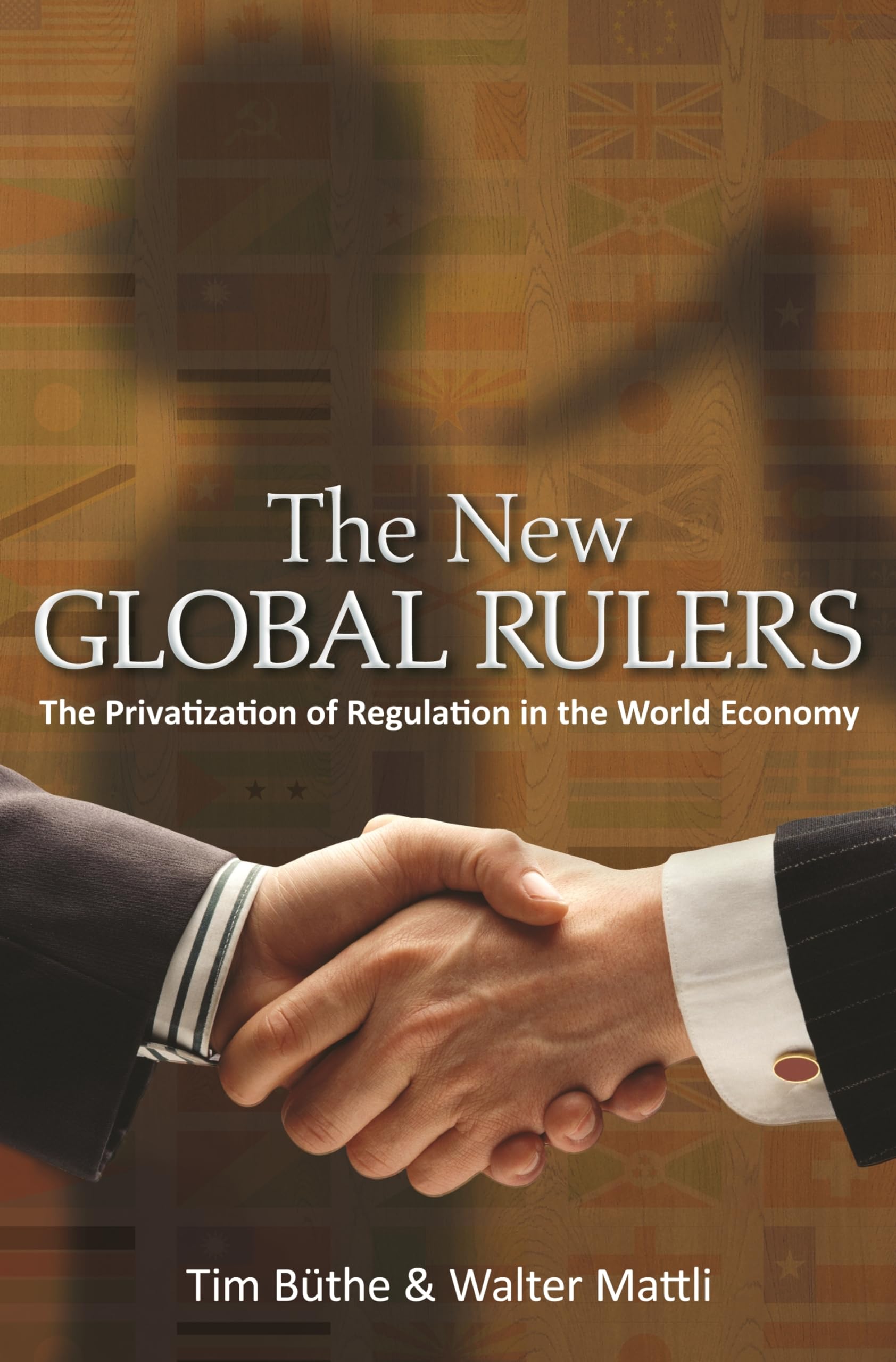
Global private regulationswho wins, who loses, and whyOver the past two decades, governments have delegated extensive regulatory authority to international privatesector organizations. This internationalization and privatization of rule making has been motivated not only by the economic benefits of common rules for global markets, but also by the realization that government regulators often lack the expertise and resources to deal with increasingly complex and urgent regulatory tasks. The New Global Rulers examines who writes the rules in international private organizations, as well as who wins, who losesand why.Tim Bthe and Walter Mattli examine three powerful global private regulators: the International Accounting Standards Board, which develops financial reporting rules used by corporations in more than a hundred countries; and the International Organization for Standardization and the International Electrotechnical Commission, which account for 85 percent of all international product standards. Bthe and Mattli offer both a new framework for understanding global private regulation and detailed empirical analyses of such regulation based on multicountry, multiindustry business surveys. They find that global rule making by technical experts is highly political, and that even though rule making has shifted to the international level, domestic institutions remain crucial. Influence in this form of global private governance is not a function of the economic power of states, but of the ability of domestic standardsetters to provide timely information and speak with a single voice. Bthe and Mattli show how domestic institutions' abilities differ, particularly between the two main standardization players, the United States and Europe.
⚠️ WARNING (California Proposition 65):
This product may contain chemicals known to the State of California to cause cancer, birth defects, or other reproductive harm.
For more information, please visit www.P65Warnings.ca.gov.