
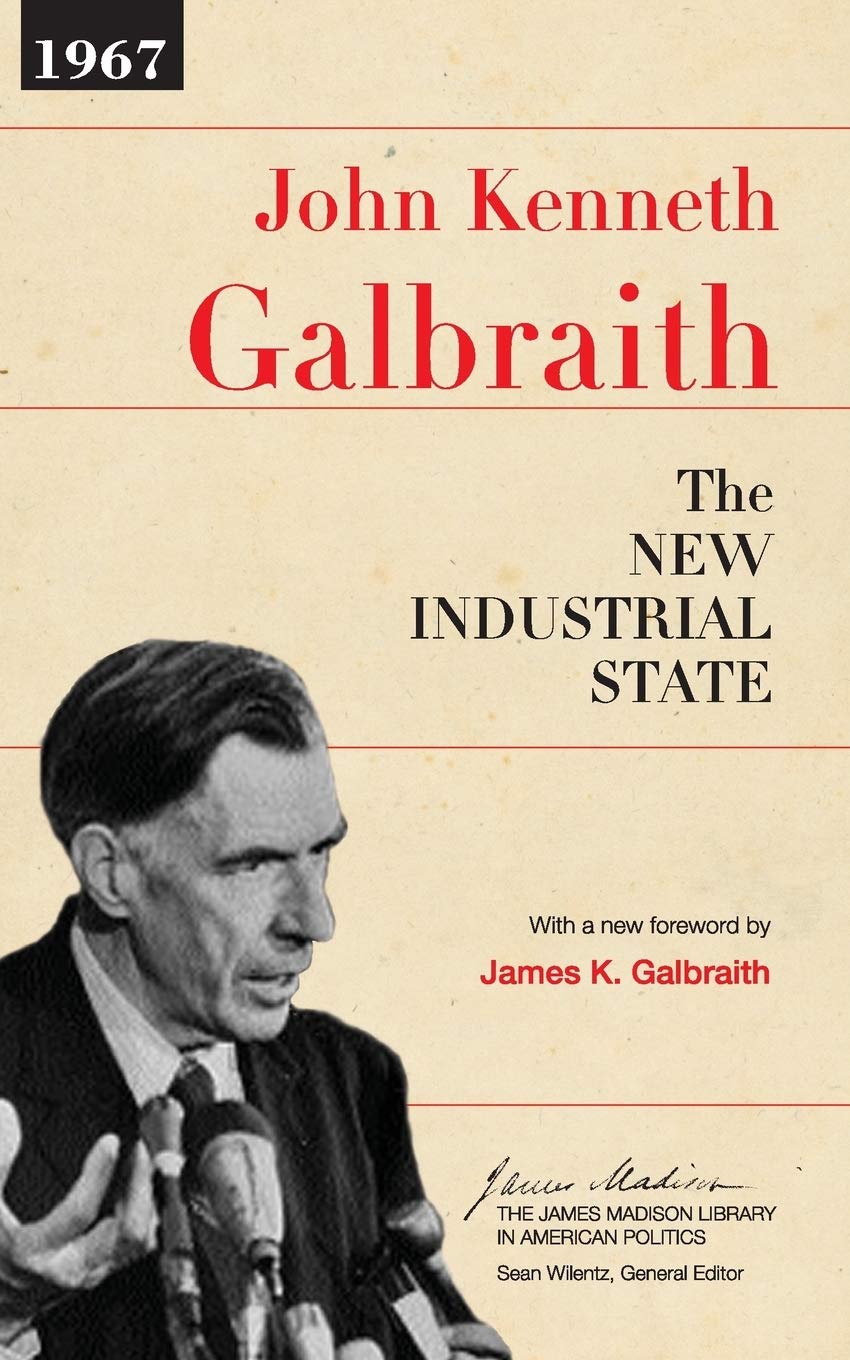
Title
The New Industrial State (The James Madison Library In American Politics),New
Sold by Ergodebooks, an authorized reseller.
Returns accepted within 30 days | support@ergodebooks.com
Shipping Information
- Free Standard Shipping — United States only
- Processing Time: 3–5 business days
- Estimated Delivery: 6–10 business days after dispatch
- Double-boxed, fully insured & discreetly packaged
- Tracking number sent via email once dispatched
Returns & Refund
Returns accepted within 30 days of delivery.
Damaged or Defective Item
Free return shipping + replacement or full refund
Wrong Item Received
Free return shipping + replacement or full refund
Change of Mind
Return shipping at customer's expense · 25% restocking fee applies
Payment Option

With Searing Wit And Incisive Commentary, John Kenneth Galbraith Redefined America'S Perception Of Itself In The New Industrial State, One Of His Landmark Works. The United States Is No Longer A Freeenterprise Society, Galbraith Argues, But A Structured State Controlled By The Largest Companies. Advertising Is The Means By Which These Companies Manage Demand And Create Consumer 'Need' Where None Previously Existed. Multinational Corporations Are The Continuation Of This Power System On An International Level. The Goal Of These Companies Is Not The Betterment Of Society, But Immortality Through An Uninterrupted Stream Of Earnings.First Published In 1967, The New Industrial State Continues To Resonate Today.
⚠️ WARNING (California Proposition 65):
This product may contain chemicals known to the State of California to cause cancer, birth defects, or other reproductive harm.
For more information, please visit www.P65Warnings.ca.gov.
- Q: How many pages does the book have? A: The book has five hundred seventy-six pages. This makes it a substantial read, providing in-depth analysis and insights.
- Q: What type of binding does the book use? A: The book is available in paperback binding. This makes it lightweight and flexible for reading.
- Q: What are the dimensions of the book? A: The book measures five inches in length, one and a half inches in width, and eight inches in height. These dimensions make it portable and easy to handle.
- Q: What is the reading level of this book? A: The book is suitable for adult readers. Its themes and discussions are geared toward those interested in political economy.
- Q: Is this book suitable for beginners in political theory? A: Yes, the book can be read by beginners. However, prior knowledge of economic concepts may enhance understanding.
- Q: How can I best engage with this book? A: You can engage with the book by taking notes and reflecting on its themes. Discussing it with peers may also deepen your understanding.
- Q: How should I store the book to keep it in good condition? A: Store the book upright on a shelf to prevent warping. Keep it away from direct sunlight to avoid fading.
- Q: Can I clean the book if it gets dirty? A: Yes, you can gently wipe the cover with a soft, dry cloth. Avoid using water or chemicals as they may damage the material.
- Q: Does the book contain any hazardous materials? A: No, the book does not contain hazardous materials. It is safe for general handling and reading.
- Q: What should I do if the book arrives damaged? A: If the book arrives damaged, contact the seller for a return or replacement. Provide photos of the damage for easier processing.
- Q: Is there a warranty for this book? A: No, books typically do not come with a warranty. However, check the return policy for any guarantees.
- Q: What if I want to return the book? A: You can return the book according to the seller's return policy. Make sure to keep the receipt for the return process.
- Q: Are there any similar books to this one? A: Yes, similar books include 'The Affluent Society' by John Kenneth Galbraith and 'Capitalism, Socialism, and Democracy' by Joseph Schumpeter. These works also explore economic themes.
- Q: How does this book compare to others in the same genre? A: This book offers a critical view of economic structures, making it distinct from more optimistic texts. It challenges readers to think critically about capitalism.
- Q: Would this book appeal to someone interested in corporate influence? A: Yes, this book specifically discusses corporate control in America. It addresses how large companies shape society and consumer needs.