If you have any questions, you are always welcome to contact us. We'll get back to you as soon as possible, withing 24 hours on weekdays.
Customer service
All questions about your order, return and delivery must be sent to our customer service team by e-mail at yourstore@yourdomain.com
Sale & Press
If you are interested in selling our products, need more information about our brand or wish to make a collaboration, please contact us at press@yourdomain.com
Help
If you have any questions, you are always welcome to contact us. We'll get back to you as soon as possible, withing 24 hours on weekdays.
Customer service
All questions about your order, return and delivery must be sent to our customer service team by e-mail at yourstore@yourdomain.com
Sale & Press
If you are interested in selling our products, need more information about our brand or wish to make a collaboration, please contact us at press@yourdomain.com
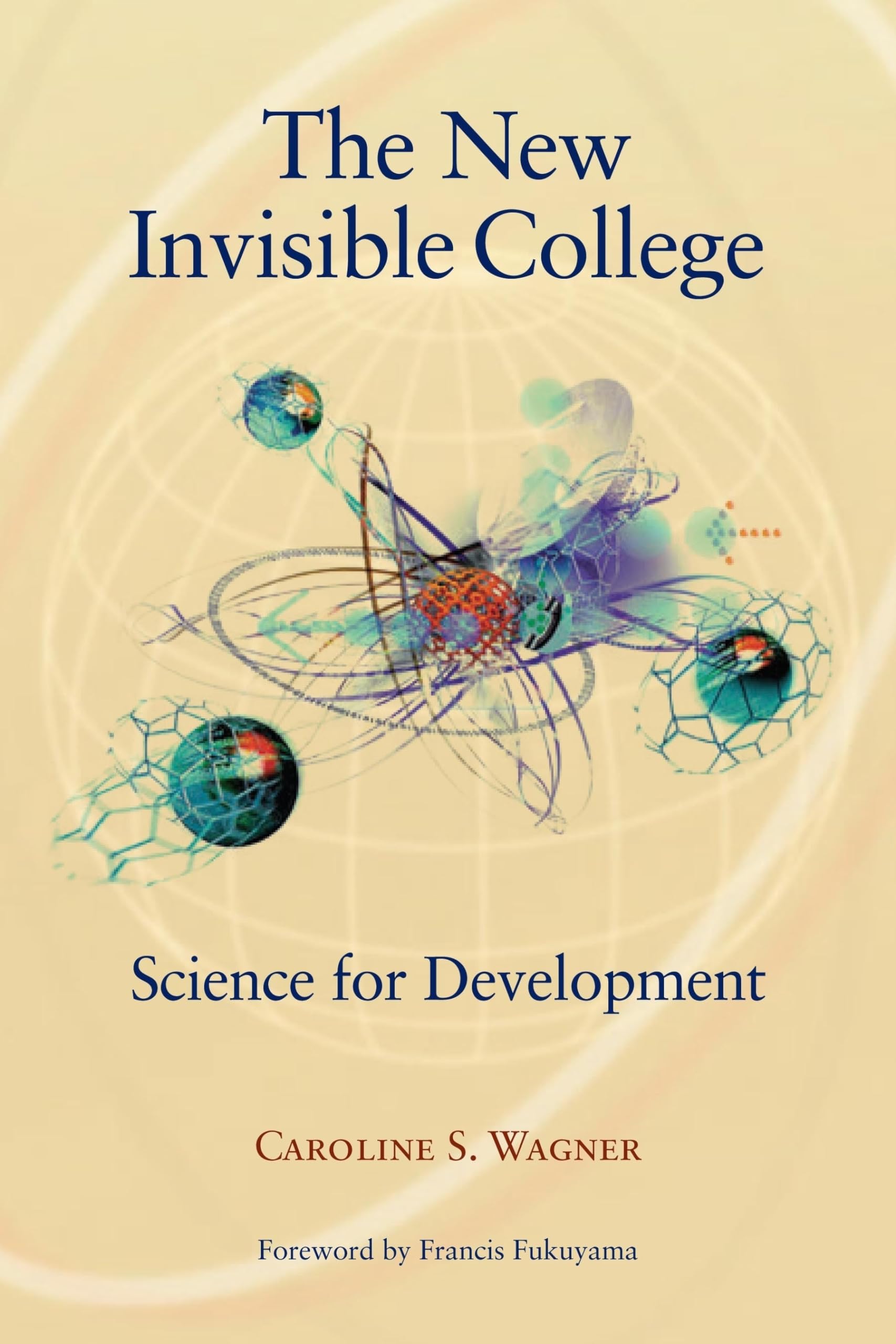
The twentieth century was the era of ''big science.'' Driven by strategic rivalries and fierce economic competition, wealthy governments invested heavily in national science establishments. Direct funding for institutions like the National Science Foundation and highvisibility projects, such as the race to the moon, fueled innovation, growth, and national prestige. But the big science model left poorer countries out in the cold. Today the organization of science is undergoing a fundamental transformation. In T he New Invisible College, Caroline Wagner combines quantitative data and extensive interviews to map the emergence of global science networks and trace the dynamics driving their growth. She argues that the shift from big science to global networks creates unprecedented opportunities for developing countries to tap science's potential. Rather than squander resources in vain efforts to mimic the scientific establishments of the twentieth century, developing country governments can leverage networks by creating incentives for topnotch scientists to focus on research that addresses their concerns and by finding ways to tie knowledge to local problem solving. T he New Invisible College offers both a guidebook and a playbook for policymakers confronting these tasks.'
⚠️ WARNING (California Proposition 65):
This product may contain chemicals known to the State of California to cause cancer,
birth defects, or other reproductive harm.
For MAP (Minimum Advertised Price) violations and Intellectual Property (IP) or Trademark concerns, please contact:
support@ergodebooks.com
⚠️ California Proposition 65 Warning: Some products sold on this website may expose you to chemicals known to the State of California to cause cancer, birth defects, or other reproductive harm. For more information, visit www.P65Warnings.ca.gov.