
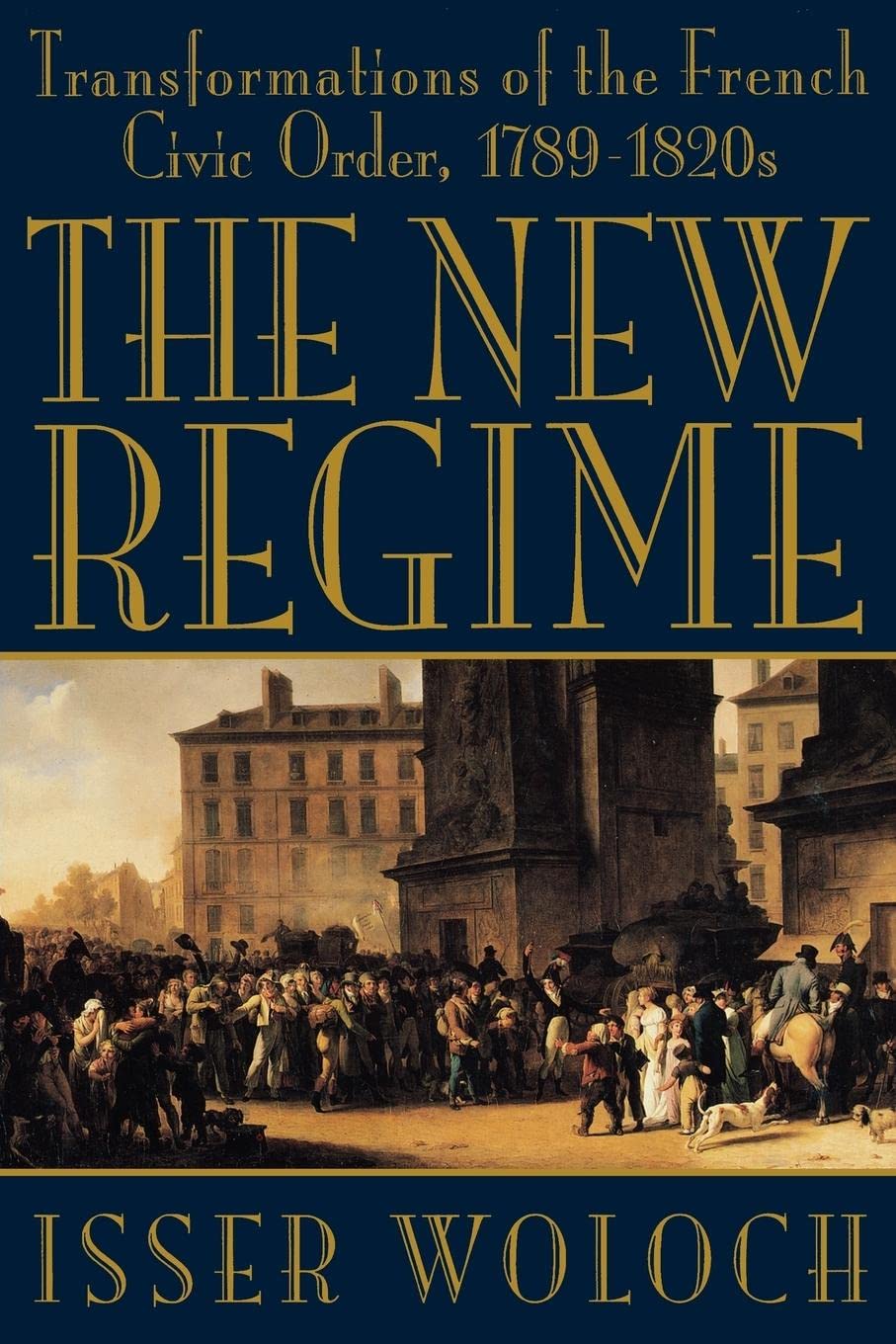
Title
The New Regime: Transformations of the French Civic Order, 17891820s,New
Sold by Ergodebooks, an authorized reseller.
Returns accepted within 30 days | support@ergodebooks.com
Shipping Information
- Free Standard Shipping — United States only
- Processing Time: 3–5 business days
- Estimated Delivery: 6–10 business days after dispatch
- Double-boxed, fully insured & discreetly packaged
- Tracking number sent via email once dispatched
Returns & Refund
Returns accepted within 30 days of delivery.
Damaged or Defective Item
Free return shipping + replacement or full refund
Wrong Item Received
Free return shipping + replacement or full refund
Change of Mind
Return shipping at customer's expense · 25% restocking fee applies
Payment Option

The New Regime is a refreshing departure from [the new revisionist] orthodoxy, Woloch takes a long view of the Revolution, from 1789 to the Restoration, even to 1830, so that the period of the Terror ceases to dominate. He sees the Revolution essentially as a constructive project, which tore down the Old Regime but put in its place a New Regime of revamped central and local government, wider political participation, the establishment of public education and public welfare systems, trial by jury and universal military service. . . . He brings to bear an immense amount of archival research in order to test the success of the revolutionary project. . . . But in spite of that vastness, he writes elegantly, clearly, with a light touch and a certain wit. . . . The most significant contribution of Wolochs book is to highlight the difficulties faced by the architects of the new civic order, and not just in terms of counterrevolutionary or religious opposition. . . . Woloch amply demonstrates that the interests of building the state directly conflicted with the building of the civic order. Robert Gildea, Merton College, in Times Literary Supplement Confident that they had broken with a discredited past, French revolutionaries after 1789 referred to prerevolutionary times as the ancien regime (old regime). The National Assembly proclaimed the sovereignty of the people, grasping the reins of power and asserting the supremacy of law over all other interests. Even as the liberalism of 1789 collapsed into the Terror and then into the Napoleonic dictatorship, a new regime emerged at the juncture of state and civil society. The cycles of recrimination, hatred, and endemic local conflict unleashed by the Terror did not obliterate this new civic order. In this fascinating and wideranging study of three turbulent decades in French history, the eminent historian Isser Woloch examines some large questions: How did the French civic order change after 1789? What civic values animated the new regime; what policies did it adopt? What institutions did it establish, and how did they fare when carried into practice? Drawing on a variety of archival sources, Professor Woloch explains shifts in lawmaking and local authority, state intervention in village life, the creation of public primary schools, experiments in public assistance, a cycle of changes in the mechanisms of civil justice, the introduction of felony trials, and above all the imposition of military conscription.
⚠️ WARNING (California Proposition 65):
This product may contain chemicals known to the State of California to cause cancer, birth defects, or other reproductive harm.
For more information, please visit www.P65Warnings.ca.gov.