
Title
The New Regulatory Framework for Consumer Dispute Resolution,Used
Sold by Ergodebooks, an authorized reseller.
Returns accepted within 30 days | support@ergodebooks.com
Shipping Information
- Free Standard Shipping — United States only
- Processing Time: 3–5 business days
- Estimated Delivery: 6–10 business days after dispatch
- Double-boxed, fully insured & discreetly packaged
- Tracking number sent via email once dispatched
Returns & Refund
Returns accepted within 30 days of delivery.
Damaged or Defective Item
Free return shipping + replacement or full refund
Wrong Item Received
Free return shipping + replacement or full refund
Change of Mind
Return shipping at customer's expense · 25% restocking fee applies
Payment Option

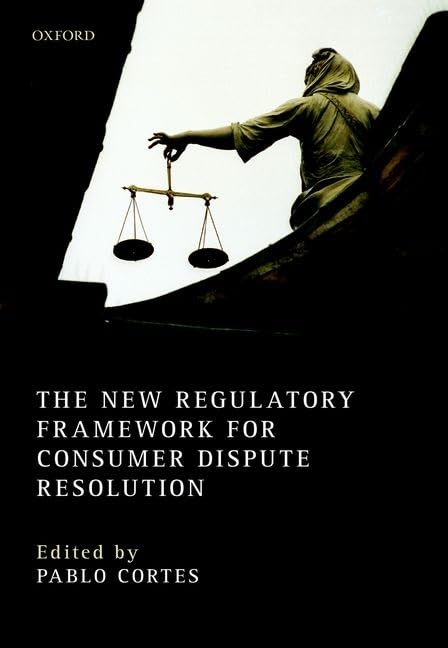
Consumer outofcourt redress in the European Union is experiencing a significant transformation; indeed the current changes are the most important that have occurred in the history of the EU. This is due to the recent implementation of the Alternative Dispute Resolution (ADR) Directive 2013/11/EU and the Online Dispute Resolution (ODR) Regulation (EU) 2013/524. The Directive ensures the availability of quality ADR schemes and sets information obligations on businesses, and the Regulation enables the resolution of consumer disputes through a pan European ODR platform.The New Regulatory Framework for Consumer Dispute Resolution examines the impact of the new EU law in the field of consumer redress. Part I of the volume examines the new European legal framework and the main methods of consumer redress, including mediation, arbitration, and ombudsman schemes. Part II analyses the implementation of the ADR Directive in nine Member States with very different legal cultures in consumer redress, namely: Belgium, Ireland, Italy, Germany, France, Portugal, Spain, the Netherlands and the UK, as well as the distinct approach taken in the US. Part III evaluates new trends in consumer ADR (CDR) by identifying best practices and looking at future trends in the field. In particular, it offers a vision of the future of CDR which is more than a mere dispute resolution tool, it poses a model on dispute system design for CDR, it examines the challenges of crossborder disputes, it proposes a strategy to promote mediation, and it identifies good practices of CDR and collective redress. The book concludes by calling for the mandatory participation of traders in CDR.
⚠️ WARNING (California Proposition 65):
This product may contain chemicals known to the State of California to cause cancer, birth defects, or other reproductive harm.
For more information, please visit www.P65Warnings.ca.gov.