If you have any questions, you are always welcome to contact us. We'll get back to you as soon as possible, withing 24 hours on weekdays.
Customer service
All questions about your order, return and delivery must be sent to our customer service team by e-mail at yourstore@yourdomain.com
Sale & Press
If you are interested in selling our products, need more information about our brand or wish to make a collaboration, please contact us at press@yourdomain.com
Help
If you have any questions, you are always welcome to contact us. We'll get back to you as soon as possible, withing 24 hours on weekdays.
Customer service
All questions about your order, return and delivery must be sent to our customer service team by e-mail at yourstore@yourdomain.com
Sale & Press
If you are interested in selling our products, need more information about our brand or wish to make a collaboration, please contact us at press@yourdomain.com
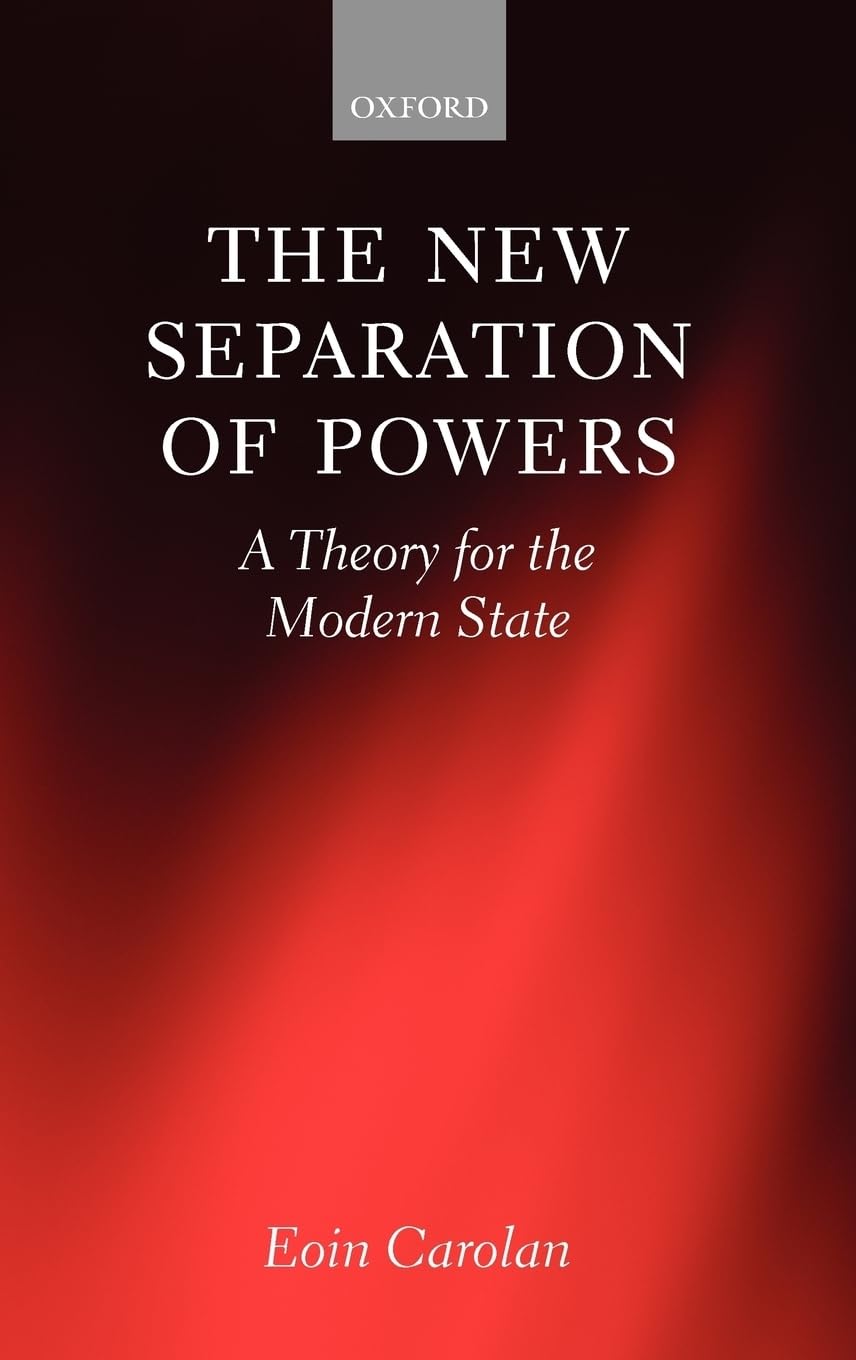
The separation of powers is an important principle of liberal constitutionalism. However, the traditional rationale behind institutional separation can no longer govern the distribution of authority in the modern state.This book develops a new model of the separation of powers theory for the administrative state. It argues for the replacement of the traditional theory with a new model which has the potential to both enhance democratic checks and balances and to legitimize the role of administrative and regulatory bodies in the modern state. Explaining how developments in modern governance have subverted the principles originally underpinning the separation of powers, the book identifies the ways in which lawyers and administrators have sought to preserve these democratic principles in particular areas. These piecemeal efforts are gathered together into a cohesive account of a radical overarching framework for institutional reform.Drawing on examples from the United Kingdom, Ireland and the U.S.A., the book provides both a descriptive and prescriptive analysis of the ways in which our legal and political notions of institutional separation have so far, and (more importantly) may, in the future, deal with the problems posed by the emergence of quasipublic administrative or regulatory agencies.Far from the traditional view of administrative agencies as a threat to democracy, administrative bodies, in fact, can provide a valuable opportunity for reforming public governance in a way which reinforces the foundational principles of democracy.
⚠️ WARNING (California Proposition 65):
This product may contain chemicals known to the State of California to cause cancer,
birth defects, or other reproductive harm.
For MAP (Minimum Advertised Price) violations and Intellectual Property (IP) or Trademark concerns, please contact:
support@ergodebooks.com
⚠️ California Proposition 65 Warning: Some products sold on this website may expose you to chemicals known to the State of California to cause cancer, birth defects, or other reproductive harm. For more information, visit www.P65Warnings.ca.gov.