If you have any questions, you are always welcome to contact us. We'll get back to you as soon as possible, withing 24 hours on weekdays.
Customer service
All questions about your order, return and delivery must be sent to our customer service team by e-mail at yourstore@yourdomain.com
Sale & Press
If you are interested in selling our products, need more information about our brand or wish to make a collaboration, please contact us at press@yourdomain.com
Help
If you have any questions, you are always welcome to contact us. We'll get back to you as soon as possible, withing 24 hours on weekdays.
Customer service
All questions about your order, return and delivery must be sent to our customer service team by e-mail at yourstore@yourdomain.com
Sale & Press
If you are interested in selling our products, need more information about our brand or wish to make a collaboration, please contact us at press@yourdomain.com
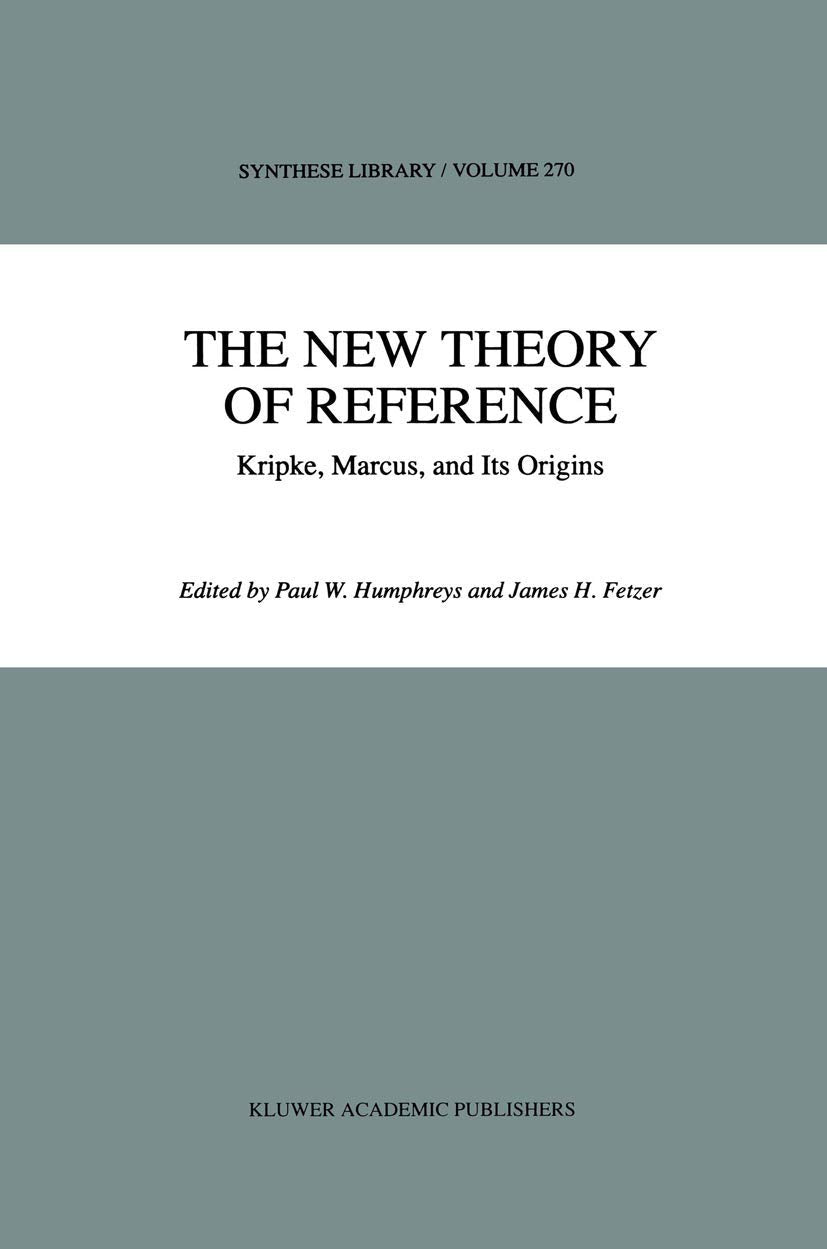
On January 20th, 22nd, and 29th, 1970 Saul Kripke delivered three lectures at Princeton University. They produced something of a sensation. In the lectures he argued, amongst other things, that many names in ordinary language referred to objects directly rather than by means of associated descriptions; that causal chains from language user to language user were an important mechanism for preserving reference; that there were necessary a posteriori and contingent a priori truths; that identity relations between rigid designators were necessary; and argued, more tentatively, that materialist identity theories in the philosophy of mind were suspect. Interspersed with this was a consider able amount of material on natural kind terms and essentialism. As a result of these lectures and a related 1971 paper, 'Identity and Necessity' (Kripke [1971]), talk of rigid designators, Hesperus and Phosphorus, meter bars, gold and H 0, and suchlike quickly became commonplace in philosophical circles 2 and when the lectures were published under the title Naming and Necessity in the collection The Semantics of Natural Language (Davidson and Harman l [1972]), that volume became the biggest seller in the Reidel (later Kluwer) list. The cluster of theses surrounding the idea that a relation of direct reference 2 exists between names and their referents is now frequently referred to as 'The 3 New Theory of Reference'.
⚠️ WARNING (California Proposition 65):
This product may contain chemicals known to the State of California to cause cancer,
birth defects, or other reproductive harm.
For MAP (Minimum Advertised Price) violations and Intellectual Property (IP) or Trademark concerns, please contact:
support@ergodebooks.com
⚠️ California Proposition 65 Warning: Some products sold on this website may expose you to chemicals known to the State of California to cause cancer, birth defects, or other reproductive harm. For more information, visit www.P65Warnings.ca.gov.