
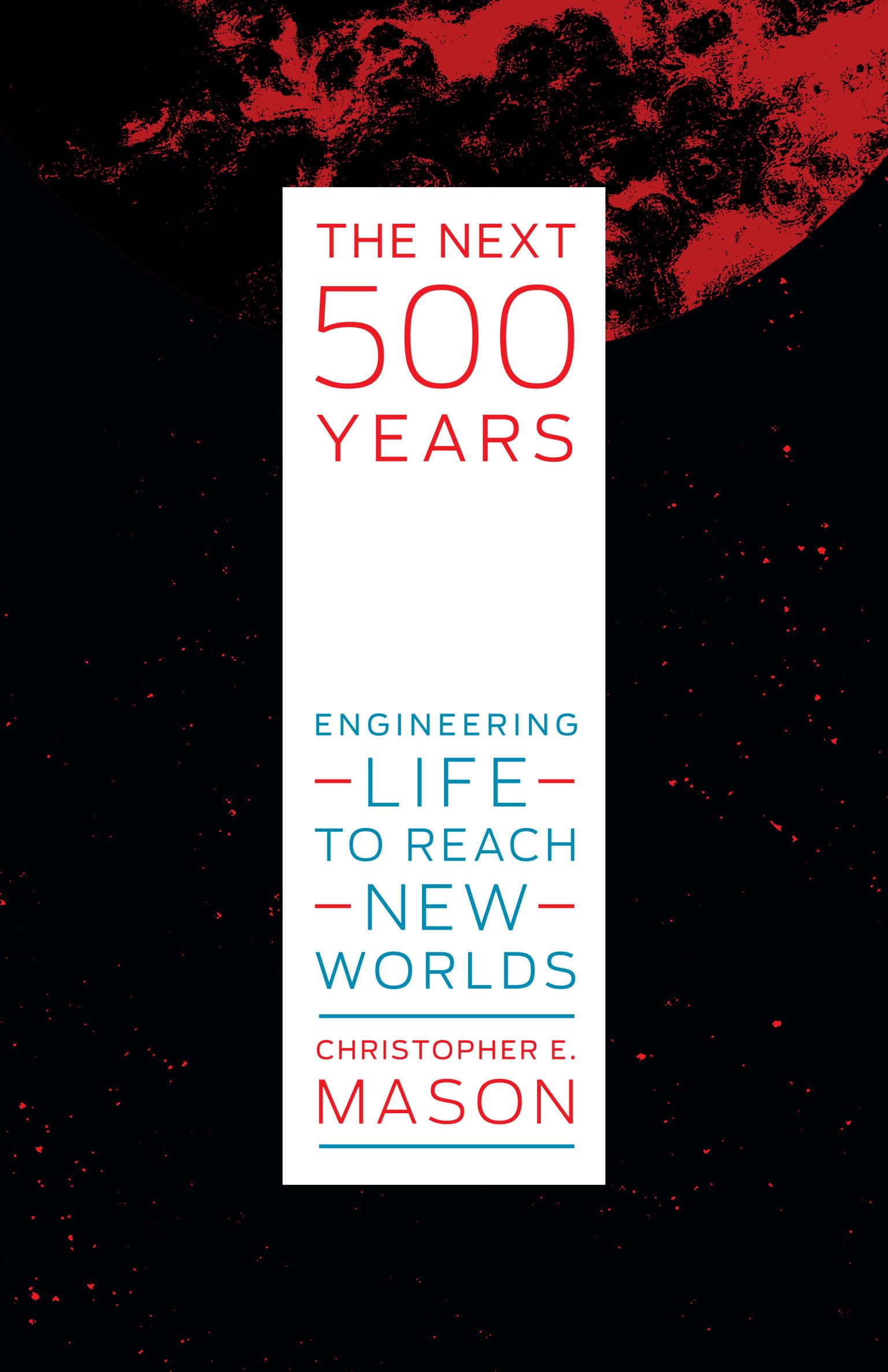
Title
The Next 500 Years: Engineering Life To Reach New Worlds
Sold by Ergodebooks, an authorized reseller.
Returns accepted within 30 days | support@ergodebooks.com
Shipping Information
- Free Standard Shipping — United States only
- Processing Time: 3–5 business days
- Estimated Delivery: 6–10 business days after dispatch
- Double-boxed, fully insured & discreetly packaged
- Tracking number sent via email once dispatched
Returns & Refund
Returns accepted within 30 days of delivery.
Damaged or Defective Item
Free return shipping + replacement or full refund
Wrong Item Received
Free return shipping + replacement or full refund
Change of Mind
Return shipping at customer's expense · 25% restocking fee applies
Payment Option

An Argument That We Have A Moral Duty To Explore Other Planets And Solar Systemsbecause Human Life On Earth Has An Expiration Date.Inevitably, Life On Earth Will Come To An End, Whether By Climate Disaster, Cataclysmic War, Or The Death Of The Sun In A Few Billion Years. To Avoid Extinction, We Will Have To Find A New Home Planet, Perhaps Even A New Solar System, To Inhabit. In This Provocative And Fascinating Book, Christopher Mason Argues That We Have A Moral Duty To Do Just That. As The Only Species Aware That Life On Earth Has An Expiration Date, We Have A Responsibility To Act As The Shepherd Of Lifeformsnot Only For Our Species But For All Species On Which We Depend And For Those Still To Come (By Accidental Or Designed Evolution). Mason Argues That The Same Capacity For Ingenuity That Has Enabled Us To Build Rockets And Land On Other Planets Can Be Applied To Redesigning Biology So That We Can Sustainably Inhabit Those Planets. And He Lays Out A 500Year Plan For Undertaking The Massively Ambitious Project Of Reengineering Human Genetics For Life On Other Worlds.As They Are Today, Our Frail Human Bodies Could Never Survive Travel To Another Habitable Planet. Mason Describes The Toll That Longterm Space Travel Took On Astronaut Scott Kelly, Who Returned From A Year On The International Space Station With Changes To His Blood, Bones, And Genes. Mason Proposes A Tenphase, 500Year Program That Would Engineer The Genome So That Humans Can Tolerate The Extreme Environments Of Outer Spacewith The Ultimate Goal Of Achieving Human Settlement Of New Solar Systems. He Lays Out A Roadmap Of Which Solar Systems To Visit First, And Merges Biotechnology, Philosophy, And Genetics To Offer An Unparalleled Vision Of The Universe To Come.
⚠️ WARNING (California Proposition 65):
This product may contain chemicals known to the State of California to cause cancer, birth defects, or other reproductive harm.
For more information, please visit www.P65Warnings.ca.gov.
- Q: What is the page count of the book? A: This book contains two hundred ninety-six pages. It provides an in-depth exploration of the concepts discussed by the author.
- Q: What are the dimensions of the book? A: The book measures six point twenty-six inches in length, one point zero six inches in width, and nine point twenty-five inches in height. These dimensions make it suitable for easy handling.
- Q: What type of binding does this book have? A: This book is bound in hardcover. Hardcover bindings are known for their durability and long-lasting quality.
- Q: What is the genre of this book? A: The genre of this book is Biomedical Engineering. It explores the intersection of engineering and life sciences.
- Q: Who is the author of the book? A: The author is Christopher E. Mason. He presents a compelling argument for the exploration of new worlds.
- Q: Is this book suitable for young readers? A: This book is not specifically designed for young readers. It contains complex themes related to space exploration and ethics.
- Q: What themes are explored in this book? A: The book explores themes of space exploration, human responsibility, and genetic engineering. It provokes thought on our future as a species.
- Q: How should I approach reading this book? A: You should approach this book with an interest in science and ethical implications of space exploration. It is best suited for readers with a background in these areas.
- Q: Is there a roadmap provided in the book? A: Yes, the author lays out a five hundred year plan for human settlement of new solar systems. This roadmap details phases of genetic engineering and exploration.
- Q: How should I care for this hardcover book? A: To care for this hardcover book, store it upright in a cool, dry place. Avoid exposure to direct sunlight to prevent fading.
- Q: Is there a warranty for this book? A: Books typically do not come with a warranty. However, check with your retailer for their return policy.
- Q: What should I do if my book arrives damaged? A: If your book arrives damaged, contact the retailer for their return or replacement policy. Most retailers will assist you in resolving the issue.
- Q: Can I find similar books on space exploration? A: Yes, there are many books on space exploration and related themes. Look for titles in the science and engineering sections of bookstores.
- Q: What makes this book different from others in its field? A: This book uniquely combines biotechnology, philosophy, and genetics to present a comprehensive vision for humanity's future in space.
- Q: Is the book's content based on scientific research? A: Yes, the content is based on scientific research and theories in the fields of engineering and biology. It presents a well-researched perspective.