
Title
The Nuclear Borderlands: The Manhattan Project in PostCold War New Mexico,Used
Sold by Ergodebooks, an authorized reseller.
Returns accepted within 30 days | support@ergodebooks.com
Shipping Information
- Free Standard Shipping — United States only
- Processing Time: 3–5 business days
- Estimated Delivery: 6–10 business days after dispatch
- Double-boxed, fully insured & discreetly packaged
- Tracking number sent via email once dispatched
Returns & Refund
Returns accepted within 30 days of delivery.
Damaged or Defective Item
Free return shipping + replacement or full refund
Wrong Item Received
Free return shipping + replacement or full refund
Change of Mind
Return shipping at customer's expense · 25% restocking fee applies
Payment Option

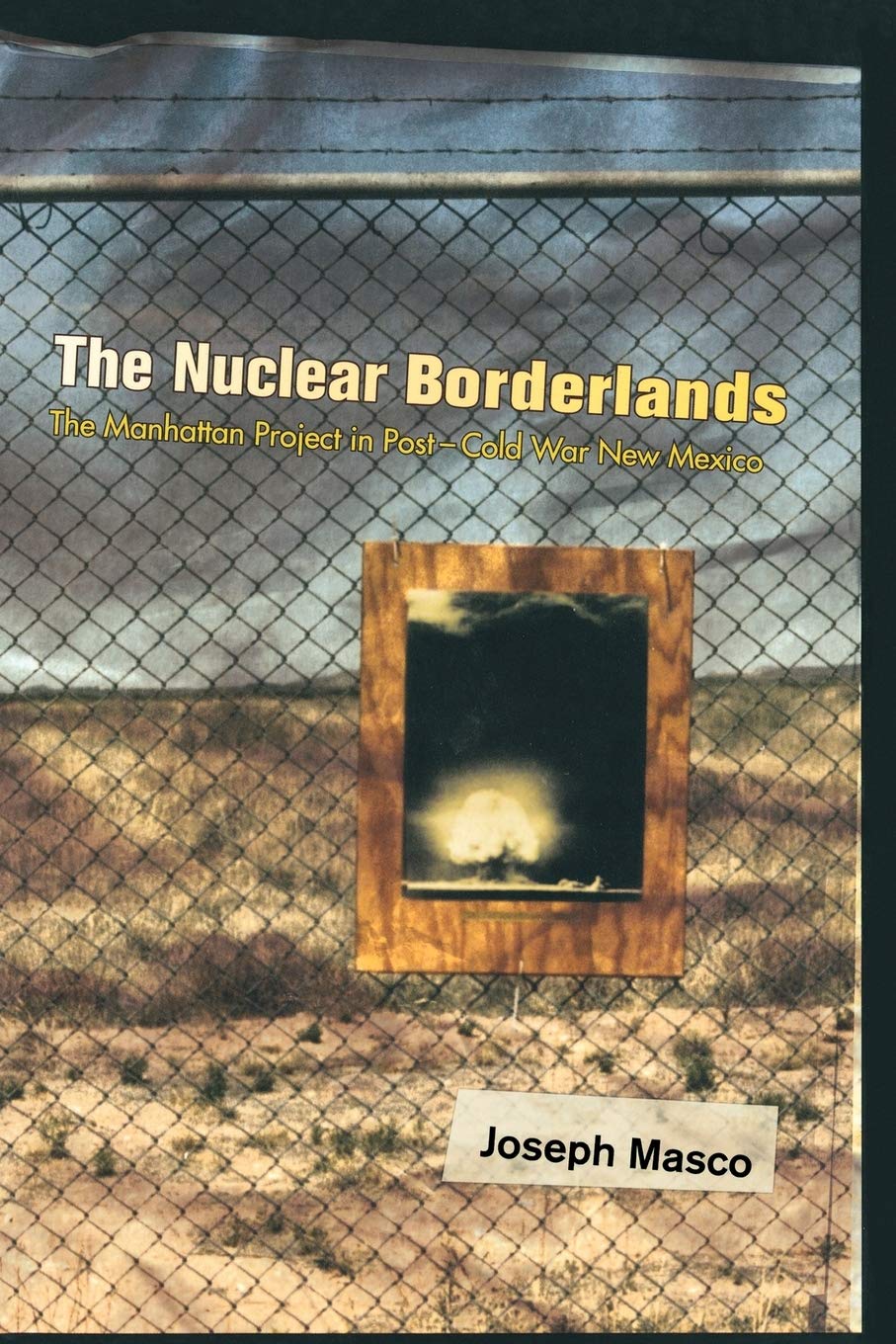
The Nuclear Borderlands explores the sociocultural fallout of twentiethcentury America's premier technoscientific projectthe atomic bomb. Joseph Masco offers the first anthropological study of the longterm consequences of the Manhattan Project for the people that live in and around Los Alamos, New Mexico, where the first atomic bomb, and the majority of weapons in the current U.S. nuclear arsenal, were designed. Masco examines how diverse groupsweapons scientists at Los Alamos National Laboratory, neighboring Pueblo Indian Nations and Nuevomexicano communities, and antinuclear activistshave engaged the U.S. nuclear weapons project in the postCold War period, mobilizing to debate and redefine what constitutes 'national security.'In a pathbreaking ethnographic analysis, Masco argues that the U.S. focus on potential nuclear apocalypse during the Cold War obscured the broader effects of the nuclear complex on American society. The atomic bomb, he demonstrates, is not just the engine of American technoscientific modernity; it has produced a new cognitive orientation toward everyday life, provoking crosscultural experiences of what Masco calls a 'nuclear uncanny.' Revealing how the bomb has reconfigured concepts of time, nature, race, and citizenship, the book provides new theoretical perspectives on the origin and logic of U.S. national security culture. The Nuclear Borderlands ultimately assesses the efforts of the nuclear security state to reinvent itself in a postCold War world, and in so doing exposes the nuclear logic supporting the twentyfirstcentury U.S. war on terrorism.
⚠️ WARNING (California Proposition 65):
This product may contain chemicals known to the State of California to cause cancer, birth defects, or other reproductive harm.
For more information, please visit www.P65Warnings.ca.gov.
- Q: What is 'The Nuclear Borderlands' about? A: 'The Nuclear Borderlands' by Joseph Masco explores the sociocultural impacts of the Manhattan Project and the atomic bomb on the communities surrounding Los Alamos, New Mexico. It examines how diverse groups, including scientists, local Indigenous communities, and activists, have engaged with the implications of nuclear technology in the post-Cold War era.
- Q: Who is the author of 'The Nuclear Borderlands'? A: The author of 'The Nuclear Borderlands' is Joseph Masco, who provides an anthropological perspective on the long-term consequences of the Manhattan Project.
- Q: What format is 'The Nuclear Borderlands' available in? A: 'The Nuclear Borderlands' is available in paperback format.
- Q: How many pages does 'The Nuclear Borderlands' have? A: 'The Nuclear Borderlands' has a total of 448 pages.
- Q: What is the publication date of 'The Nuclear Borderlands'? A: 'The Nuclear Borderlands' was published on April 16, 2006.
- Q: Is 'The Nuclear Borderlands' a new or used book? A: 'The Nuclear Borderlands' is classified as a new book.
- Q: What are the main themes discussed in 'The Nuclear Borderlands'? A: The main themes of 'The Nuclear Borderlands' include national security, the sociocultural effects of nuclear technology, and the concept of the 'nuclear uncanny' which influences everyday life in America.
- Q: Does 'The Nuclear Borderlands' include any theoretical perspectives? A: Yes, 'The Nuclear Borderlands' provides new theoretical perspectives on the origins and logic of U.S. national security culture in relation to nuclear weapons.
- Q: What kind of analysis does Joseph Masco use in 'The Nuclear Borderlands'? A: Joseph Masco employs an ethnographic analysis to explore the impacts of the nuclear complex on American society and the experiences of those living in affected communities.
- Q: What is the significance of the title 'The Nuclear Borderlands'? A: The title 'The Nuclear Borderlands' signifies the intersection of nuclear science and the sociocultural landscape of the communities surrounding nuclear facilities, particularly in New Mexico.