
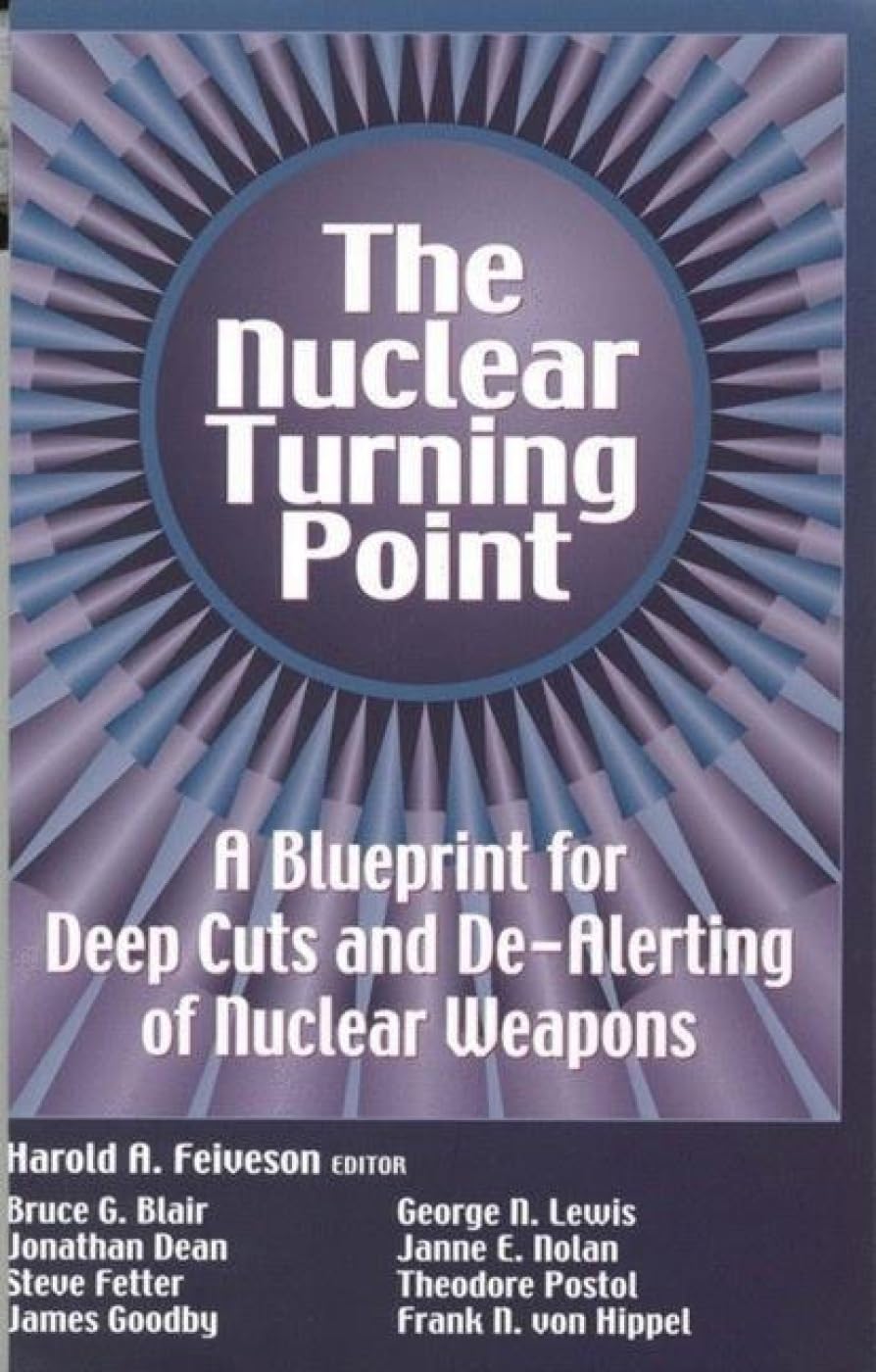
Title
The Nuclear Turning Point: A Blueprint for Deep Cuts and DeAlerting of Nuclear Weapons,Used
Sold by Ergodebooks, an authorized reseller.
Returns accepted within 30 days | support@ergodebooks.com
Shipping Information
- Free Standard Shipping — United States only
- Processing Time: 3–5 business days
- Estimated Delivery: 6–10 business days after dispatch
- Double-boxed, fully insured & discreetly packaged
- Tracking number sent via email once dispatched
Returns & Refund
Returns accepted within 30 days of delivery.
Damaged or Defective Item
Free return shipping + replacement or full refund
Wrong Item Received
Free return shipping + replacement or full refund
Change of Mind
Return shipping at customer's expense · 25% restocking fee applies
Payment Option

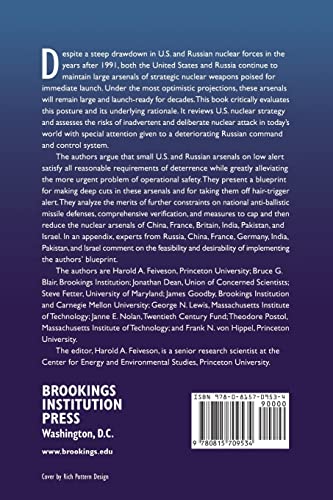
Despite the ongoing drawdown of strategic forces under the terms of START, both the United States and Russia maintain large arsenals of nuclear weapons poised for immediate launch. Under the most optimistic current scenarios, these arsenals will remain very large and launchready for more than a decade. This book, by a distinguished group of coauthors, critically evaluates the current policy of retaining and operating large nuclear arsenals. It reviews U.S. nuclear doctrine and strategy, and the role of nuclear weapons in deterring aggression by former Cold War adversaries and other countries with weapons of mass destruction. The risks of inadvertent as well as deliberate nuclear attack are assessed. The authors argue that small arsenals (low hundreds) on low alert satisfy all justifiable requirements for nuclear weapons. They present a blueprint for making deep cuts in U.S. and Russian deployments, and for lowering their alert level. They explain the implications of shifting to small arsenals for further constraining antiballistic missile defenses, strengthening verification, and capping or reducing the nuclear arsenals of China, France, and Britain as well as the threshold nuclear states. The political challenges and opportunities, both domestic and international, for achieving deep reductions in the size and readiness of nuclear forces are analyzed by the authors and by distinguished experts from other countries. The coauthors are Bruce Blair, Jonathan Dean, James Goodby, Steve Fetter, Hal Feiveson, George Lewis, Janne Nolan, Theodore Postol, and Frank von Hippel. An appendix with international perspectives by Li Bin (China), Alexei Arbatov (Russia), Therese Delpech (France), Pervez Hoodbhoy (Pakistan), Shai Feldman (Israel), Harald Mueller (Germany), and Zia Mian and M.V. Ramana (South Asia).'
⚠️ WARNING (California Proposition 65):
This product may contain chemicals known to the State of California to cause cancer, birth defects, or other reproductive harm.
For more information, please visit www.P65Warnings.ca.gov.