
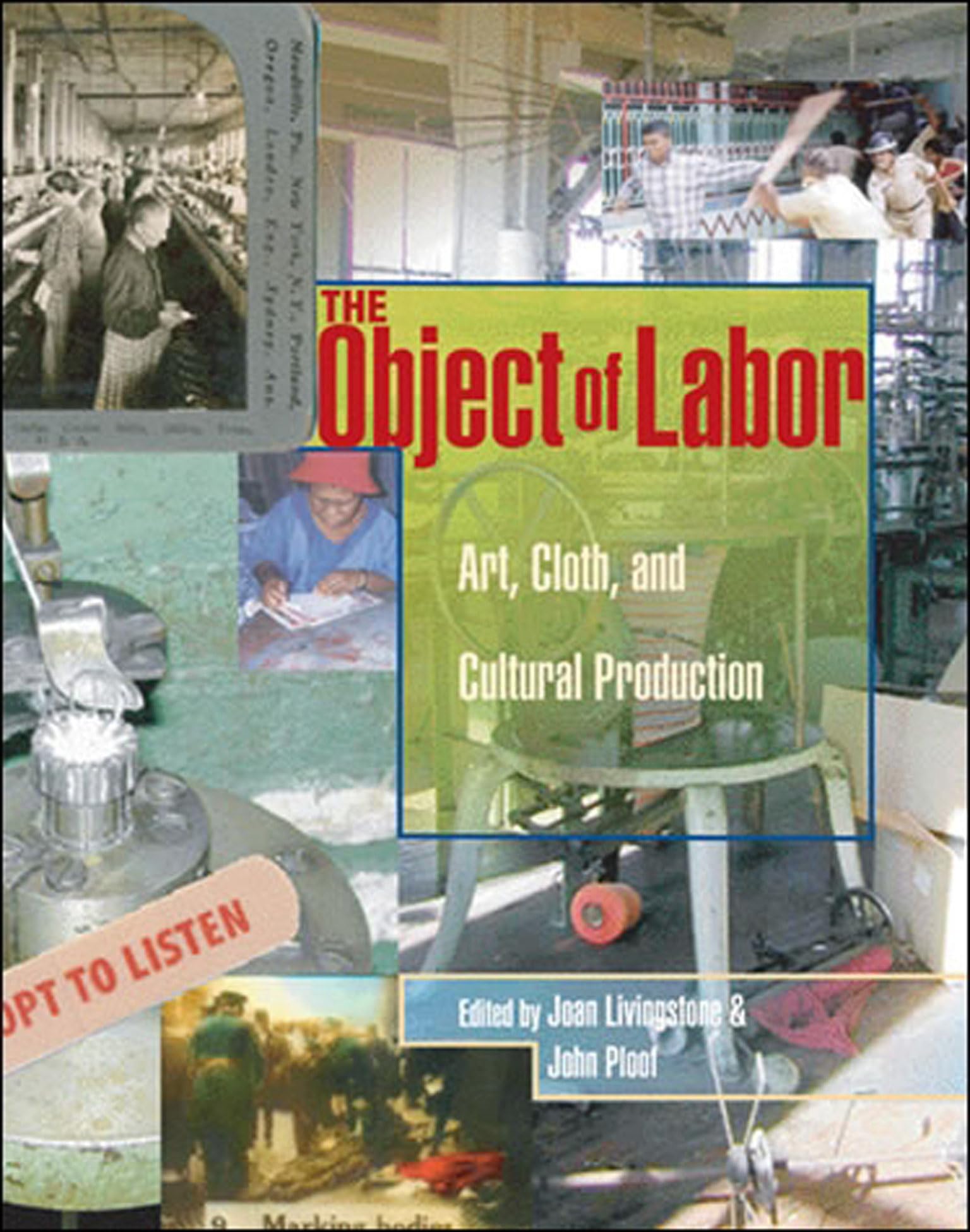
Title
The Object Of Labor: Art, Cloth, And Cultural Production (Mit Press)
Sold by Ergodebooks, an authorized reseller.
Returns accepted within 30 days | support@ergodebooks.com
Shipping Information
- Free Standard Shipping — United States only
- Processing Time: 3–5 business days
- Estimated Delivery: 6–10 business days after dispatch
- Double-boxed, fully insured & discreetly packaged
- Tracking number sent via email once dispatched
Returns & Refund
Returns accepted within 30 days of delivery.
Damaged or Defective Item
Free return shipping + replacement or full refund
Wrong Item Received
Free return shipping + replacement or full refund
Change of Mind
Return shipping at customer's expense · 25% restocking fee applies
Payment Option

Essays And Artists' Projects Explore The Ubiquity Of Cloth In Everyday Life And The Effect Of Globalization On Art And Labor; With More Than 100 Color Images.The Object Of Labor Explores The Personal, Political, Social, And Economic Meaning Of Work In The Context Of Art And Textile Production. The Ubiquity Of Cloth In Everyday Life, The Historically Resonant Relationship Of Textile And Cloth To Labor, And The Tumultuous Drive Of Globalization Make The Issues Raised By This Pubication Of Special Interest Today. The Seventeen Essays Cover Topics Ranging From Artmaking Practices To Labor History And The Effects Of Globalization As Seen Through Art And Labor. The Artists' Projectstwelve Striking And Beautiful Eightpage, Full Color Spreadsconduct Parallel Investigations Into Art, Cloth, And Work.The Contributors Explore, From Historical And Personal Perspectives, Such Subjects As The Charged History Of Offshore Garment Workers; The Different Systems Of Production And Consumption In Factories, Homes, Studios, And Exhibitions; The Revelation Of Class, Gender, And Sexuality Through Cloth, Costume, And Textile Images; Textile Production As Commemorative Acts In South Africa, The United States, And India; Transnationalism, Cultural Hybridity, And Race In The Work Of Individual Artists; Lost Histories Of Garment Production And Embroidery; The Physical Act Of Artmaking As Labor; And The Value Of Handmade And Technologically Improved Objects.Artist Projects And Portfoliossusie Brandt, Nick Cave, Park Chambers, Lisa Clark, Lia Cook, Ann Hamilton, Kimsooja, Barbara Layne And Sue Rowley, Lara Lepionka, Merrill Mason, Darrel Morris, Pepn Osorio, J. Morgan Puett And Iain Kerr, Karen Reimer, Yinka Shonibare, Subrosa, Christine Tarkowski, Anne Wilson
⚠️ WARNING (California Proposition 65):
This product may contain chemicals known to the State of California to cause cancer, birth defects, or other reproductive harm.
For more information, please visit www.P65Warnings.ca.gov.
- Q: How many pages does the book have? A: This book has four hundred twenty-two pages. It includes essays and artists' projects related to art and labor.
- Q: What is the binding type of 'The Object of Labor'? A: The book is bound in hardcover. This binding type provides durability and a premium feel.
- Q: What are the dimensions of the book? A: The book measures seven point eight one inches in length, one point five inches in width, and nine point six nine inches in height. These dimensions make it a substantial yet manageable read.
- Q: Who is the author of 'The Object of Labor'? A: The author is Joan Livingstone. She explores the intersections of art, labor, and cultural production in this publication.
- Q: What topics are covered in the essays? A: The essays cover topics such as labor history, globalization effects, and art-making practices. They provide diverse perspectives on art and textile production.
- Q: Is this book suitable for academic use? A: Yes, this book is suitable for academic use. It includes scholarly essays and artist projects that can support research in art and cultural studies.
- Q: How can I best utilize this book for my studies? A: You can use this book to explore themes of globalization and labor in art. It serves as a resource for essays, projects, and discussions in related fields.
- Q: Is this book appropriate for beginners in the art field? A: Yes, this book can be appropriate for beginners. It presents complex ideas in an accessible format, making it suitable for those new to art theory.
- Q: Can this book be used for group discussions? A: Yes, it can be used for group discussions. The diverse topics encourage dialogue on art, labor, and cultural issues.
- Q: How should I care for this hardcover book? A: To care for this hardcover book, keep it in a dry place away from direct sunlight. Avoid bending the pages to maintain its condition.
- Q: What is the recommended way to store this book? A: Store this book upright on a shelf, or lay it flat in a cool, dry location. Proper storage will help prevent wear and tear.
- Q: What if the book arrives damaged? A: If the book arrives damaged, you should contact the seller for a return or replacement. Most sellers have policies in place for such issues.
- Q: Is there a warranty for this book? A: No, books typically do not come with warranties. However, check the seller's return policy for any guarantees.
- Q: What is the main theme of 'The Object of Labor'? A: The main theme explores the relationship between art, cloth, and labor. It highlights the impact of globalization on these elements.
- Q: How does this book compare to other art publications? A: This book uniquely combines essays with artist projects, offering both theoretical and practical insights into art and labor compared to traditional art publications.
- Q: Are there any notable contributors to the book? A: Yes, notable contributors include artists such as Yinka Shonibare and Kimsooja. Their work provides varied perspectives on art and labor.