
Title
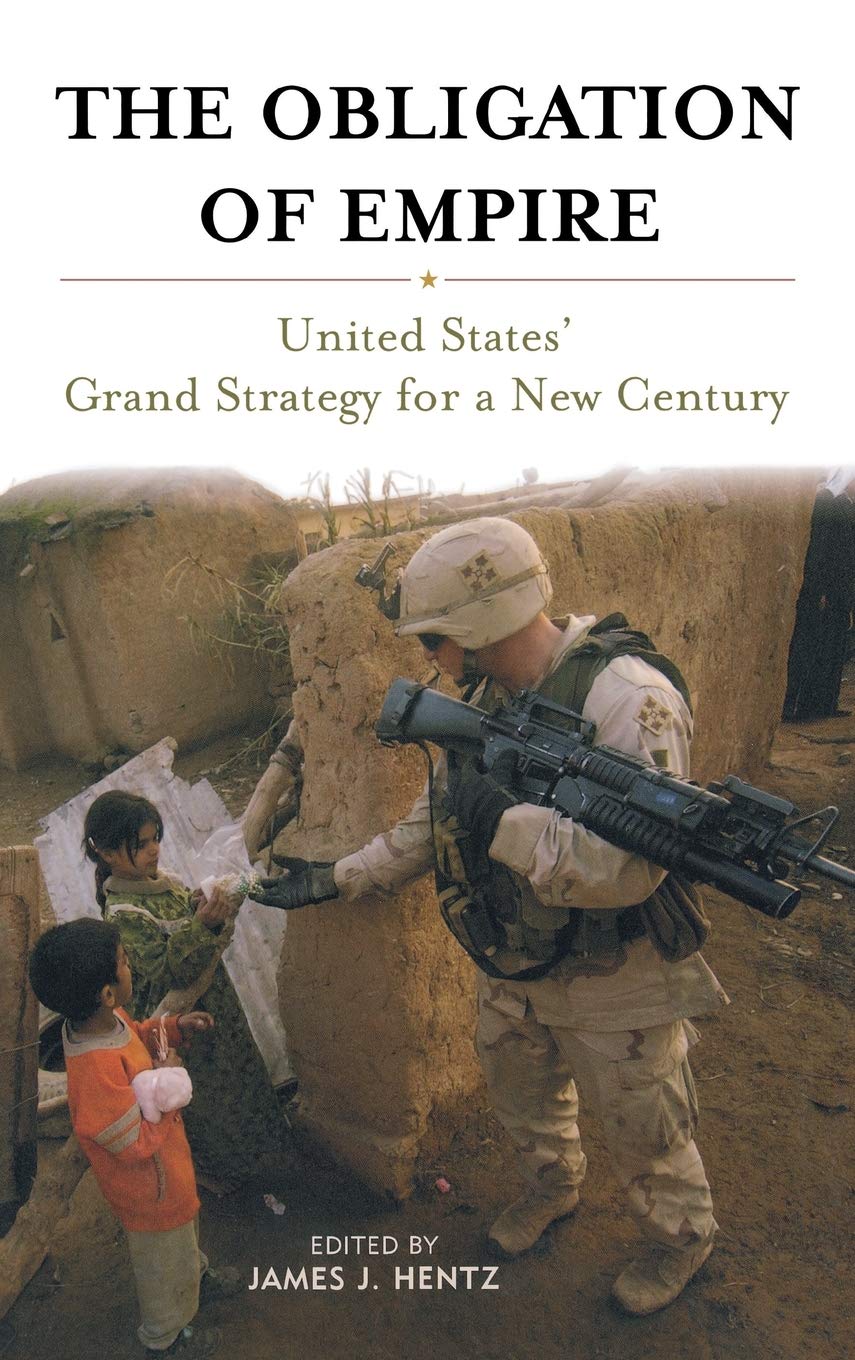
The Obligation Of Empire: United States' Grand Strategy For A New Century,Used
Sold by Ergodebooks, an authorized reseller.
Returns accepted within 30 days | support@ergodebooks.com
Shipping Information
- Free Standard Shipping — United States only
- Processing Time: 3–5 business days
- Estimated Delivery: 6–10 business days after dispatch
- Double-boxed, fully insured & discreetly packaged
- Tracking number sent via email once dispatched
Returns & Refund
Returns accepted within 30 days of delivery.
Damaged or Defective Item
Free return shipping + replacement or full refund
Wrong Item Received
Free return shipping + replacement or full refund
Change of Mind
Return shipping at customer's expense · 25% restocking fee applies
Payment Option

Product DescriptionSome of the nation's most respected scholars of international affairs examine the debates over U.S. grand strategy in light of U.S. security policies and interests in tactical regions around the world. The contributors begin by describing the four grand strategies currently competing for dominance of U.S. foreign policy: neoisolationism argues that the United States should not become involved in conflicts outside specifically defined national interests selective engagement proposes that the United States, despite its position as the world's only remaining superpower, should limit its involvement in foreign affairs cooperative security advocates that the United States is not and should not act as an imperial country primacy asserts that the United States is an empire and therefore it should conduct an expansive foreign policy. Focusing on regions that present new challenges to U.S. grand strategy, such as SubSaharan Africa, the Middle East, and Latin America, the contributors offer the most current examinations of U.S. policies and assess the effectiveness of competing strategies in each region. The Obligation of Empire offers an innovative set of foreign policy initiatives that explore the tensions between global agendas and regionalist approaches.Contributors: Andrew J. Bacevich, Doug Bandow, Dale Davis, Thomas Donnelly, James J. Hentz, Clifford Kiracofe, Charles Kupchan, Jeffrey Stark, S. Frederick Starr, and Brantley Womack. James J. Hentz, associate professor of international studies at the Virginia Military Institute, is the coeditor of New and Critical Security and Regionalism: Beyond the Nation State .Review'A balanced analysis of the relative strengths and weaknesses of privacy, selective engagement, liberal internationalism, and isolationism as grand strategies for the U.S. in the post9/11 world. . . . Sophisticated yet still accesible to undergraduates just beginning to study U.S. foreign policy. Recommended.'Choice'An insightful guide for US foreign policy analysis. . . . Succeeds in broadening the scope of understanding by offering a regional perspective through which more practical approaches can be identified.'Journal of Conflict StudiesAbout the AuthorJames J. Hentz, associate professor of international studies at the Virginia Military Institute, is the coeditor of New and Critical Security and Regionalism: Beyond the Nation State.
⚠️ WARNING (California Proposition 65):
This product may contain chemicals known to the State of California to cause cancer, birth defects, or other reproductive harm.
For more information, please visit www.P65Warnings.ca.gov.